Laboratory of Functional and Metabolic Imaging, École polytechnique fédérale de Lausanne (EPFL), Lausanne, Switzerland.
Geneva School of Health Sciences, HES-SO University of Applied Sciences and Arts Western Switzerland, Geneva, Switzerland.
Magn Reson Med. 2022 Sep;88(3):1450-1464. doi: 10.1002/mrm.29298. Epub 2022 May 16.
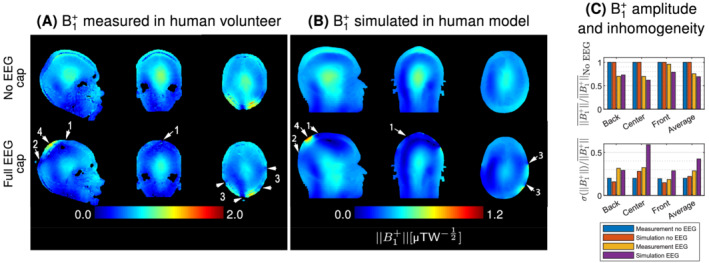
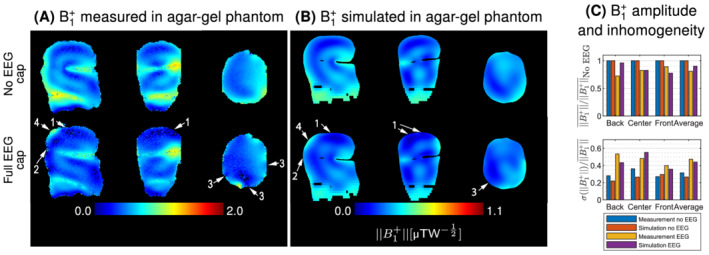
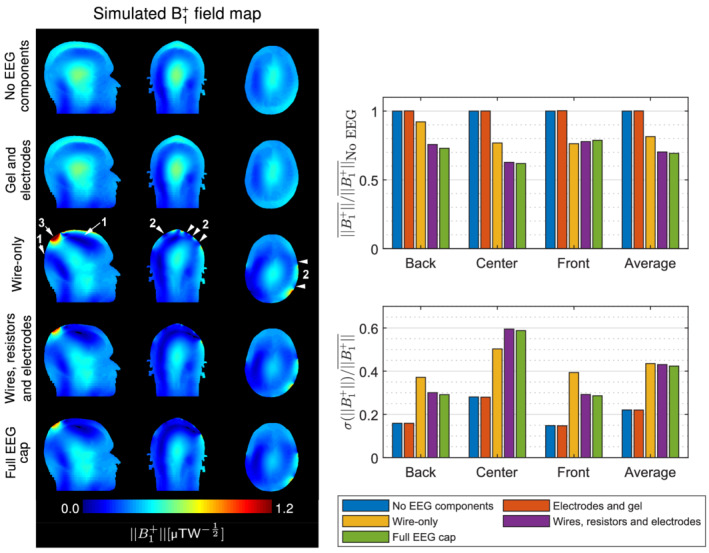
Simultaneous scalp electroencephalography and functional magnetic resonance imaging (EEG-fMRI) enable noninvasive assessment of brain function with high spatial and temporal resolution. However, at ultra-high field, the data quality of both modalities is degraded by mutual interactions. Here, we thoroughly investigated the radiofrequency (RF) shielding artifact of a state-of-the-art EEG-fMRI setup, at 7 T, and design a practical solution to limit this issue.
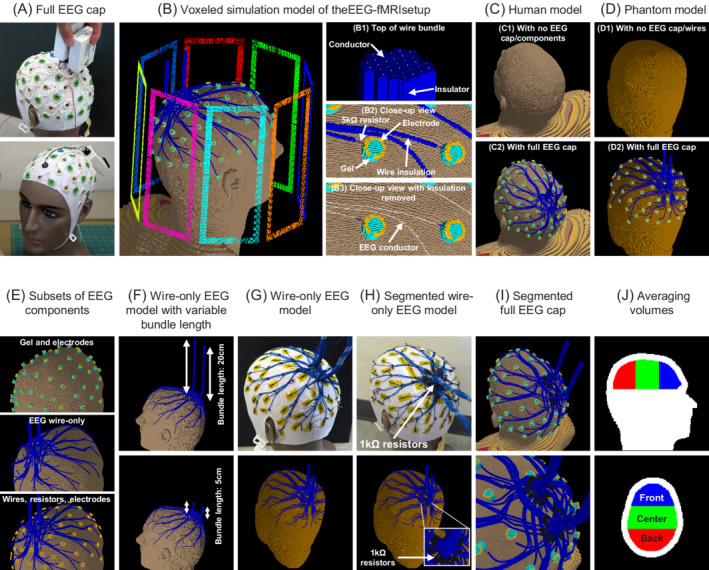
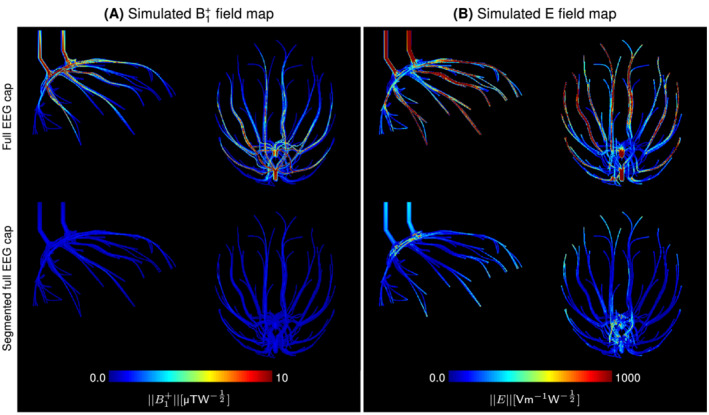
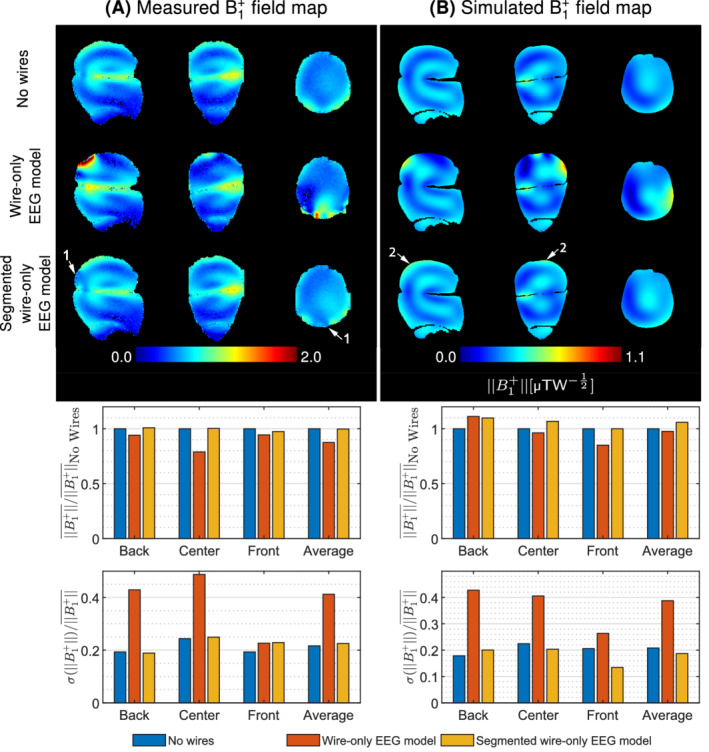
Electromagnetic field simulations and MR measurements assessed the shielding effect of the EEG setup, more specifically the EEG wiring. The effectiveness of segmenting the wiring with resistors to reduce the transmit field disruption was evaluated on a wire-only EEG model and a simulation model of the EEG cap.
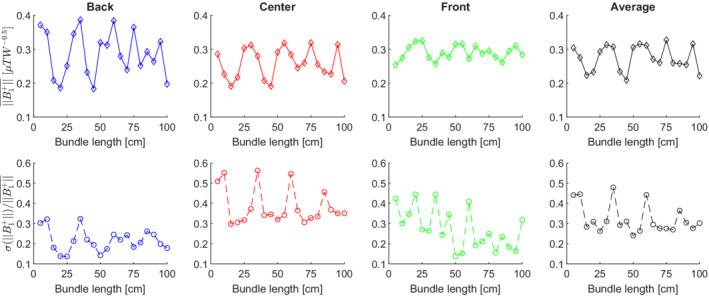
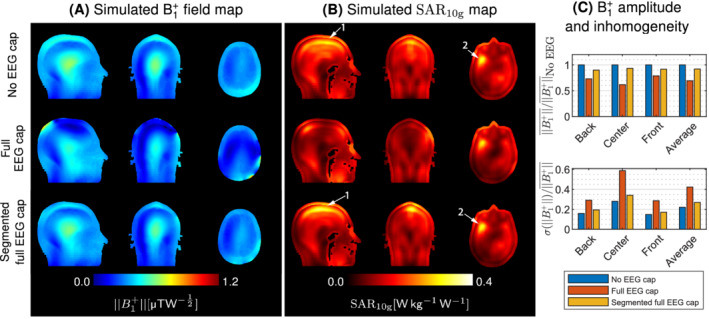
The EEG wiring was found to exert a dominant effect on the disruption of the transmit field, whose intensity varied periodically as a function of the wire length. Breaking the electrical continuity of the EEG wires into segments shorter than one quarter RF wavelength in air (25 cm at 7 T) reduced significantly the RF shielding artifacts. Simulations of the EEG cap with segmented wires indicated similar improvements for a moderate increase of the power deposition.
We demonstrated that segmenting the EEG wiring into shorter lengths using commercially available nonmagnetic resistors is effective at reducing RF shielding artifacts in simultaneous EEG-fMRI. This prevents the formation of RF-induced standing waves, without substantial specific absorption rate (SAR) penalties, and thereby enables benefiting from the functional sensitivity boosts achievable at ultra-high field.
头皮脑电图和功能磁共振成像(EEG-fMRI)的同步实现了以高时空分辨率对大脑功能进行非侵入性评估。然而,在超高场强下,两种模式的数据质量都会因相互作用而降低。在此,我们彻底研究了最先进的 EEG-fMRI 设备在 7T 下的射频(RF)屏蔽伪影,并设计了一种实用的解决方案来限制这个问题。
电磁场模拟和 MR 测量评估了 EEG 设备的屏蔽效果,特别是 EEG 布线。通过在仅布线的 EEG 模型和 EEG 帽的模拟模型上评估用电阻器分割布线以减少传输场干扰的有效性来评估该方法。
发现 EEG 布线对传输场的干扰有显著影响,其强度随电线长度周期性变化。将 EEG 电线的电连续性打断成短于四分之一射频波长(7T 时为 25cm)的小段可以显著减少 RF 屏蔽伪影。使用分段电线的 EEG 帽的模拟表明,在适度增加功率沉积的情况下,也可以得到类似的改进。
我们证明了使用市售的非磁性电阻器将 EEG 布线分成较短的长度可以有效减少同步 EEG-fMRI 中的 RF 屏蔽伪影。这可以防止 RF 诱导的驻波形成,而不会对特定吸收率(SAR)造成实质性的影响,从而能够从超高场强下实现的功能灵敏度提升中受益。