Department of Hepatology, First Bethune Hospital of Jilin University, No. 71 XinMin Street, Changchun, 130021, Jilin, People's Republic of China.
Center for Pathogen Biology and Infectious Disease, First Bethune Hospital of Jilin University, Changchun, 130021, Jilin, People's Republic of China.
Stem Cell Res Ther. 2022 May 16;13(1):204. doi: 10.1186/s13287-022-02882-4.
Mesenchymal stem cells (MSCs) therapy is showing potential therapeutic effects on liver function improvement in patients with chronic liver disease; however, the consensus on efficacy and safety of MSCs has not been reached.
We performed this systematic review and meta-analysis of randomized controlled trials (RCTs) to evaluate the efficacy and safety of MSCs therapy for patients with chronic liver disease. A detailed search of the Cochrane Library, MEDLINE, Web of Science, and EMBASE databases was conducted to find studies published prior to September 15, 2021. The outcome measures were survival rate, model of end-stage liver disease (MELD) score, albumin, total bilirubin, coagulation function, and aminotransferase.
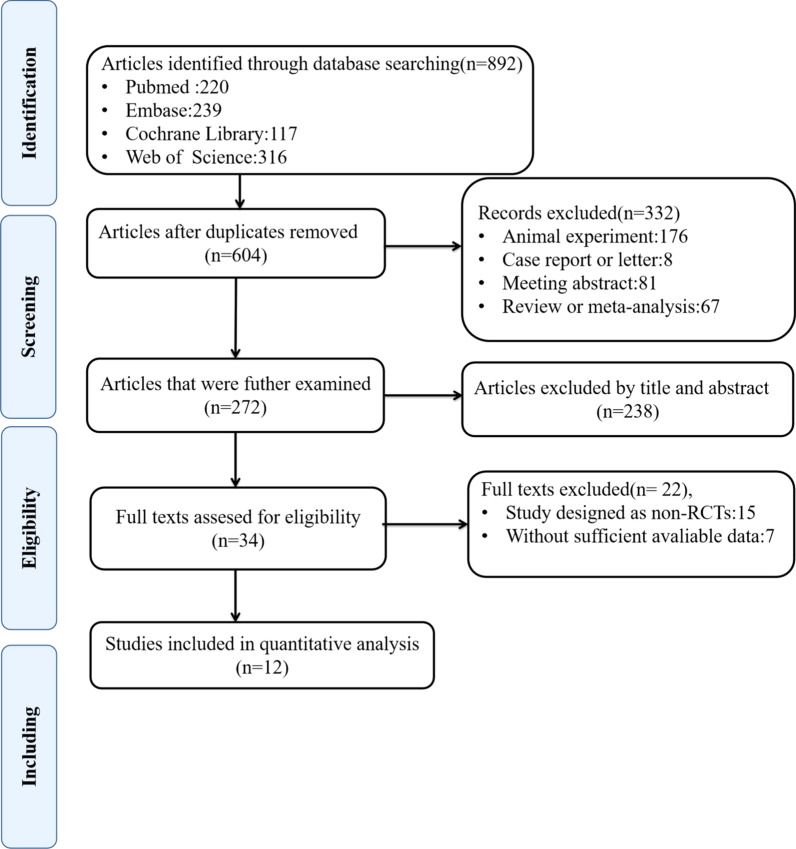
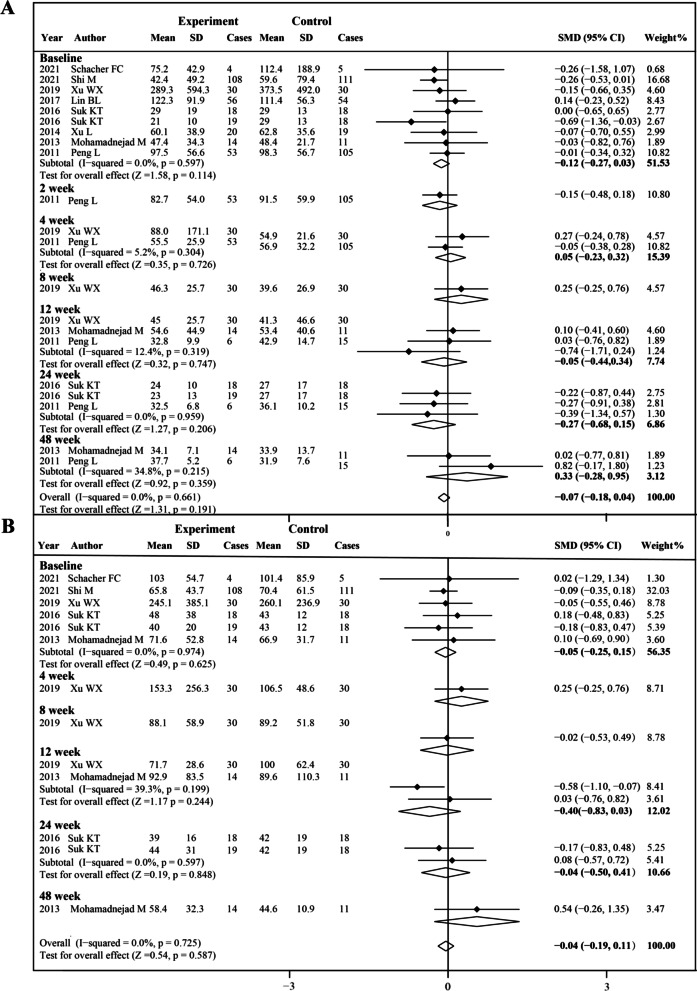
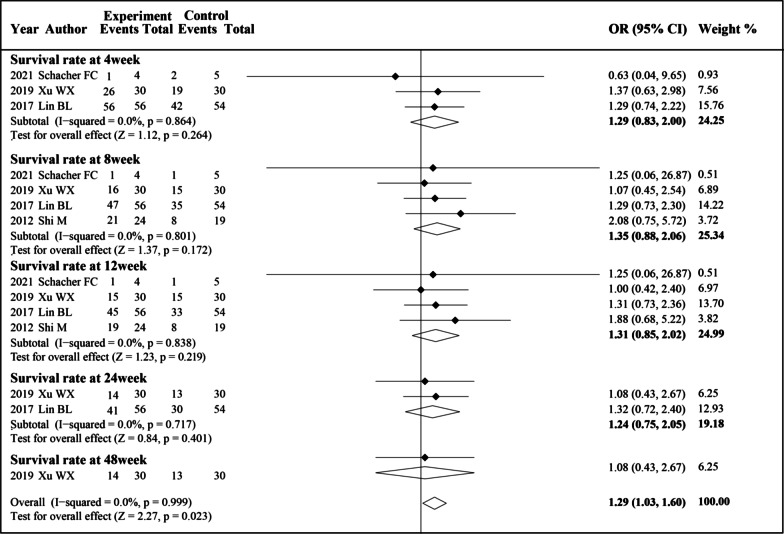
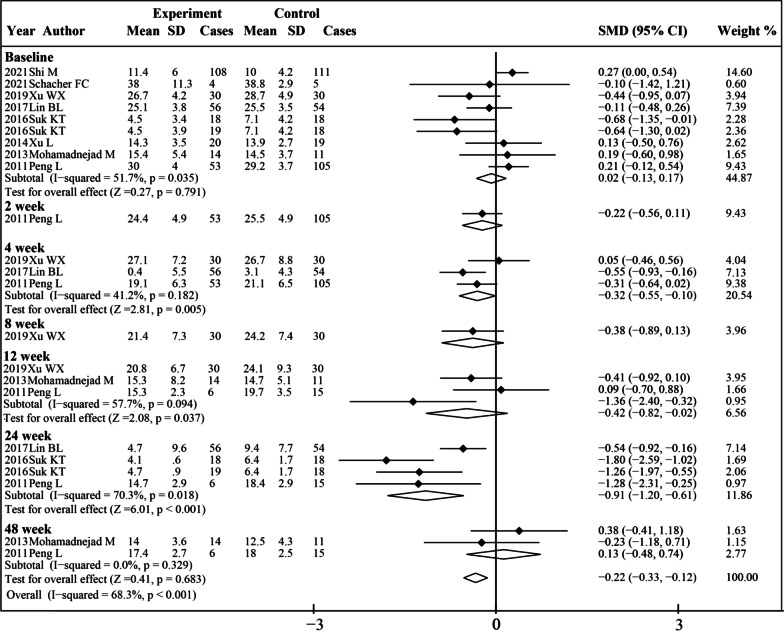
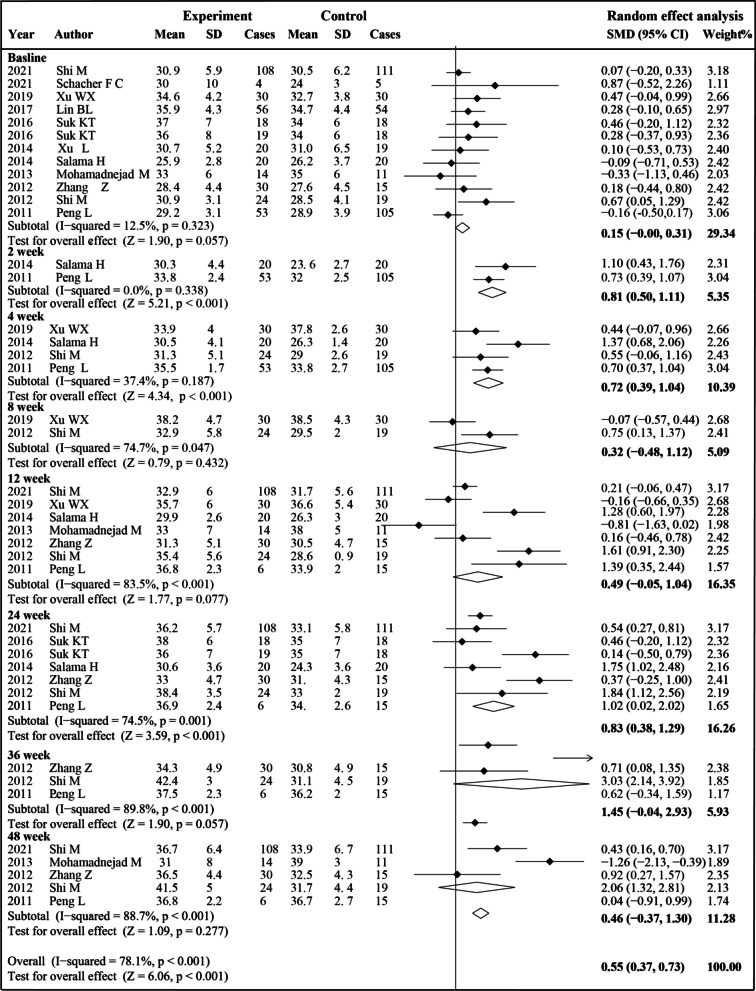
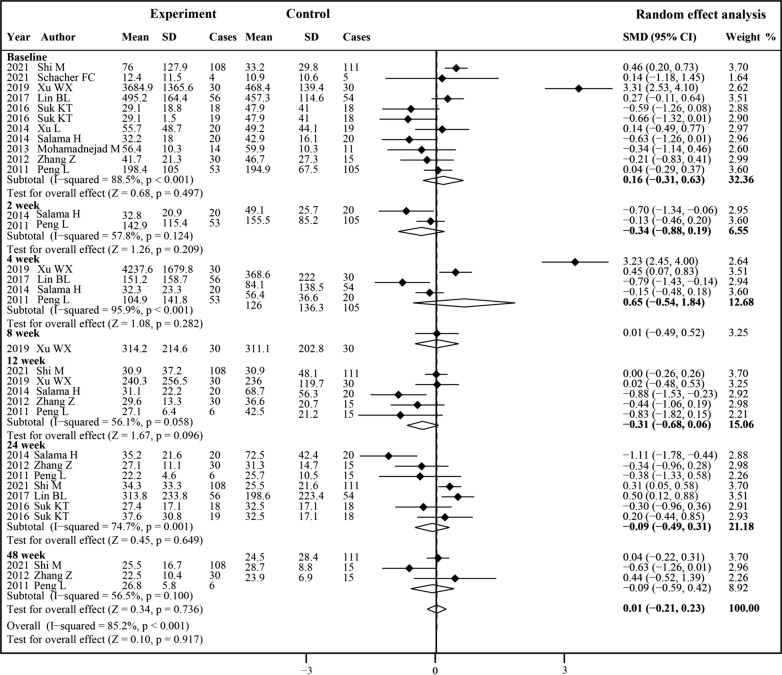
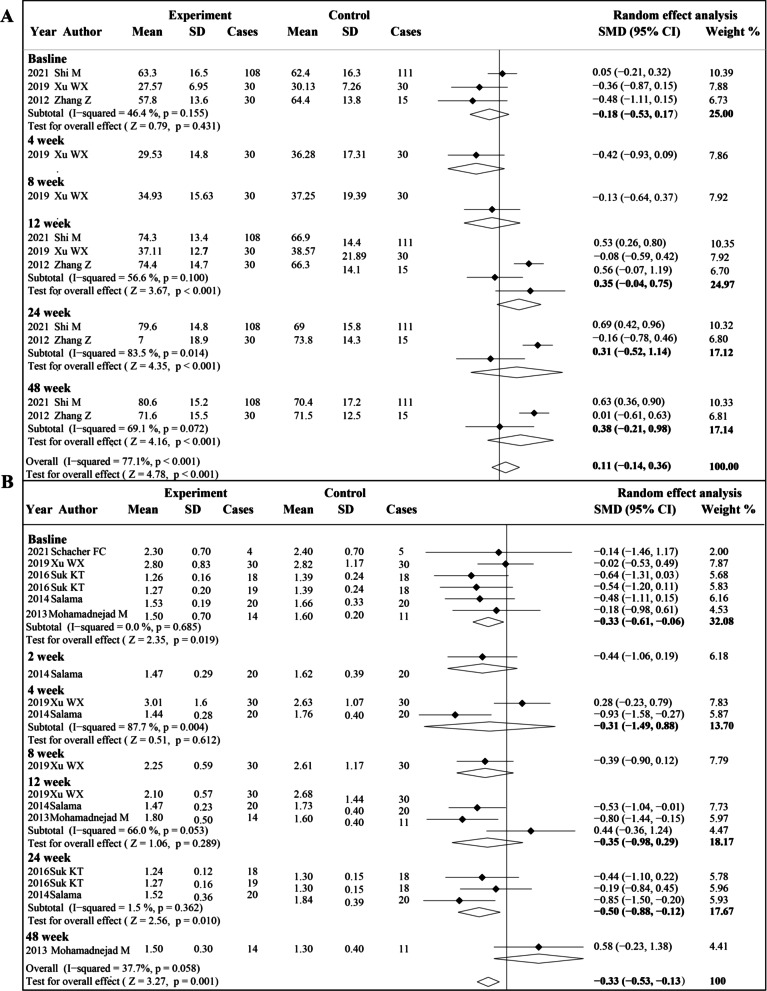
A literature search resulted in 892 citations. Of these, 12 studies met the inclusion criteria. It was found that compared with conventional treatment, MSCs therapy was associated with improved liver function including the MELD score, albumin levels, and coagulation function. However, it had no obvious beneficial effects on survival rate and aminotransferase levels. Subgroup analyses indicated that MSCs therapy had therapeutic effects on patients with both acute on chronic liver failure (ACLF) and cirrhosis. BM-MSCs and UC-MSCs treatment had similar efficacy to improve liver function. The effectiveness varied slightly between the peripheral intravenous injection and hepatic arterial injection. Five studies reported that the only adverse event of the MSCs therapy was fever, and no serious adverse events and side effects were reported. Analysis on clinical symptoms showed that encephalopathy and gastrointestinal hemorrhage events were reduced after MSCs therapy.
In conclusion, this study suggested that MSCs therapy could be a potential therapeutic alternative for patients with chronic liver disease in clinical practice.
间充质干细胞(MSCs)疗法在改善慢性肝病患者肝功能方面显示出潜在的治疗效果;然而,MSCs 的疗效和安全性尚未达成共识。
我们进行了这项系统评价和随机对照试验(RCTs)的荟萃分析,以评估 MSCs 疗法治疗慢性肝病患者的疗效和安全性。详细检索了 Cochrane 图书馆、MEDLINE、Web of Science 和 EMBASE 数据库,以查找截至 2021 年 9 月 15 日之前发表的研究。主要结局指标为生存率、终末期肝病模型(MELD)评分、白蛋白、总胆红素、凝血功能和转氨酶。
文献检索得到 892 条引文。其中,12 项研究符合纳入标准。结果发现,与常规治疗相比,MSCs 治疗与改善肝功能有关,包括 MELD 评分、白蛋白水平和凝血功能。然而,它对生存率和转氨酶水平没有明显的有益影响。亚组分析表明,MSCs 治疗对急性慢性肝衰竭(ACLF)和肝硬化患者均有治疗作用。BM-MSCs 和 UC-MSCs 治疗在改善肝功能方面具有相似的疗效。外周静脉注射和肝动脉注射之间的效果略有差异。五项研究报告 MSCs 治疗的唯一不良事件是发热,没有报告严重不良事件和副作用。对临床症状的分析表明,MSCs 治疗后脑病和胃肠道出血事件减少。
综上所述,本研究表明 MSCs 疗法可能是慢性肝病患者临床实践中的一种潜在治疗选择。