Department of Global Health and Infection, Brighton and Sussex Medical School, Brighton, UK.
Centre for Dementia Studies, Brighton and Sussex Medical School, Brighton, UK.
Qual Life Res. 2022 Oct;31(10):3019-3030. doi: 10.1007/s11136-022-03150-x. Epub 2022 May 17.
Cognitive impairment (CI) in people living with HIV (PLWH) is an important health concern in the context of an ageing HIV population. Impacting 14-28% of PLWH, CI is associated with lower health-related quality of life (HRQoL), however, evaluation of the illness-specific factors comprising HRQoL in PLWH with CI have not been assessed.
We sought to contribute evidence toward an understanding of HRQoL and identify domains of HRQoL in PLWH with CI.
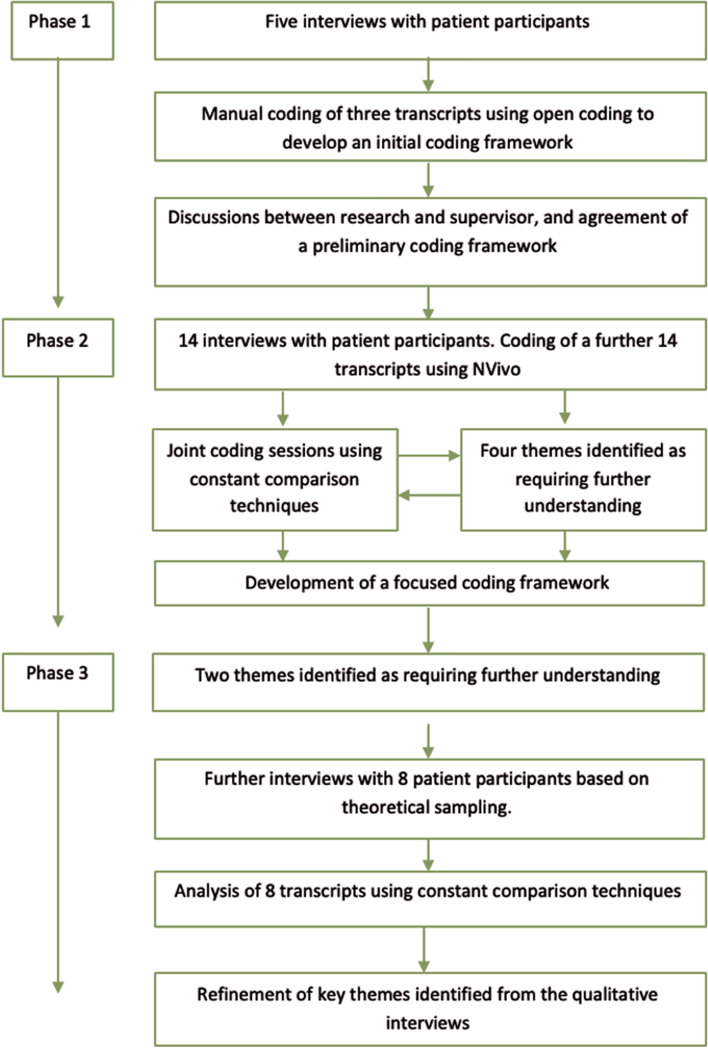
Qualitative interviews with 25 PLWH with objective CI related to HIV disease were conducted with participants attending HIV clinics in the UK. Clinically significant CI was defined based on The European AIDS Clinical Society guidelines, requiring: (i) subjective reporting of cognitive symptoms; (ii) symptoms to be related to HIV (e.g. potentially confounding non-HIV related conditions have been excluded or are being optimally managed) and; (iii) formal neuropsychological assessment confirming CI. Median age was 56 years (range 35-80); 18 participants were men (72%); 11 (44%) were white British and 8 (32%) were Black African; 14 (56%) were men that have sex with men and 10 (40%) were heterosexual; median number of years living with HIV was 17 (range 1-34); and all participants were on combination antiretroviral therapy. Analyses employed techniques from grounded theory, underpinned by an inductive, collaborative team-based approach.
Findings revealed seven interrelated domains comprising HRQoL experiences were identified: Physical function, Cognition, Social connectedness, Physical and mental health, Stigma, Self-concept, and Control and acceptance, and each was defined by specific descriptive components.
This study provides valuable insights on the factors that drive HRQoL in PLWH with CI and contribute to a body of evidence which provides targets for the development of targeted interventions to maintain or improve quality of life.
在艾滋病毒(HIV)感染者(PLWH)老龄化人群中,认知障碍(CI)是一个重要的健康关注点。影响 14-28%的 PLWH,CI 与较低的健康相关生活质量(HRQoL)相关,但尚未评估 CI 对 PLWH 的疾病特异性 HRQoL 因素的影响。
我们旨在为理解 HRQoL 做出贡献,并确定 CI 患者的 HRQoL 领域。
对英国 HIV 诊所就诊的 25 名 HIV 相关客观 CI 的 PLWH 进行了定性访谈。根据欧洲艾滋病临床学会指南,将临床显著的 CI 定义为:(i)主观报告认知症状;(ii)症状与 HIV 相关(例如,已排除或正在最佳管理潜在的非 HIV 相关疾病);(iii)正式的神经心理评估证实 CI。参与者的中位年龄为 56 岁(范围 35-80);18 名参与者为男性(72%);11 名(44%)为白种英国人,8 名(32%)为黑非洲人;14 名(56%)为男男性行为者,10 名(40%)为异性恋者;中位 HIV 感染时间为 17 年(范围 1-34);所有参与者均接受联合抗逆转录病毒治疗。分析采用扎根理论技术,以归纳性、协作团队为基础的方法为基础。
研究结果揭示了七个相互关联的领域,包括 HRQoL 体验:身体功能、认知、社会联系、身体和心理健康、污名、自我概念和控制与接受,每个领域都由特定的描述性组成部分定义。
本研究提供了关于影响 CI 患者 HRQoL 的因素的宝贵见解,并为提供针对目标的干预措施以维持或改善生活质量的证据提供了依据。