Biomedical Research and Innovation Institute of Cadiz (INiBICA), 11009, Cádiz, Spain.
Research Unit, Puerta del Mar University Hospital, 11009, Cádiz, Spain.
Sci Rep. 2022 May 17;12(1):8211. doi: 10.1038/s41598-022-11926-x.
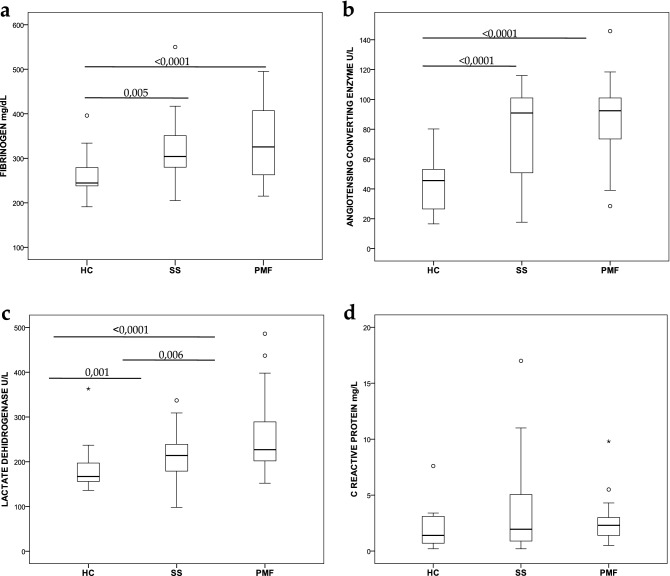
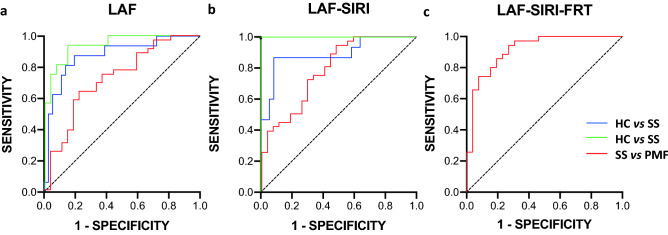
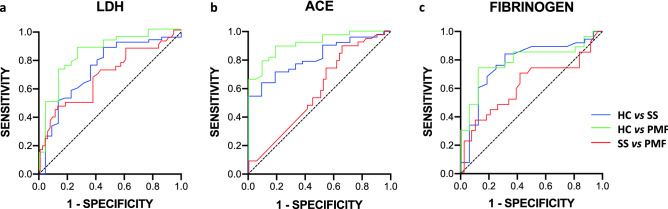
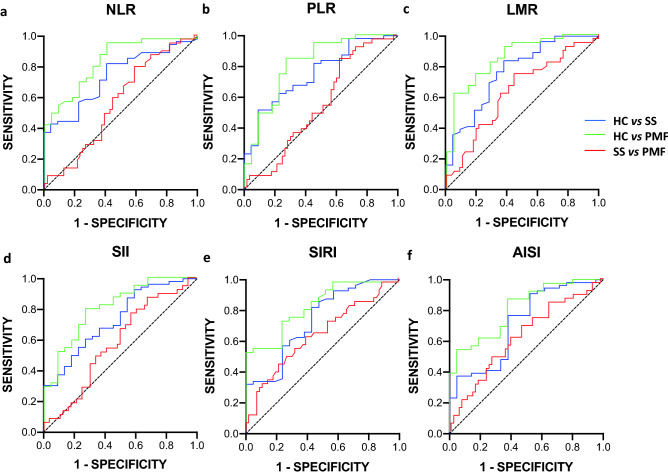
Patients with silicosis caused by occupational exposure to engineered stone (ES) present a rapid progression from simple silicosis (SS) to progressive massive fibrosis (PMF). Patient classification follows international rules based on radiology and high-resolution computed tomography (HRCT), but limited studies, if any, have explored biomarkers from routine clinical tests that can be used as predictors of disease status. Our objective was thus to investigate circulating biomarker levels and systemic inflammatory indices in ES silicosis patients whose exposure to ES dust ended several years ago. Ninety-one adult men, ex-workers in the manufacturing of ES, 53 diagnosed with SS and 38 with PMF, and 22 healthy male volunteers (HC) as controls not exposed to ES dust, were recruited. The following circulating levels of biomarkers like lactate dehydrogenase (LDH), angiotensin-converting-enzyme (ACE), protein C reactive (PCR), rheumatoid factor, alkaline phosphatase and fibrinogen were obtained from clinical reports after being measured from blood samples. As biochemical markers, only LDH (HC = 262 ± 48.1; SS = 315.4 ± 65.4; PMF = 337.6 ± 79.3 U/L), ACE (HC = 43.1 ± 18.4; SS = 78.2 ± 27.2; PMF = 86.1 ± 23.7 U/L) and fibrinogen (HC = 182.3 ± 49.1; SS = 212.2 ± 43.5; PMF = 256 ± 77.3 U/L) levels showed a significant sequential increase, not been observed for the rest of biomarkers, in the HC → SS → PMF direction. Moreover, several systemic inflammation indices neutrophil-to-lymphocyte ratio (NLR), lymphocyte-to-monocyte ratio (LMR), platelet-to-lymphocyte ratio (PLR), systemic inflammation response index (SIRI), systemic immune-inflammation index (SII), aggregate index of systemic inflammation (AISI) derived from whole blood cell counts showed significant differences between the HC, SS and PMF groups. All these biomarkers were analyzed using receiver operating characteristic (ROC) curves, and the results provided moderately high sensitivity and specificity for discriminating between ES silicosis patient groups and healthy controls. Our study reveals that some inflammatory biomarkers, easily available from routine blood analysis, are present in ES silicosis patients even several years after cessation of exposure to ES silica dust and they could help to know the progression of the disease.
接触人造石引起矽肺的患者,其单纯矽肺(SS)迅速进展为进行性大块纤维化(PMF)。患者分类遵循基于放射学和高分辨率计算机断层扫描(HRCT)的国际规则,但如果有任何研究,都只是探索了常规临床检测中的生物标志物,这些标志物可以作为疾病状态的预测因子。因此,我们的目的是研究几年前接触人造石粉尘的 ES 矽肺患者的循环生物标志物水平和全身炎症指数。我们招募了 91 名成年男性,他们曾在人造石制造行业工作,其中 53 人被诊断为 SS,38 人患有 PMF,22 名健康男性志愿者(HC)作为对照,他们没有接触人造石粉尘。从血液样本中测量后,从临床报告中获得了以下循环生物标志物水平,如乳酸脱氢酶(LDH)、血管紧张素转换酶(ACE)、蛋白 C 反应(PCR)、类风湿因子、碱性磷酸酶和纤维蛋白原。作为生化标志物,只有 LDH(HC=262±48.1;SS=315.4±65.4;PMF=337.6±79.3 U/L)、ACE(HC=43.1±18.4;SS=78.2±27.2;PMF=86.1±23.7 U/L)和纤维蛋白原(HC=182.3±49.1;SS=212.2±43.5;PMF=256±77.3 U/L)水平在 HC→SS→PMF 方向上呈显著递增,而其余生物标志物则没有观察到这种情况。此外,来自全血细胞计数的几种全身炎症指数,如中性粒细胞与淋巴细胞比值(NLR)、淋巴细胞与单核细胞比值(LMR)、血小板与淋巴细胞比值(PLR)、全身炎症反应指数(SIRI)、全身免疫炎症指数(SII)和全身炎症综合指数(AISI)在 HC、SS 和 PMF 组之间存在显著差异。所有这些生物标志物都使用接收器操作特征(ROC)曲线进行了分析,结果为区分 ES 矽肺患者组和健康对照组提供了较高的灵敏度和特异性。我们的研究表明,即使在停止接触 ES 硅尘多年后,一些炎症生物标志物仍存在于接触人造石引起矽肺的患者中,这些标志物可能有助于了解疾病的进展。