Kuo Janice R, Fitzpatrick Skye, Ip Jennifer, Uliaszek Amanda
Department of Psychology, Palo Alto University, 1791 Arastradero Rd., Palo Alto, CA, 94304, USA.
Department of Psychology, York University, Toronto, ON, Canada.
Borderline Personal Disord Emot Dysregul. 2022 May 18;9(1):15. doi: 10.1186/s40479-022-00185-x.
Theory and research indicate that validation is associated with reductions in negative emotions, whereas invalidation is associated with escalation of negative emotions. However, it remains unclear whether these effects are consistent across emotions, and/or moderated by an individual's levels of emotion dysregulation. The present study experimentally examines the effects of validation and invalidation across emotions and as moderated by emotion dysregulation.
One hundred twenty-six participants completed a measure of emotion dysregulation, and then listened to a rejection-themed imagery script after which they reported the intensity of several emotions. Participants were then presented with either validating or invalidating feedback about their most intense self-reported emotion, depending on their counterbalancing order. They then repeated the procedure for the other condition. Self-reported negative emotions via continuous rating dial, heart rate (HR), and skin conductance level (SCL) were monitored throughout.
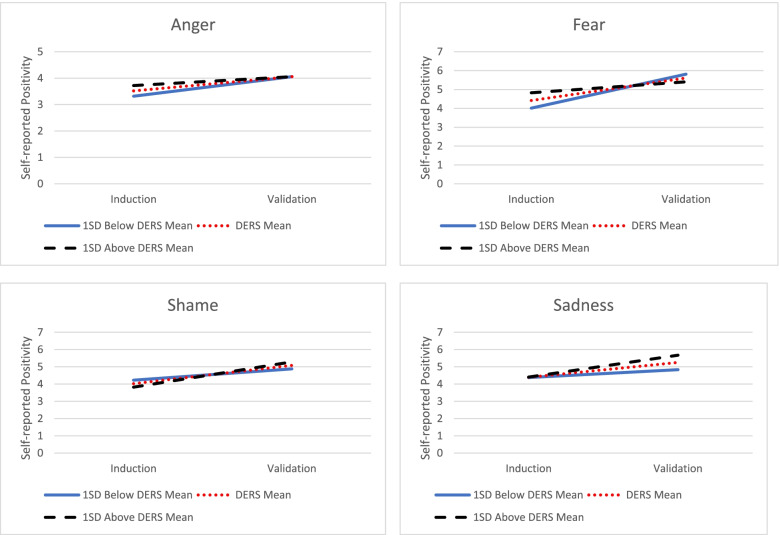
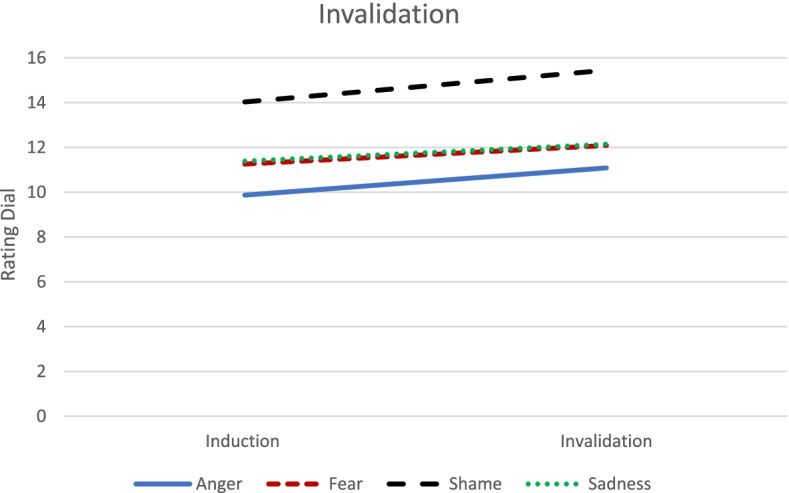
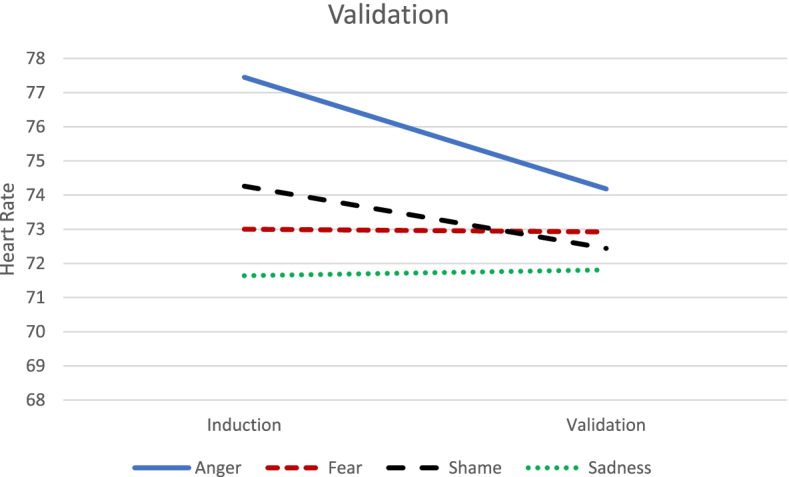
Higher emotion dysregulation was associated with greater increases in self-reported positive emotion when shame or sadness was validated and lesser increases when fear was validated. There were no significant moderating effects of emotion dysregulation in response to invalidation for any emotion on any index.
The effects of validation appear emotion specific and dependent on levels of emotion dysregulation. These findings may help inform more strategic use of validation in psychotherapeutic interventions.
理论与研究表明,被认可与负面情绪的减少相关,而未被认可则与负面情绪的升级相关。然而,这些影响在不同情绪中是否一致,和/或是否受个体情绪失调水平的调节,仍不清楚。本研究通过实验检验了认可和未被认可在不同情绪中的影响,以及情绪失调的调节作用。
126名参与者完成了一项情绪失调测量,然后听了一个以被拒为主题的意象脚本,之后报告了几种情绪的强度。根据平衡顺序,参与者随后会收到关于他们自我报告的最强烈情绪的认可或不认可反馈。然后他们在另一种情况下重复该过程。全程监测通过连续评分量表、心率(HR)和皮肤电导水平(SCL)自我报告的负面情绪。
当羞耻或悲伤被认可时,情绪失调程度越高,自我报告的积极情绪增加幅度越大;当恐惧被认可时,增加幅度较小。对于任何情绪的任何指标,情绪失调对未被认可的反应均无显著调节作用。
认可的效果似乎具有情绪特异性,并取决于情绪失调的程度。这些发现可能有助于为心理治疗干预中更有策略地使用认可提供参考。