Department of Anesthesiology, NHO Kure Medical Center, Kure, Hiroshima, Japan.
PLoS One. 2022 May 18;17(5):e0268568. doi: 10.1371/journal.pone.0268568. eCollection 2022.
To analyze the cause of prolonged recovery from general anesthesia with remimazolam.
We studied 65 patients under general anesthesia with remimazolam. According to time to extubation, patients were divided into short period (SP) (n = 34, < 15 min) and long period (LP) (n = 31, ≥ 15 min) groups. Variables affecting time to extubation such as age, sex, height, body weight, body mass index (BMI), plasma albumin concentration, ASA class, duration of surgery, and total duration of general anesthesia, and total dose of remimazolam were compared between SP and LP groups. At the end of remimazolam infusion and upon extubation, predictive remimazolam concentrations were calculated using pharmacokinetic/pharmacodynamic three compartment modeling.
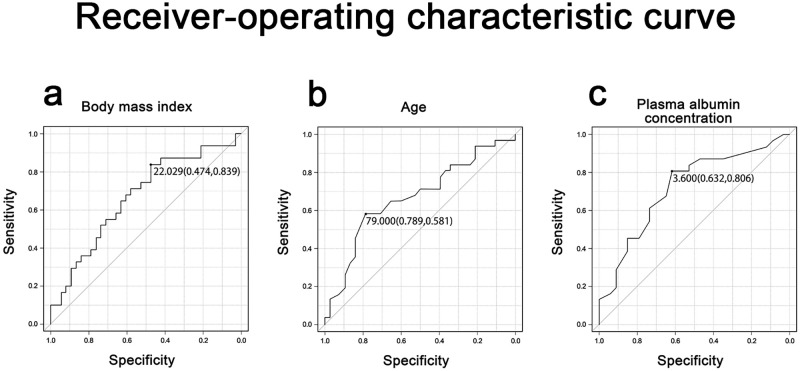
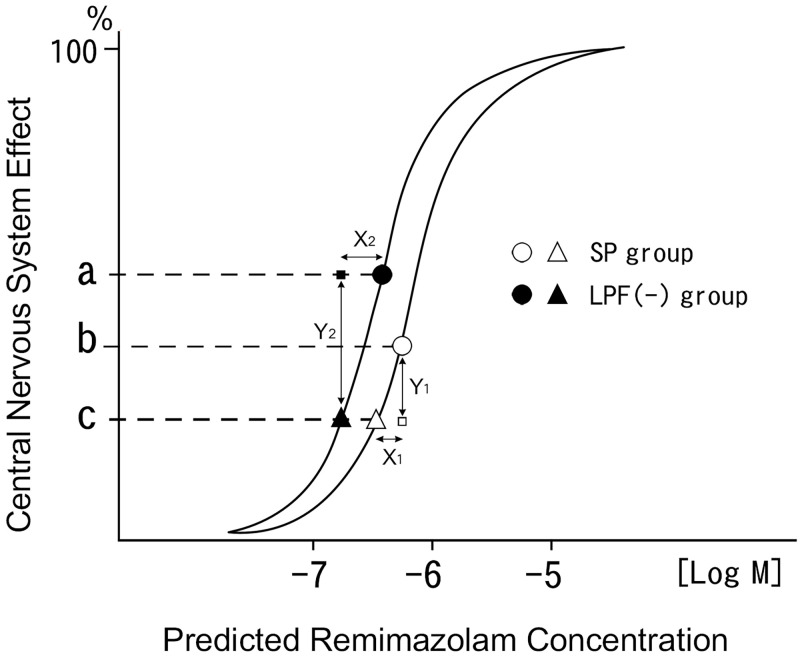
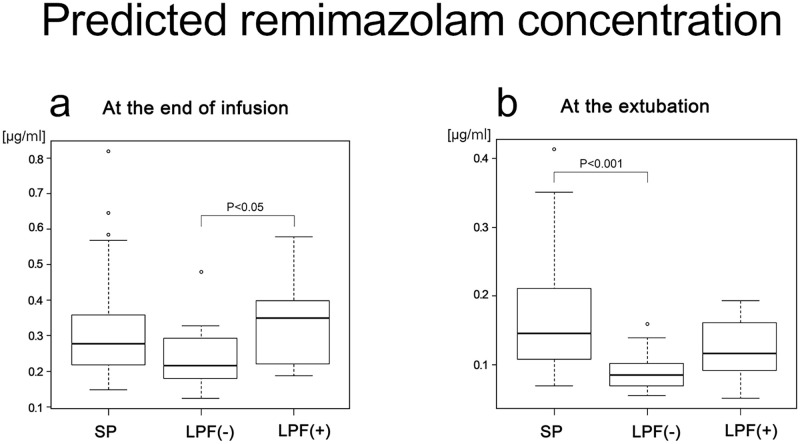
LP group showed significantly higher BMI, older age, and lower plasma albumin concentration compared with those of SP group. Logistic regression analysis showed that the probability of time to extubation of ≥ 15 min was higher in patients with BMI greater than 22.0 kg/m2 (AUC 0.668, 95% CI 0.533‒0.803), ages older than 79.0 years (AUC 0.662, 95% CI 0.526‒0.798), and plasma albumin concentrations lower than 3.60 g/dl (AUC 0.720, 95% CI 0.593‒0.847). LP group showed significantly lower predicted remimazolam concentration than SP group upon extubation despite no difference in concentration between both groups at the end of infusion. Pharmacological analysis estimates that LP group is more sensitive to remimazolam than SP group through amplified responses.
Lower remimazolam doses should be considered for the overweight patients, elderly, and those with lower plasma albumin concentration.
分析以咪达唑仑进行全身麻醉后恢复期延长的原因。
我们研究了 65 例全身麻醉下使用咪达唑仑的患者。根据拔管时间,患者分为短时间组(SP)(n = 34,< 15 分钟)和长时间组(LP)(n = 31,≥ 15 分钟)。比较 SP 组和 LP 组的影响拔管时间的变量,如年龄、性别、身高、体重、体重指数(BMI)、血浆白蛋白浓度、ASA 分级、手术时间、全身麻醉总时间和咪达唑仑总剂量。在咪达唑仑输注结束和拔管时,使用药代动力学/药效学三房室模型计算预测的咪达唑仑浓度。
LP 组的 BMI 较高、年龄较大、血浆白蛋白浓度较低,与 SP 组相比差异有统计学意义。Logistic 回归分析显示,BMI 大于 22.0 kg/m2(AUC 0.668,95%CI 0.533-0.803)、年龄大于 79.0 岁(AUC 0.662,95%CI 0.526-0.798)和血浆白蛋白浓度低于 3.60 g/dl(AUC 0.720,95%CI 0.593-0.847)的患者拔管时间大于 15 分钟的概率更高。尽管两组在输注结束时的浓度无差异,但 LP 组在拔管时的预测咪达唑仑浓度明显低于 SP 组。药物分析估计 LP 组对咪达唑仑的敏感性高于 SP 组,通过放大反应。
超重患者、老年人和血浆白蛋白浓度较低的患者应考虑使用较低剂量的咪达唑仑。