Department of Cell Biology, Cancer Institute, Japanese Foundation for Cancer Research (JFCR), Tokyo, Japan.
Department of Surgery, Graduate School of Medicine, Kyoto University, Kyoto, Japan.
Cancer Sci. 2022 Aug;113(8):2693-2703. doi: 10.1111/cas.15396. Epub 2022 Jun 7.
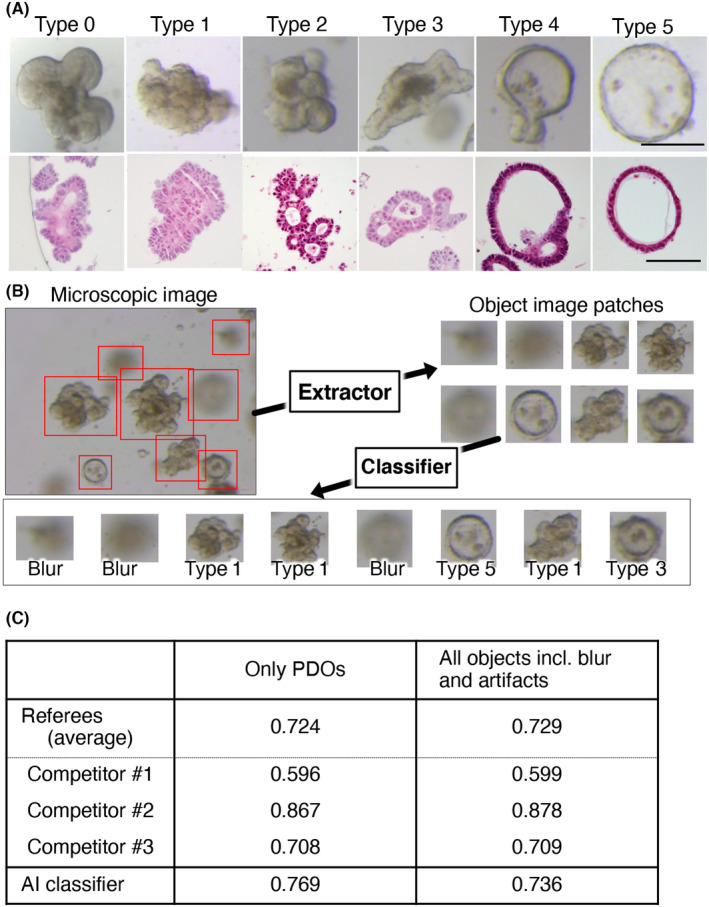
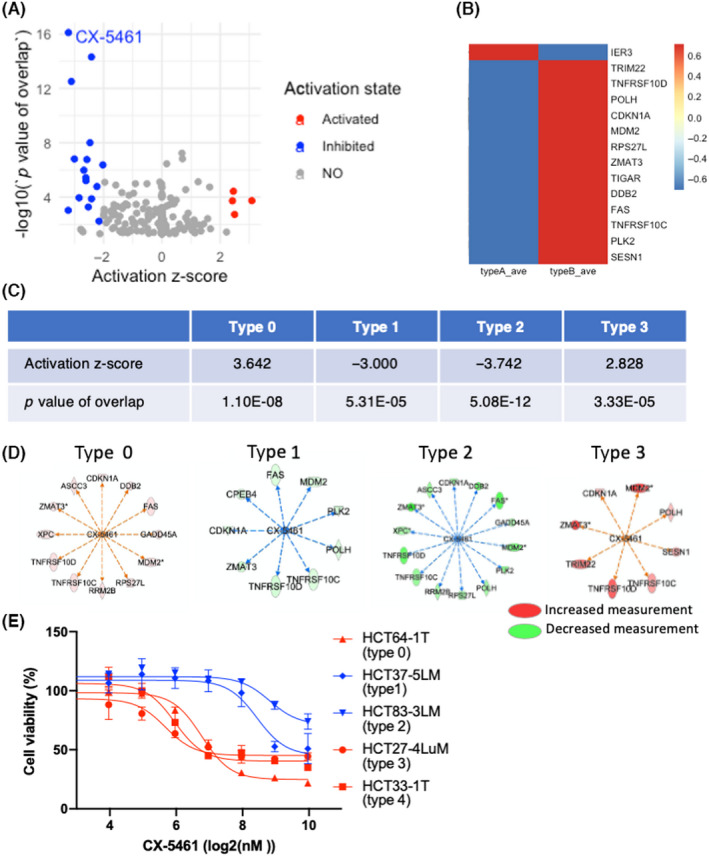
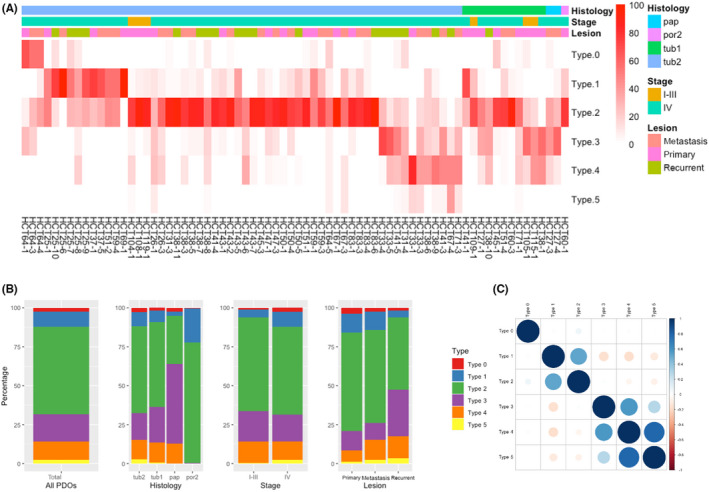
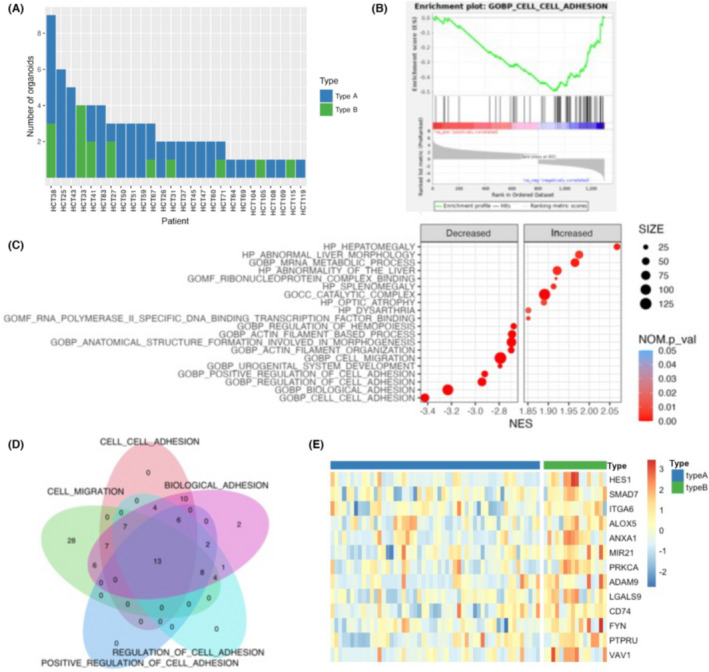
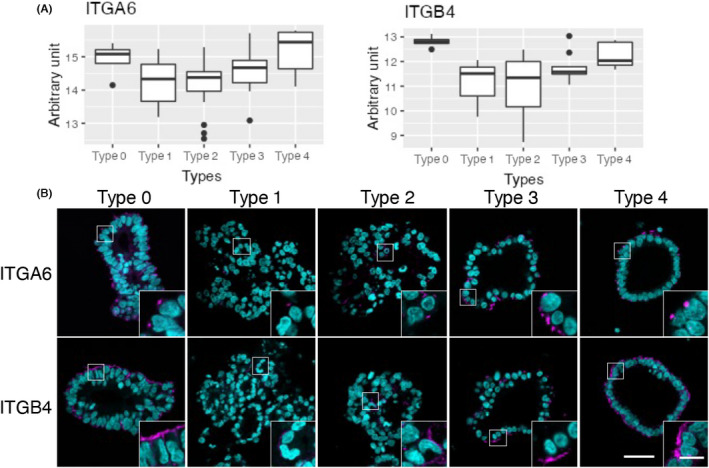
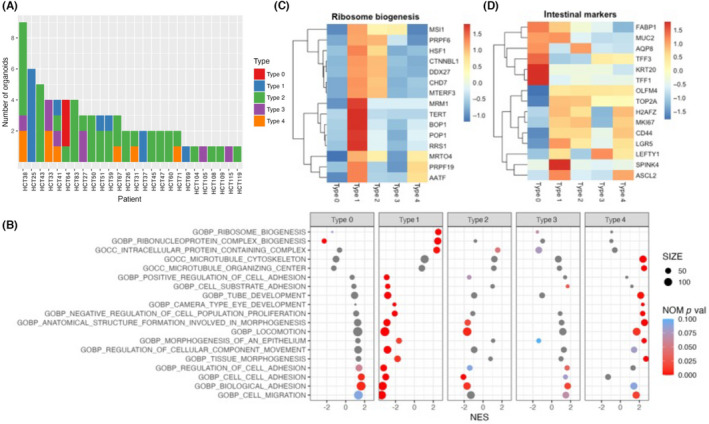
Colorectal cancer (CRC) is a heterogenous disease, and patients have differences in therapeutic response. However, the mechanisms underlying interpatient heterogeneity in the response to chemotherapeutic agents remain to be elucidated, and molecular tumor characteristics are required to select patients for specific therapies. Patient-derived organoids (PDOs) established from CRCs recapitulate various biological characteristics of tumor tissues, including cellular heterogeneity and the response to chemotherapy. Patient-derived organoids established from CRCs show various morphologies, but there are no criteria for defining these morphologies, which hampers the analysis of their biological significance. Here, we developed an artificial intelligence (AI)-based classifier to categorize PDOs based on microscopic images according to their similarity in appearance and classified tubular adenocarcinoma-derived PDOs into six types. Transcriptome analysis identified differential expression of genes related to cell adhesion in some of the morphological types. Genes involved in ribosome biogenesis were also differentially expressed and were most highly expressed in morphological types showing CRC stem cell properties. We identified an RNA polymerase I inhibitor, CX-5641, to be an upstream regulator of these type-specific gene sets. Notably, PDO types with increased expression of genes involved in ribosome biogenesis were resistant to CX-5461 treatment. Taken together, these results uncover the biological significance of the morphology of PDOs and provide novel indicators by which to categorize CRCs. Therefore, the AI-based classifier is a useful tool to support PDO-based cancer research.
结直肠癌(CRC)是一种异质性疾病,患者对治疗的反应存在差异。然而,化疗药物反应中个体间异质性的潜在机制仍需阐明,需要分子肿瘤特征来选择特定治疗的患者。从 CRC 建立的患者来源的类器官(PDO)重现了肿瘤组织的各种生物学特征,包括细胞异质性和对化疗的反应。从 CRC 建立的患者来源的类器官表现出各种形态,但目前尚无定义这些形态的标准,这阻碍了对其生物学意义的分析。在这里,我们开发了一种基于人工智能(AI)的分类器,根据外观相似性对基于显微镜图像的 PDO 进行分类,并将管状腺癌衍生的 PDO 分为六种类型。转录组分析鉴定出一些形态类型中与细胞黏附相关的基因表达差异。核糖体生物发生相关基因也表现出差异表达,并且在表现出 CRC 干细胞特性的形态类型中表达水平最高。我们确定了一种 RNA 聚合酶 I 抑制剂 CX-5641,它是这些特定形态基因集的上游调节剂。值得注意的是,核糖体生物发生相关基因表达增加的 PDO 类型对 CX-5461 治疗具有抗性。总之,这些结果揭示了 PDO 形态的生物学意义,并提供了新的指标来对 CRC 进行分类。因此,基于 AI 的分类器是支持基于 PDO 的癌症研究的有用工具。