School of Biology, Institute of Science, Suranaree University of Technology, Nakhon Ratchasima, Thailand.
Biological and Environmental Sciences, University of Stirling, Stirling, UK.
Commun Biol. 2022 May 19;5(1):448. doi: 10.1038/s42003-022-03374-0.
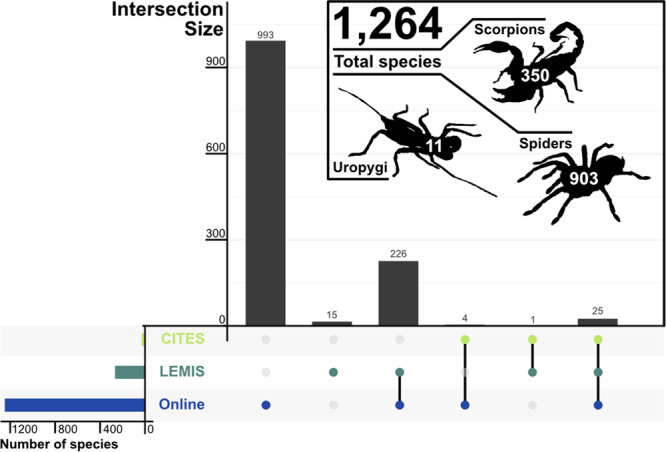
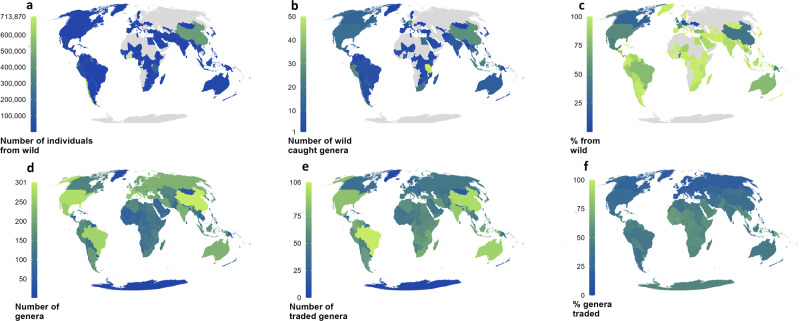
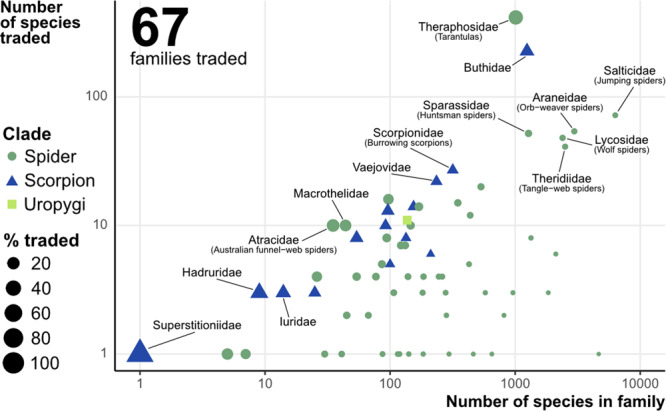
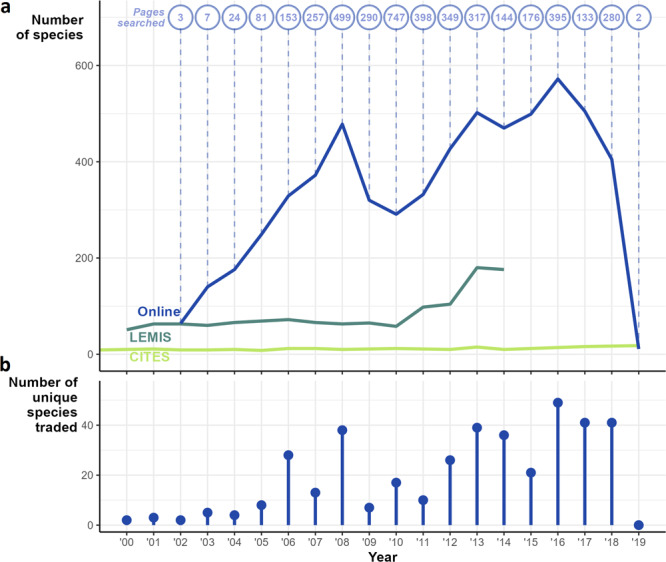
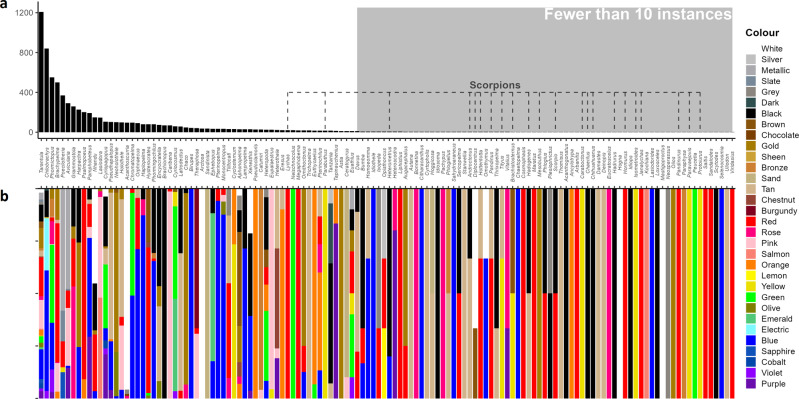
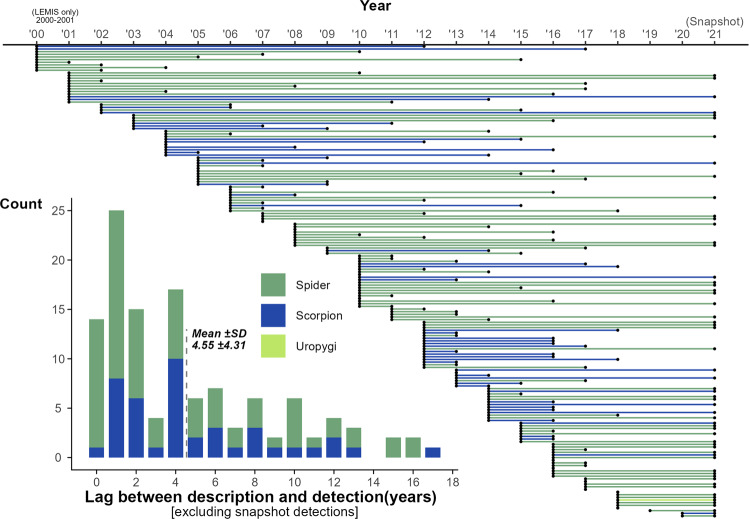
Wildlife trade is a major driver of biodiversity loss, yet whilst the impacts of trade in some species are relatively well-known, some taxa, such as many invertebrates are often overlooked. Here we explore global patterns of trade in the arachnids, and detected 1,264 species from 66 families and 371 genera in trade. Trade in these groups exceeds millions of individuals, with 67% coming directly from the wild, and up to 99% of individuals in some genera. For popular taxa, such as tarantulas up to 50% are in trade, including 25% of species described since 2000. CITES only covers 30 (2%) of the species potentially traded. We mapped the percentage and number of species native to each country in trade. To enable sustainable trade, better data on species distributions and better conservation status assessments are needed. The disparity between trade data sources highlights the need to expand monitoring if impacts on wild populations are to be accurately gauged and the impacts of trade minimised.
野生动物贸易是生物多样性丧失的主要驱动因素,但尽管某些物种的贸易影响相对较为明显,而某些类群(如许多无脊椎动物)往往被忽视。在这里,我们探讨了蛛形纲动物的全球贸易模式,并在贸易中发现了 66 科 371 属的 1264 个物种。这些类群的贸易数量超过了数百万只个体,其中 67%直接来自野外,在某些属中甚至高达 99%。对于受欢迎的类群,如狼蛛,有多达 50%的个体在贸易中,其中包括自 2000 年以来描述的 25%的物种。CITES 仅涵盖了潜在贸易物种的 30%(2%)。我们绘制了每个国家贸易中原产物种的百分比和数量。为了实现可持续贸易,需要更好的数据来了解物种的分布和更好的保护状况评估。贸易数据来源之间的差异突出表明,如果要准确衡量对野生种群的影响并尽量减少贸易的影响,就需要扩大监测。