Kazemian Pardis, Yu Si-Yue, Thomson Sarah B, Birkenshaw Alexandra, Leavitt Blair R, Ross Colin J D
Department of Medical Genetics, Faculty of Medicine, University of British Columbia, 317-2194 Health Sciences Mall, Vancouver, British Columbia V6T 1Z3, Canada.
Centre for Molecular Medicine and Therapeutics, BC Children's Hospital Research Institute, 938 West 28th Avenue, Vancouver, British Columbia V5Z 4H4, Canada.
Mol Pharm. 2022 Jun 6;19(6):1669-1686. doi: 10.1021/acs.molpharmaceut.1c00916. Epub 2022 May 20.
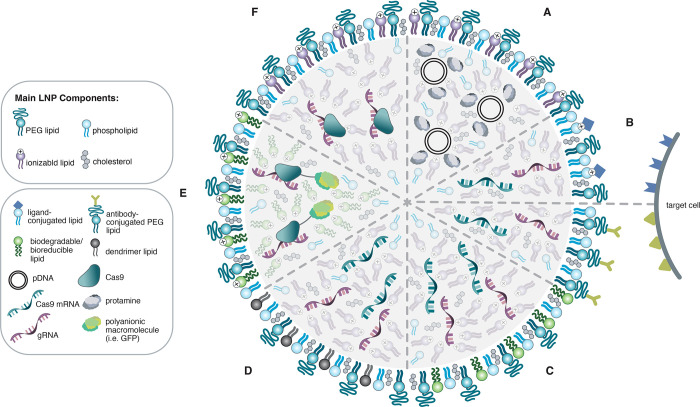
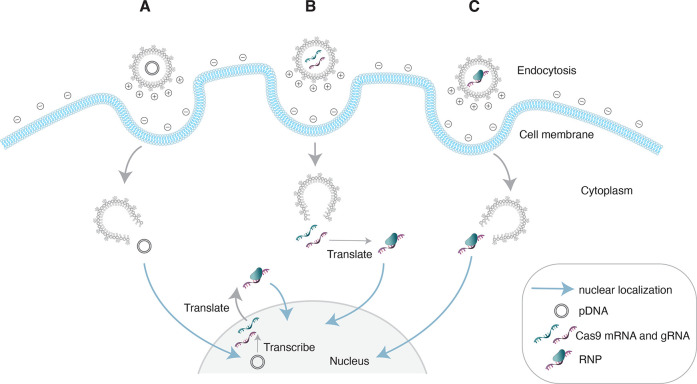
Gene editing mediated by CRISPR/Cas9 systems is due to become a beneficial therapeutic option for treating genetic diseases and some cancers. However, there are challenges in delivering CRISPR components which necessitate sophisticated delivery systems for safe and effective genome editing. Lipid nanoparticles (LNPs) have become an attractive nonviral delivery platform for CRISPR-mediated genome editing due to their low immunogenicity and application flexibility. In this review, we provide a background of CRISPR-mediated gene therapy, as well as LNPs and their applicable characteristics for delivering CRISPR components. We then highlight the challenges of CRISPR delivery, which have driven the significant development of new, safe, and optimized LNP formulations in the past decade. Finally, we discuss considerations for using LNPs to deliver CRISPR and future perspectives on clinical translation of LNP-CRISPR gene editing.
由CRISPR/Cas9系统介导的基因编辑有望成为治疗遗传疾病和某些癌症的有益治疗选择。然而,递送CRISPR组件存在挑战,这需要复杂的递送系统来实现安全有效的基因组编辑。脂质纳米颗粒(LNPs)因其低免疫原性和应用灵活性,已成为用于CRISPR介导的基因组编辑的有吸引力的非病毒递送平台。在这篇综述中,我们提供了CRISPR介导的基因治疗的背景,以及LNPs及其递送CRISPR组件的适用特性。然后,我们强调了CRISPR递送的挑战,这些挑战推动了过去十年新型、安全和优化的LNP制剂的显著发展。最后,我们讨论了使用LNPs递送CRISPR的注意事项以及LNP-CRISPR基因编辑临床转化的未来前景。