• 文献检索
  • 文档翻译
  • 深度研究
  • 学术资讯
  • Suppr Zotero 插件Zotero 插件
  • 邀请有礼
  • 套餐&价格
  • 历史记录
应用&插件
Suppr Zotero 插件Zotero 插件浏览器插件Mac 客户端Windows 客户端微信小程序
定价
高级版会员购买积分包购买API积分包
服务
文献检索文档翻译深度研究API 文档MCP 服务
关于我们
关于 Suppr公司介绍联系我们用户协议隐私条款
关注我们

Suppr 超能文献

核心技术专利:CN118964589B侵权必究
粤ICP备2023148730 号-1Suppr @ 2026

文献检索

告别复杂PubMed语法,用中文像聊天一样搜索,搜遍4000万医学文献。AI智能推荐,让科研检索更轻松。

立即免费搜索

文件翻译

保留排版,准确专业,支持PDF/Word/PPT等文件格式,支持 12+语言互译。

免费翻译文档

深度研究

AI帮你快速写综述,25分钟生成高质量综述,智能提取关键信息,辅助科研写作。

立即免费体验

使用世界卫生组织指标评估住院患者的抗生素处方模式:一项横断面研究。

Evaluation of antibiotic prescribing patterns among inpatients using World Health Organization indicators: A cross-sectional study.

作者信息

Tadesse Tesfaye Yimer, Molla Mulugeta, Yimer Yohannis Shumet, Tarekegn Benyas Shishigie, Kefale Belayneh

机构信息

Pharmacology and Toxicology Unit, Department of Pharmacy, College of Health Sciences, Debre Tabor University, Debre Tabor, Ethiopia.

Pharmaceutics and Social Pharmacy Unit, Department of Pharmacy, College of Health Sciences, Debre Tabor University, Debre Tabor, Ethiopia.

出版信息

SAGE Open Med. 2022 May 14;10:20503121221096608. doi: 10.1177/20503121221096608. eCollection 2022.

DOI:10.1177/20503121221096608
PMID:35600711
原文链接:https://pmc.ncbi.nlm.nih.gov/articles/PMC9118891/
Abstract

OBJECTIVE

Even though antibiotic resistance is one of the most serious threats to global public health, it is becoming more common due to inappropriate antibiotic prescribing patterns. Thus, the purpose of this study is to assess antibiotic prescribing patterns among inpatients at an Ethiopian comprehensive specialized hospital.

METHODS

An institutional-based cross-sectional study was used. During the study period, data were collected from the charts of admitted patients in selected wards of Debre Tabor comprehensive specialized hospital. The World Health Organization's developed questionnaire and conventional antibiotic prescribing indicators were used to assess rational drug usage, with an emphasis on antibiotic prescribing trends. The data were analyzed using SPSS 25.0 statistical software.

RESULTS

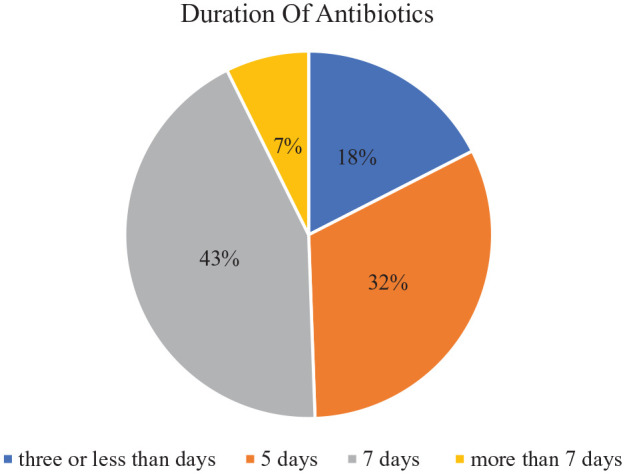
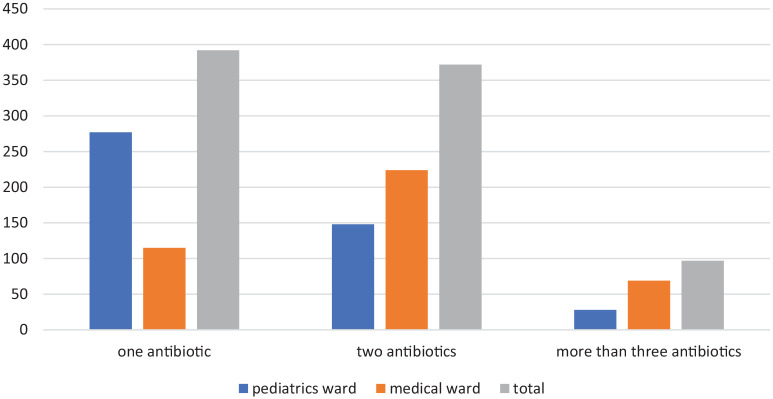
For 861 patients admitted to medical and pediatric wards, a total of 1444 antibiotics were prescribed. Overall, 60.6% of inpatients were prescribed at least one antibiotic, with an average (mean ± SD) number of antibiotics prescribed per patient of 1.7 ± 1.6. During their hospital stay, patients were given antibiotics for an average (mean ± SD) of 6.4 ± 2.7 days. Furthermore, 83.3% of antibiotics were prescribed for therapeutic purposes, whereas 100% were provided for empiric purposes. Ceftriaxone was the most commonly administered antibiotic in the study settings (49.2%). During the study period, Debre Tabor comprehensive specialized hospital had access to 67.5% of key antibiotics.

CONCLUSION

The antibiotic prescribing pattern in our study diverged from the World Health Organization-recommended guidelines. Furthermore, all antibiotics were given without a culture or sensitivity test in every case. Setting up an antibiotic stewardship program, introducing antibiotic use based on culture and sensitivity tests, and adopting institutional guidelines could all help to address this issue.

摘要

目的

尽管抗生素耐药性是对全球公共卫生最严重的威胁之一,但由于不恰当的抗生素处方模式,其正变得越来越普遍。因此,本研究的目的是评估埃塞俄比亚一家综合专科医院住院患者的抗生素处方模式。

方法

采用基于机构的横断面研究。在研究期间,从德布雷塔博尔综合专科医院选定病房的住院患者病历中收集数据。使用世界卫生组织制定的问卷和传统的抗生素处方指标来评估合理用药情况,重点是抗生素处方趋势。使用SPSS 25.0统计软件对数据进行分析。

结果

对于入住内科和儿科病房的861名患者,共开出了1444剂抗生素。总体而言,60.6%的住院患者至少开具了一种抗生素,每位患者开具的抗生素平均(均值±标准差)数量为1.7±1.6剂。在住院期间,患者接受抗生素治疗的平均(均值±标准差)天数为6.4±2.7天。此外,83.3%的抗生素是用于治疗目的,而100%是用于经验性治疗。头孢曲松是研究环境中最常用的抗生素(49.2%)。在研究期间,德布雷塔博尔综合专科医院能够获取67.5%的关键抗生素。

结论

我们研究中的抗生素处方模式与世界卫生组织推荐的指南不同。此外,所有病例在未进行培养或药敏试验的情况下就使用了抗生素。建立抗生素管理计划、引入基于培养和药敏试验的抗生素使用方法以及采用机构指南都有助于解决这一问题。
https://cdn.ncbi.nlm.nih.gov/pmc/blobs/9371/9118891/c5fb97a5f92c/10.1177_20503121221096608-fig2.jpg
https://cdn.ncbi.nlm.nih.gov/pmc/blobs/9371/9118891/d036394483c3/10.1177_20503121221096608-fig1.jpg
https://cdn.ncbi.nlm.nih.gov/pmc/blobs/9371/9118891/c5fb97a5f92c/10.1177_20503121221096608-fig2.jpg
https://cdn.ncbi.nlm.nih.gov/pmc/blobs/9371/9118891/d036394483c3/10.1177_20503121221096608-fig1.jpg
https://cdn.ncbi.nlm.nih.gov/pmc/blobs/9371/9118891/c5fb97a5f92c/10.1177_20503121221096608-fig2.jpg

相似文献

1
Evaluation of antibiotic prescribing patterns among inpatients using World Health Organization indicators: A cross-sectional study.使用世界卫生组织指标评估住院患者的抗生素处方模式:一项横断面研究。
SAGE Open Med. 2022 May 14;10:20503121221096608. doi: 10.1177/20503121221096608. eCollection 2022.
2
Prescribing Pattern of Antibiotics Using WHO Prescribing Indicators Among Inpatients in Ethiopia: A Need for Antibiotic Stewardship Program.埃塞俄比亚住院患者中使用世界卫生组织处方指标的抗生素处方模式:对抗生素管理计划的需求。
Infect Drug Resist. 2020 Aug 11;13:2783-2794. doi: 10.2147/IDR.S262104. eCollection 2020.
3
Assessment of Antibiotic Prescribing Patterns at Outpatient Pharmacy Using World Health Organization Prescribing Indicators.使用世界卫生组织处方指标评估门诊药房抗生素处方模式
J Prim Care Community Health. 2019 Jan-Dec;10:2150132719886942. doi: 10.1177/2150132719886942.
4
Antibiotic Prescription Pattern, Appropriateness, and Associated Factors in Patients Admitted to Pediatric Wards of Tibebe Ghion Specialized Hospital, Bahir Dar, North West Ethiopia.埃塞俄比亚西北部巴赫达尔市蒂贝贝·吉翁专科医院儿科病房收治患者的抗生素处方模式、合理性及相关因素
Infect Drug Resist. 2022 Nov 15;15:6659-6669. doi: 10.2147/IDR.S380897. eCollection 2022.
5
Evaluation of prescription completeness, rational drug-use patterns using WHO prescribing, patient-care and facility indicators in Debre Tabor Comprehensive Specialized Hospital, Ethiopia: A cross-sectional study.使用世界卫生组织的处方、患者护理和机构指标评估埃塞俄比亚德布雷塔博尔综合专科医院的处方完整性和合理用药模式:一项横断面研究。
SAGE Open Med. 2022 Sep 6;10:20503121221122422. doi: 10.1177/20503121221122422. eCollection 2022.
6
Prescribing Pattern and Associated Factors in Community Pharmacies: A Cross-Sectional Study Using AWaRe Classification and WHO Antibiotic Prescribing Indicators in Dire Dawa, Ethiopia.埃塞俄比亚德雷达瓦社区药房的处方模式及相关因素:一项使用AWaRe分类和世界卫生组织抗生素处方指标的横断面研究
Drugs Real World Outcomes. 2023 Sep;10(3):459-469. doi: 10.1007/s40801-023-00367-1. Epub 2023 Jun 10.
7
Evaluation of Prescribing Patterns of Antibiotics Using Selected Indicators for Antimicrobial Use in Hospitals and the Access, Watch, Reserve (AWaRe) Classification by the World Health Organization.利用医院抗菌药物使用选定指标及世界卫生组织的准入、观察、储备(AWaRe)分类评估抗生素处方模式。
Turk J Pharm Sci. 2021 Jun 18;18(3):282-288. doi: 10.4274/tjps.galenos.2020.11456.
8
Evaluation of antibiotic utilization pattern in the treatment of acute diarrheal diseases at Debre Tabor comprehensive specialized hospital, Debre Tabor, Ethiopia: A retrospective cross-sectional study.埃塞俄比亚德布雷塔博尔综合专科医院急性腹泻病治疗中抗生素使用模式的评估:一项回顾性横断面研究。
Heliyon. 2023 Jul 7;9(7):e18049. doi: 10.1016/j.heliyon.2023.e18049. eCollection 2023 Jul.
9
Appropriateness and Pattern of Antibiotic Prescription in Pediatric Patients at Adigart General Hospital, Tigray, Ethiopia.埃塞俄比亚提格雷阿达格特综合医院儿科患者抗生素处方的适宜性和模式。
Biomed Res Int. 2021 Apr 10;2021:6640892. doi: 10.1155/2021/6640892. eCollection 2021.
10
Prescribing practices using WHO prescribing indicators and factors associated with antibiotic prescribing in six community pharmacies in Asmara, Eritrea: a cross-sectional study.在厄立特里亚阿斯马拉的六家社区药店中,使用世界卫生组织处方指标和与抗生素处方相关的因素进行处方实践:一项横断面研究。
Antimicrob Resist Infect Control. 2019 Oct 22;8:163. doi: 10.1186/s13756-019-0620-5. eCollection 2019.

引用本文的文献

1
Appropriateness of Antibiotic Prescription Among Children Under 5 Years: A Cross-Sectional Study in a Ghanaian Regional Hospital.5岁以下儿童抗生素处方的合理性:加纳一家地区医院的横断面研究
Health Sci Rep. 2025 Apr 29;8(5):e70761. doi: 10.1002/hsr2.70761. eCollection 2025 May.
2
Point Prevalence Survey of Antibiotic Use in Level 1 hospitals in Zambia: Future Prospects for Antimicrobial Stewardship Programs.赞比亚一级医院抗生素使用情况的现患率调查:抗菌药物管理计划的未来前景
Infect Drug Resist. 2025 Feb 15;18:887-902. doi: 10.2147/IDR.S509522. eCollection 2025.
3
Appropriateness of antibiotic prescribing among patients treated for dental diseases in Mekelle city, Northern Ethiopia: a cross sectional study.

本文引用的文献

1
Assessment of drug use pattern using WHO core drug use indicators in selected general hospitals: a cross-sectional study in Tigray region, Ethiopia.使用世界卫生组织核心药物使用指标评估选定综合医院的药物使用模式:埃塞俄比亚提格雷地区的一项横断面研究。
BMJ Open. 2021 Oct 27;11(10):e045805. doi: 10.1136/bmjopen-2020-045805.
2
Evaluation of Prescribing Patterns of Antibiotics Using Selected Indicators for Antimicrobial Use in Hospitals and the Access, Watch, Reserve (AWaRe) Classification by the World Health Organization.利用医院抗菌药物使用选定指标及世界卫生组织的准入、观察、储备(AWaRe)分类评估抗生素处方模式。
Turk J Pharm Sci. 2021 Jun 18;18(3):282-288. doi: 10.4274/tjps.galenos.2020.11456.
3
埃塞俄比亚北部梅开勒市牙科疾病治疗患者抗生素使用适宜性的横断面研究。
J Health Popul Nutr. 2024 Sep 28;43(1):153. doi: 10.1186/s41043-024-00636-x.
4
Hospital prescribing patterns of antibiotics in Zambia using the WHO prescribing indicators post-COVID-19 pandemic: findings and implications.后新冠疫情时代赞比亚使用世界卫生组织处方指标的医院抗生素处方模式:研究结果与启示
JAC Antimicrob Resist. 2024 Feb 22;6(1):dlae023. doi: 10.1093/jacamr/dlae023. eCollection 2024 Feb.
5
Adherence to WHO guidelines on severe pneumonia management in children and its impact on outcome: an observational study at Jinka General Hospital in Ethiopia.遵循世卫组织关于儿童严重肺炎管理的指南及其对结局的影响:在埃塞俄比亚的延卡总医院进行的一项观察性研究。
Front Public Health. 2023 Jul 27;11:1189684. doi: 10.3389/fpubh.2023.1189684. eCollection 2023.
6
Diagnosis and Management of Adult Tuberculosis Patients Admitted to a Rural Hospital in Ethiopia.埃塞俄比亚一家乡村医院收治的成年结核病患者的诊断与管理
Cureus. 2023 Feb 27;15(2):e35519. doi: 10.7759/cureus.35519. eCollection 2023 Feb.
What out-of-hours antibiotic prescribing practices are contributing to antibiotic resistance: a literature review.
非工作时间抗生素处方行为如何导致抗生素耐药性:一项文献综述
Br Paramed J. 2020 Mar 1;4(4):25-33. doi: 10.29045/14784726.2020.12.4.4.25.
4
Prescribing Pattern of Antibiotics Using WHO Prescribing Indicators Among Inpatients in Ethiopia: A Need for Antibiotic Stewardship Program.埃塞俄比亚住院患者中使用世界卫生组织处方指标的抗生素处方模式:对抗生素管理计划的需求。
Infect Drug Resist. 2020 Aug 11;13:2783-2794. doi: 10.2147/IDR.S262104. eCollection 2020.
5
Assessment of Drug Prescription Pattern in Mekelle General Hospital, Mekelle, Ethiopia, Using World Health Organization Prescribing Indicators.评估埃塞俄比亚梅开勒总医院的药物处方模式:使用世界卫生组织处方指标。
Biomed Res Int. 2020 Jun 27;2020:3809157. doi: 10.1155/2020/3809157. eCollection 2020.
6
Assessment of Antibiotic Prescribing Patterns at Outpatient Pharmacy Using World Health Organization Prescribing Indicators.使用世界卫生组织处方指标评估门诊药房抗生素处方模式
J Prim Care Community Health. 2019 Jan-Dec;10:2150132719886942. doi: 10.1177/2150132719886942.
7
Critical Importance of a One Health Approach to Antimicrobial Resistance.“同一健康”方法对抗菌素耐药性的至关重要性。
Ecohealth. 2019 Sep;16(3):404-409. doi: 10.1007/s10393-019-01415-5. Epub 2019 Jun 28.
8
Assessment of inpatient antibiotic use in Halibet National Referral Hospital using WHO indicators: a retrospective study.使用世界卫生组织指标评估哈利贝特国家转诊医院住院患者抗生素使用情况:一项回顾性研究。
BMC Res Notes. 2018 Dec 18;11(1):904. doi: 10.1186/s13104-018-4000-7.
9
Antibiotic prescribing practices in secondary and tertiary hospitals in Shaanxi province, western China, 2013-2015.2013-2015 年中国西部陕西省二级和三级医院的抗生素处方实践。
PLoS One. 2018 Dec 12;13(12):e0207229. doi: 10.1371/journal.pone.0207229. eCollection 2018.
10
Investigation of prescribing behavior at outpatient settings of governmental hospitals in eastern Ethiopia: an overall evaluation beyond World Health Organization core prescribing indicators.埃塞俄比亚东部政府医院门诊处方行为调查:超越世界卫生组织核心处方指标的全面评估
J Pharm Policy Pract. 2018 Oct 15;11:26. doi: 10.1186/s40545-018-0152-z. eCollection 2018.