Liu Sen, Zhang Jinxin, Niu Ben, Liu Ling, He Xiaojun
School of Logistics, Yunnan University of Finance and Economics, Kunming 650221, China.
College of Management, Shenzhen University, Shenzhen 518060, China.
Comput Ind Eng. 2022 Jul;169:108228. doi: 10.1016/j.cie.2022.108228. Epub 2022 May 18.
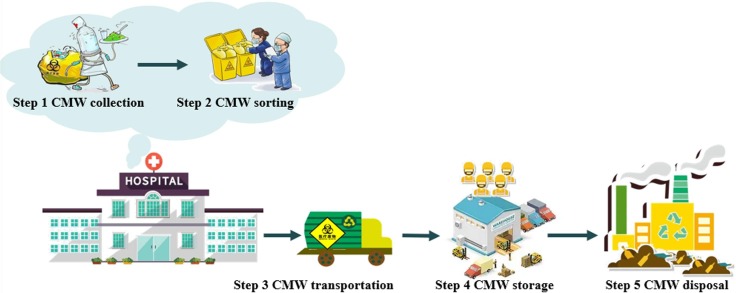
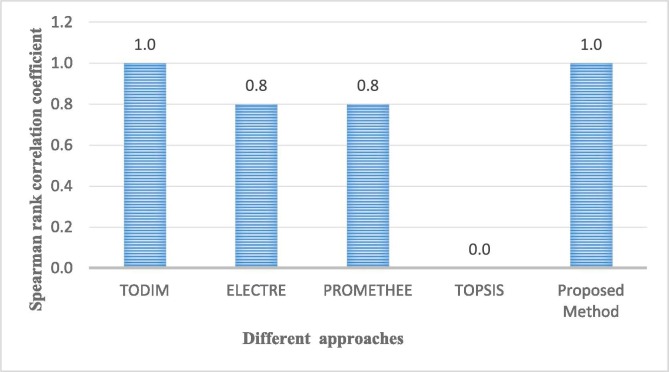
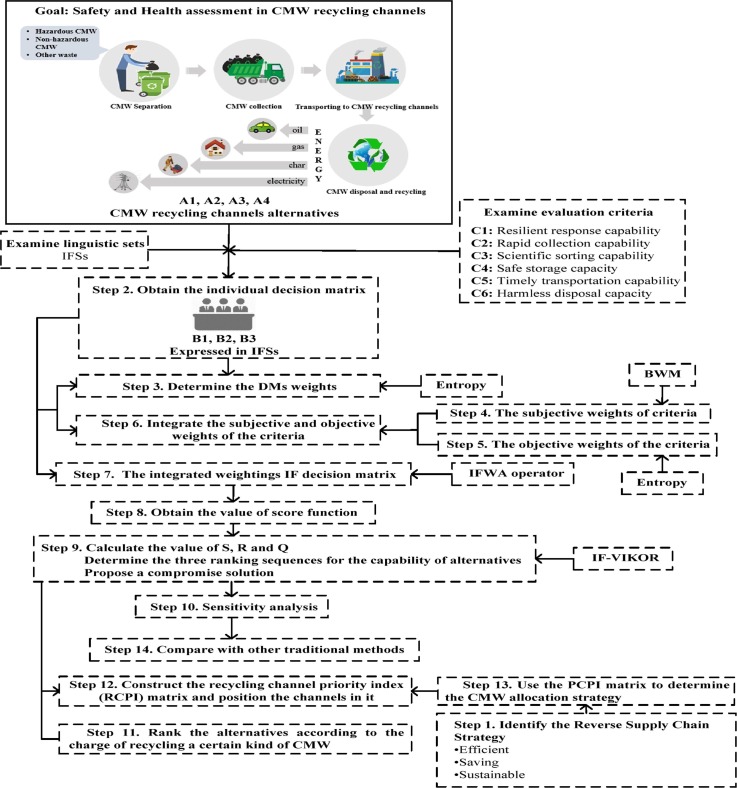
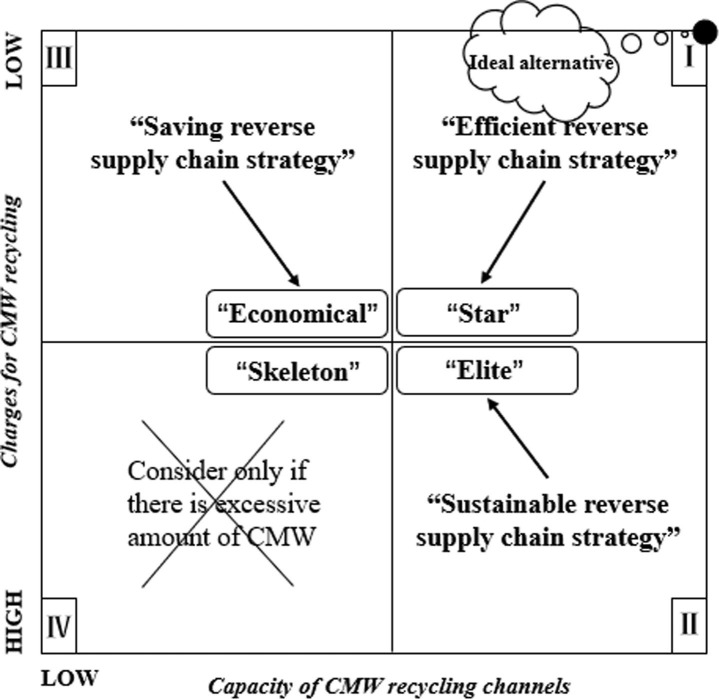
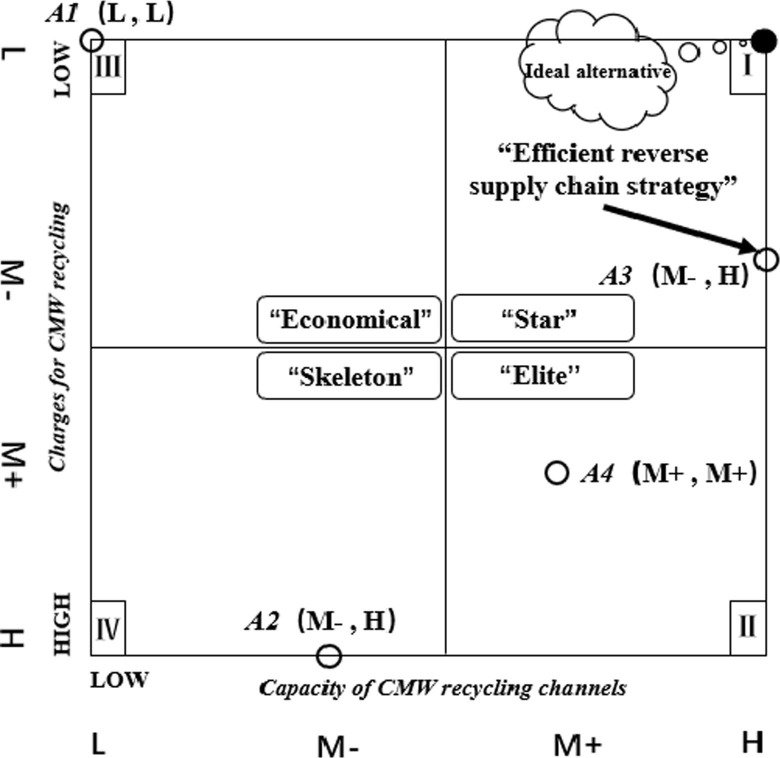
The COVID-19 pandemic has led to exponential growth in COVID-19 medical waste (CMW) generation worldwide. This tremendous growth in CMW is a major transmission medium for COVID-19 virus and thus brings serious challenges to medical waste (MW) management. Designing an efficient and reliable CMW reverse supply chain in this situation can help to prevent epidemic spread. Nowadays, the assessment of CMW recycling channels has become a challenging mission for health-care institutions, especially in developing countries. It can be seen as a complex multi-criteria group decision-making (MCGDM) problem that requires the consideration of multiple conflicting tangible and intangible criteria. Nevertheless, few academics have been concerned about this issue. Moreover, current MCGDM methods have limited support for CMW recycling channel evaluation and they do not consider hospitals' reverse supply chain strategy when evaluating. Thus, this study presents a novel MCGDM approach based on intuitionistic fuzzy sets (IFSs) and the VIKOR method for assessing the capacity of CWM recycling channels. According to the characteristics of CMW, processing flow and the TOE (Technology, Organization and Environment) theoretical framework, we established a new CMW recycling channel capacity evaluation index system which makes our proposed method more targeted and efficient. In the decision-making process, we integrate the best-worst method (BWM) and entropy to determine the decision makers (DMs) weighting in a more comprehensive way, considering both subjective and objective criteria, which was ignored by many MCGDM methods. A new aggregation operator called IFWA is proposed by us, considering the priority of DMs. Based on both the ranking of capacity and disposal charges, we then position the alternatives in the recycling channel priority index (RCPI) matrix constructed by us. According to this PCPI matrix and the reverse supply chain strategy of hospitals, a more reasonable CMW allocation strategy is determined and a more efficient CMW reverse supply chain is designed. Finally, a real case study from Wuhan was examined to illustrate the validation of our approach.
新冠疫情导致全球范围内新冠医疗废物(CMW)的产生呈指数级增长。CMW的这种巨大增长是新冠病毒的主要传播媒介,因此给医疗废物(MW)管理带来了严峻挑战。在这种情况下设计一个高效可靠的CMW逆向供应链有助于防止疫情传播。如今,对CMW回收渠道的评估已成为医疗机构面临的一项具有挑战性的任务,尤其是在发展中国家。这可以被视为一个复杂的多准则群体决策(MCGDM)问题,需要考虑多个相互冲突的有形和无形准则。然而,很少有学者关注这个问题。此外,当前的MCGDM方法对CMW回收渠道评估的支持有限,并且在评估时没有考虑医院的逆向供应链策略。因此,本研究提出了一种基于直觉模糊集(IFS)和VIKOR方法的新型MCGDM方法,用于评估CWM回收渠道的能力。根据CMW的特点、处理流程和TOE(技术、组织和环境)理论框架,我们建立了一个新的CMW回收渠道能力评估指标体系,使我们提出的方法更具针对性和高效性。在决策过程中,我们整合了最佳 - 最差方法(BWM)和熵,以更全面的方式确定决策者(DMs)的权重,同时考虑主观和客观标准,而这一点被许多MCGDM方法所忽视。我们提出了一种新的聚合算子IFWA,考虑了DMs的优先级。基于能力排名和处置费用,我们将备选方案定位在我们构建的回收渠道优先级指数(RCPI)矩阵中。根据这个PCPI矩阵和医院的逆向供应链策略,确定了更合理的CMW分配策略,并设计了更高效的CMW逆向供应链。最后,通过对武汉的一个实际案例研究来验证我们方法的有效性。