MRC Human Genetics Unit, The Institute of Genetics and Molecular Medicine, University of Edinburgh, Edinburgh EH4 2XU, United Kingdom.
Centre for Regenerative Medicine, University of Edinburgh, Edinburgh EH16 4UU, United Kingdom.
Biol Open. 2022 Jun 15;11(6). doi: 10.1242/bio.059143. Epub 2022 Jun 13.
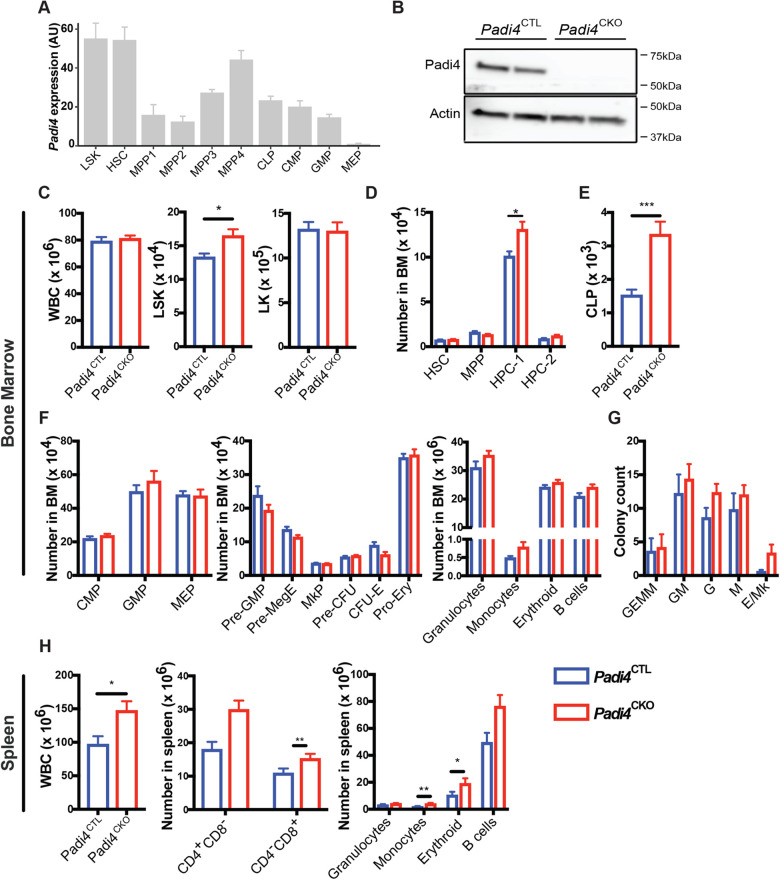
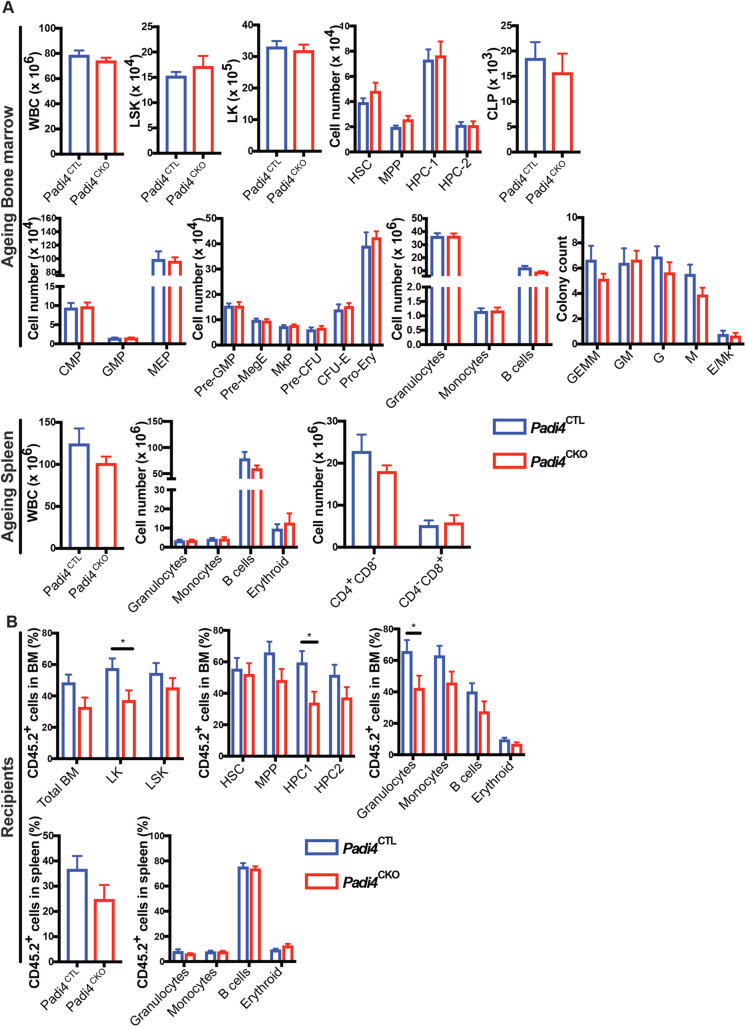
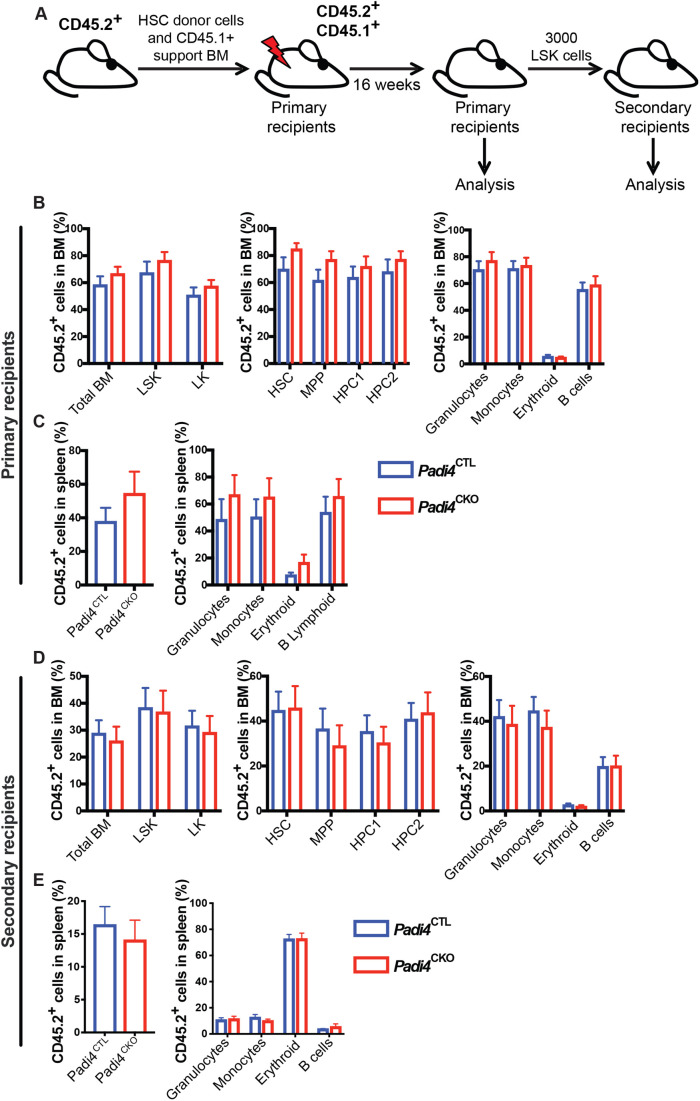
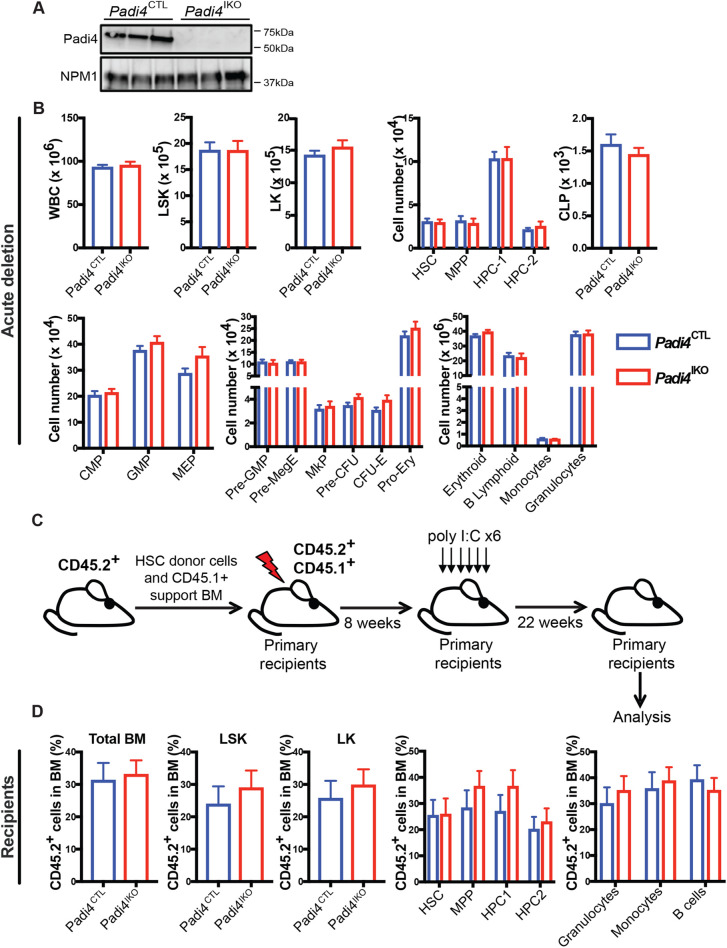
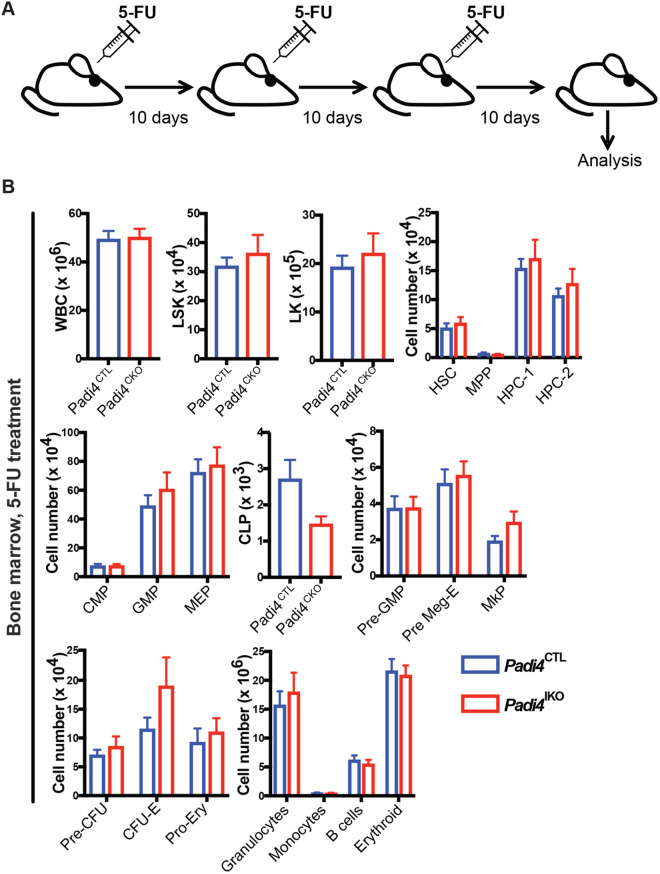
Peptidylarginine deiminases (PADIs) are strongly associated with the development of autoimmunity, neurodegeneration and cancer but their physiological roles are ill-defined. The nuclear deiminase PADI4 regulates pluripotency in the mammalian pre-implantation embryo but its function in tissue development is unknown. PADI4 is primarily expressed in the bone marrow, as part of a self-renewal-associated gene signature. It has been shown to regulate the proliferation of multipotent haematopoietic progenitors and proposed to impact on the differentiation of haematopoietic stem cells (HSCs), suggesting that it controls haematopoietic development or regeneration. Using conditional in vivo models of steady state and acute Padi4 ablation, we examined the role of PADI4 in the development and function of the haematopoietic system. We found that PADI4 loss does not significantly affect HSC self-renewal or differentiation potential upon injury or serial transplantation, nor does it lead to HSC exhaustion or premature ageing. Thus PADI4 is dispensable for cell-autonomous HSC maintenance, differentiation and haematopoietic regeneration. This work represents the first study of PADI4 in tissue development and indicates that pharmacological PADI4 inhibition may be tolerated without adverse effects.
肽基精氨酸脱亚氨酶(PADIs)与自身免疫、神经退行性疾病和癌症的发展密切相关,但它们的生理作用仍未明确。核脱亚氨酶 PADI4 调节哺乳动物着床前胚胎的多能性,但它在组织发育中的功能尚不清楚。PADI4 主要在骨髓中表达,是自我更新相关基因特征的一部分。已经表明它可以调节多能造血祖细胞的增殖,并提出它可以影响造血干细胞(HSCs)的分化,这表明它控制着造血的发育或再生。使用稳态和急性 Padi4 缺失的条件性体内模型,我们研究了 PADI4 在造血系统发育和功能中的作用。我们发现,PADI4 缺失不会显著影响损伤或连续移植后 HSC 的自我更新或分化潜能,也不会导致 HSC 耗竭或过早衰老。因此,PADI4 对于细胞自主 HSC 的维持、分化和造血再生是可有可无的。这项工作代表了对 PADI4 在组织发育中的首次研究,并表明药物抑制 PADI4 可能不会产生不良反应而被耐受。