Department of Biomedical Sciences, College of Veterinary Medicine, King Faisal University, Al-Hofuf, 31982, Al-Ahsa, Saudi Arabia; Department of Pharmacology, Kafrelshikh University, Kafrelshikh, 33516, Egypt.
Department of Clinical Sciences, College of Veterinary Medicine, King Faisal University, Al-Ahsa, Saudi Arabia; Department of Internal Medicine, Infectious Diseases and Fish Diseases, Faculty of Veterinary Medicine, Mansoura University, Manosura, Egypt.
Comput Biol Med. 2022 Jul;146:105633. doi: 10.1016/j.compbiomed.2022.105633. Epub 2022 May 17.
We investigated the evolutionary relationships, mutations, antigenic epitopes, and structural dynamics of the receptor-binding domain (RBD) of SARS-CoV-2, Omicron and other recently evolved variants.
The RBD of SARS-CoV-2 and its Omicron, Alpha, Beta, Gamma, Delta, and Mu variants were subjected to pairwise sequence matrix evaluation, antigenic epitope prediction, and phylogenetic relationship and structural dynamics analyses.
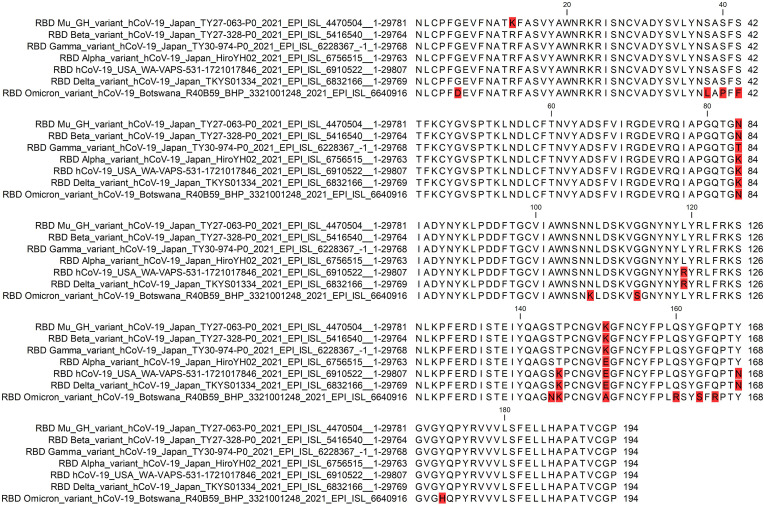
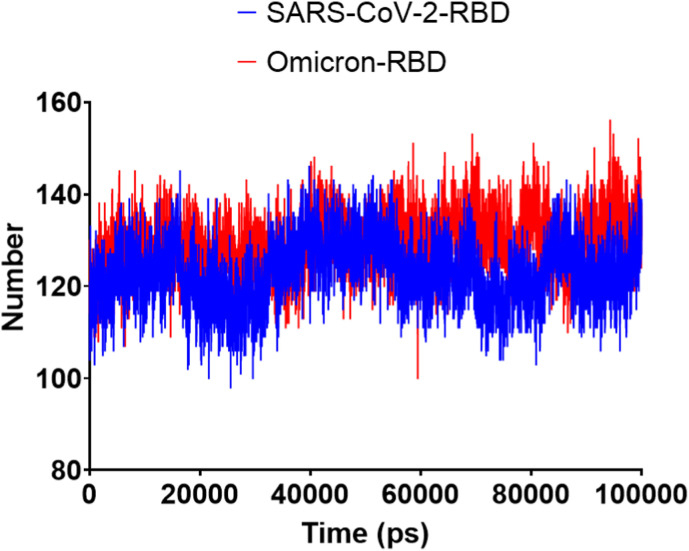
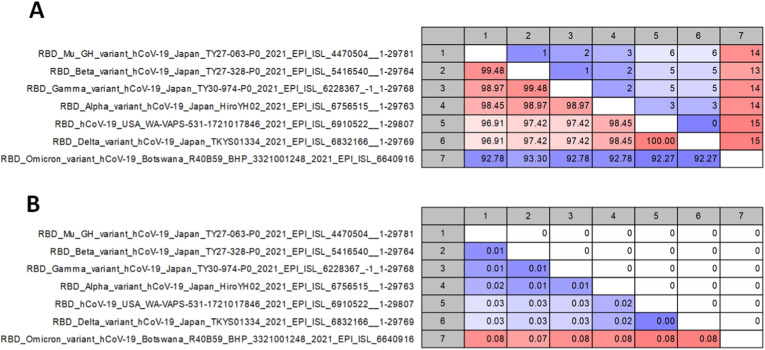
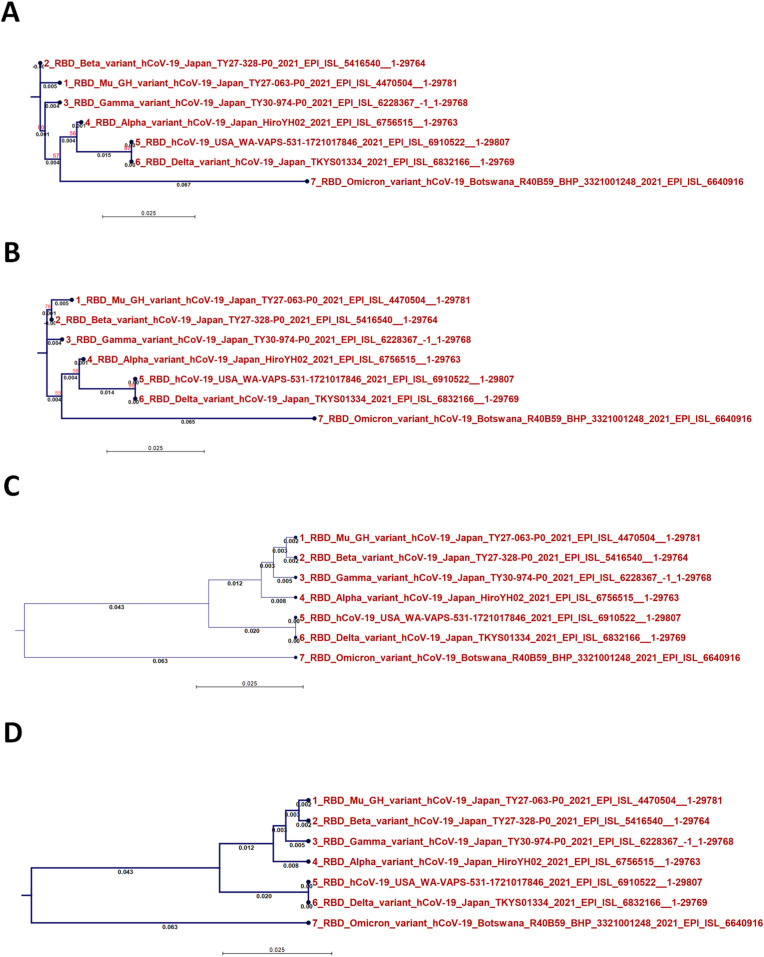
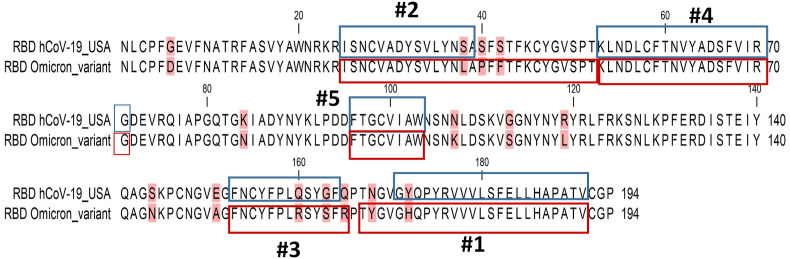
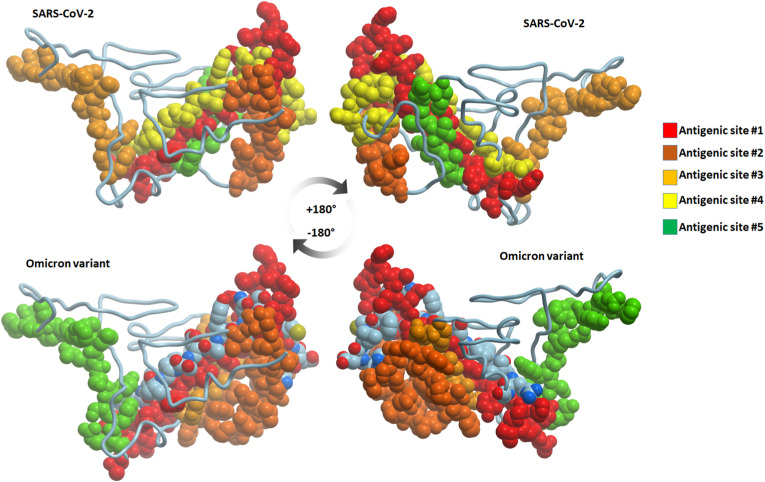
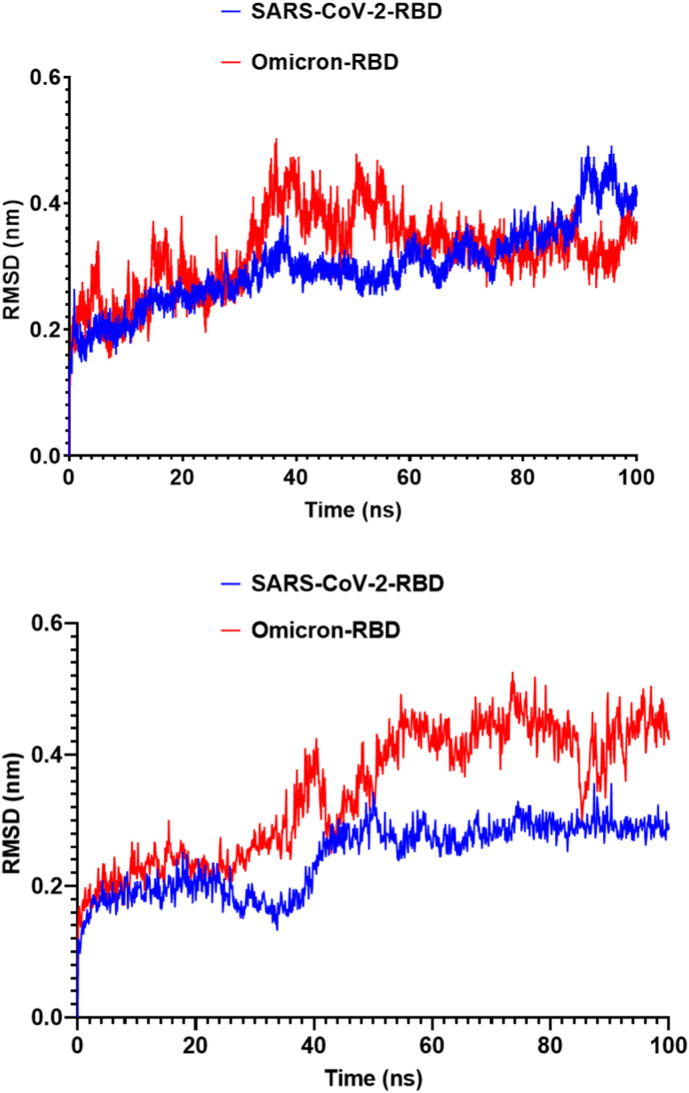
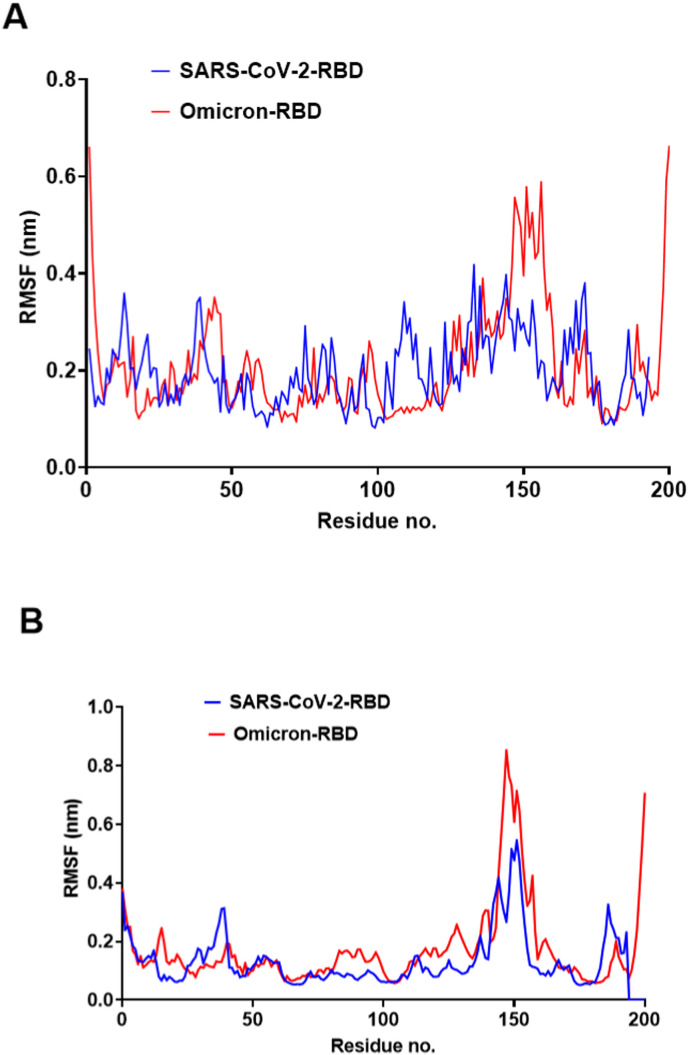
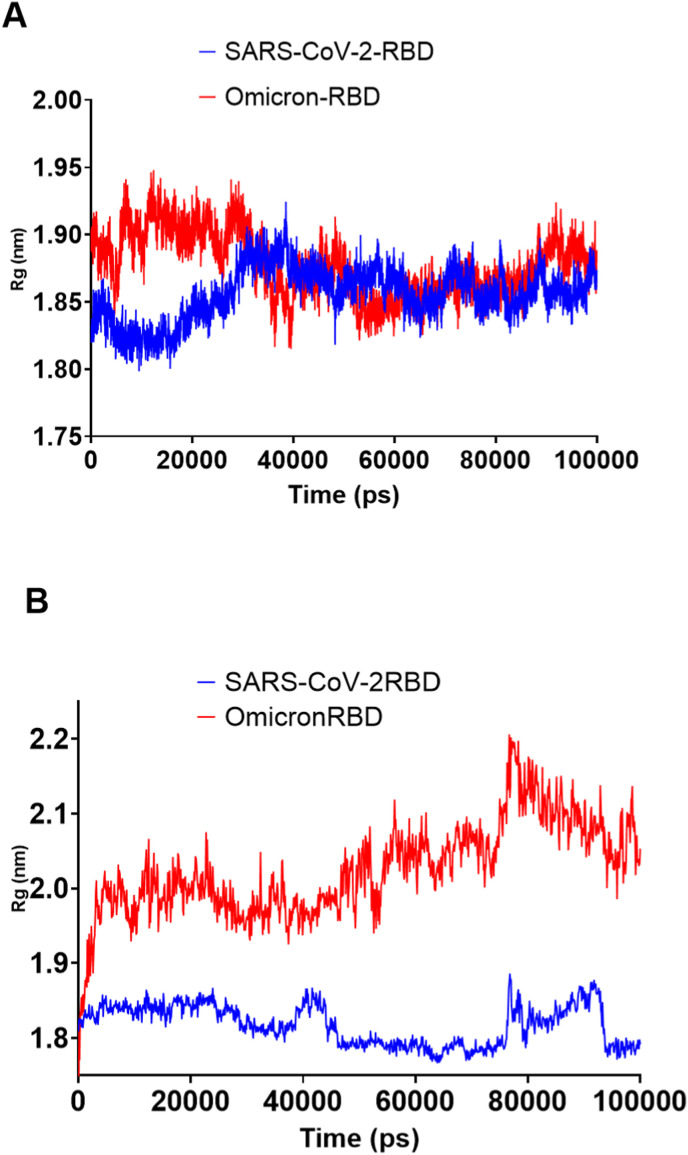
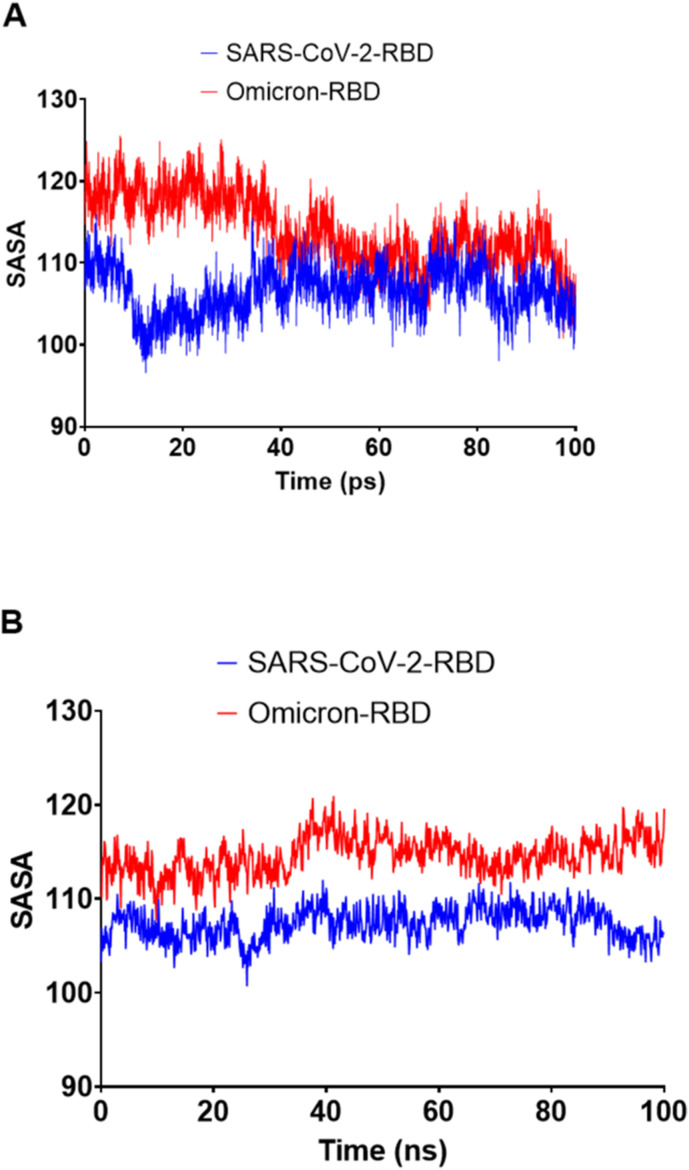
The Omicron RBD contained 13-15 amino acid mutations, of which 12 were new and three conserved with other variants. In addition, two mutations found in the Alpha, Beta, Gamma, and Mu variants were not found in the Omicron RBD. The ultrametric clustering unweighted pair group method with arithmetic mean identified Omicron as a novel monophyletic class, but the neighbor-joining method clustered Omicron with Alpha and Delta variants. In the SARS-CoV-2 RBD, five main antigenic epitopes were predicted, and these epitopes were conserved across all SARS-CoV-2 variants tested. Surprisingly, the additional mutations in the Omicron variant increased the size of the expected antigenic sites in two of these antigenic epitopes. Molecular dynamics (MD) simulations revealed higher root-mean-square deviation in the Omicron RBD, greater residue fluctuation at residues 32-42 and 140-160, and increased solvent-accessible surface area.
The Omicron RBD mutations indicate the variant is within a new phylogenetic class of SARS-CoV-2 and significantly impact RBD structure, conformation, and molecular dynamics. However, conserved anticipated antigenic sites may imply partial changes in receptor affinity and response to immune reactions. Omicron RBD binding with the angiotensin-converting enzyme 2 receptor was suggested to be weaker than the original SARS-CoV-2 binding in MD simulations.
我们研究了 SARS-CoV-2、奥密克戎及其他近期进化变体的受体结合域(RBD)的进化关系、突变、抗原表位和结构动力学。
对 SARS-CoV-2 的 RBD 及其奥密克戎、阿尔法、贝塔、伽马、德尔塔和缪变异体进行了成对序列矩阵评估、抗原表位预测以及系统发生关系和结构动力学分析。
奥密克戎的 RBD 含有 13-15 个氨基酸突变,其中 12 个是新的,3 个与其他变体保守。此外,在阿尔法、贝塔、伽马和缪变异体中发现的两个突变在奥密克戎 RBD 中没有发现。非加权对组平均法(unweighted pair group method with arithmetic mean)的超树聚类将奥密克戎鉴定为一个新的单系类,但邻接法(neighbor-joining method)将奥密克戎与阿尔法和德尔塔变体聚类在一起。在 SARS-CoV-2 的 RBD 中,预测到了五个主要的抗原表位,这些表位在所有测试的 SARS-CoV-2 变体中都是保守的。令人惊讶的是,奥密克戎变体中的额外突变增加了其中两个抗原表位中预期的抗原位点的大小。分子动力学(MD)模拟表明奥密克戎 RBD 的均方根偏差较大,32-42 位和 140-160 位的残基波动较大,溶剂可及表面积增加。
奥密克戎 RBD 的突变表明该变体属于 SARS-CoV-2 的一个新的系统发生类群,并且显著影响 RBD 的结构、构象和分子动力学。然而,保守的预期抗原位点可能意味着受体亲和力和对免疫反应的反应的部分变化。在 MD 模拟中,奥密克戎 RBD 与血管紧张素转化酶 2 受体的结合被认为比原始 SARS-CoV-2 的结合弱。