Australian Institute for Bioengineering and Nanotechnology (AIBN), The University of Queensland, Brisbane, QLD, 4072, Australia.
CSIRO Synthetic Biology Future Science Platform, Commonwealth Scientific and Industrial Research Organisation (CSIRO), Black Mountain, ACT, 2601, Australia.
Nat Commun. 2022 May 24;13(1):2895. doi: 10.1038/s41467-022-30529-8.
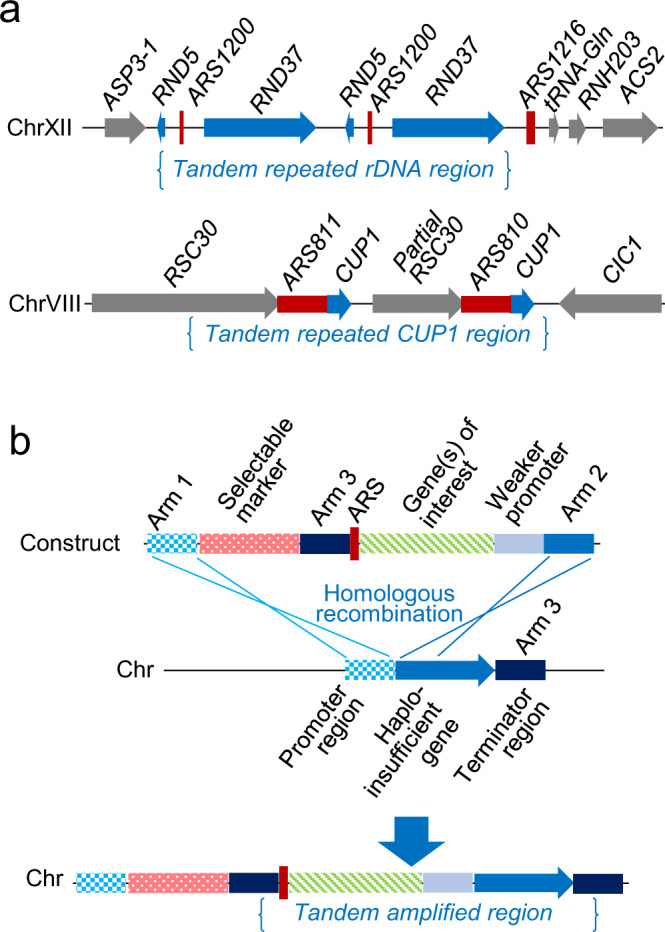
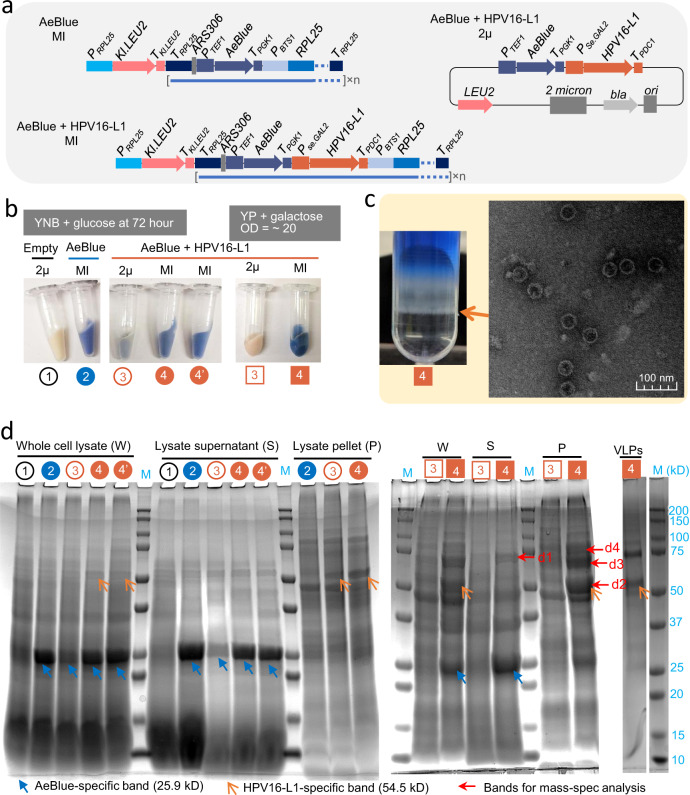
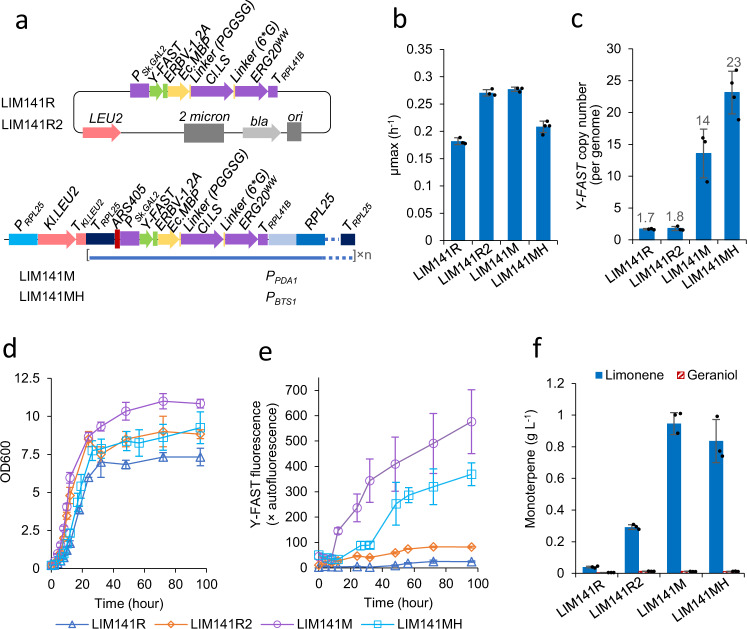
Bottlenecks in metabolic pathways due to insufficient gene expression levels remain a significant problem for industrial bioproduction using microbial cell factories. Increasing gene dosage can overcome these bottlenecks, but current approaches suffer from numerous drawbacks. Here, we describe HapAmp, a method that uses haploinsufficiency as evolutionary force to drive in vivo gene amplification. HapAmp enables efficient, titratable, and stable integration of heterologous gene copies, delivering up to 47 copies onto the yeast genome. The method is exemplified in metabolic engineering to significantly improve production of the sesquiterpene nerolidol, the monoterpene limonene, and the tetraterpene lycopene. Limonene titre is improved by 20-fold in a single engineering step, delivering ∼1 g L in the flask cultivation. We also show a significant increase in heterologous protein production in yeast. HapAmp is an efficient approach to unlock metabolic bottlenecks rapidly for development of microbial cell factories.
由于基因表达水平不足导致的代谢途径瓶颈仍然是使用微生物细胞工厂进行工业生物生产的一个重大问题。增加基因剂量可以克服这些瓶颈,但目前的方法存在许多缺点。在这里,我们描述了 HapAmp,这是一种利用半不足作为进化力来驱动体内基因扩增的方法。HapAmp 能够有效地、可滴定地、稳定地整合异源基因拷贝,在酵母基因组上最多可达 47 个拷贝。该方法在代谢工程中得到了例证,可显著提高倍半萜类化合物橙花叔醇、单萜类化合物柠檬烯和四萜类化合物番茄红素的产量。在单一的工程步骤中,柠檬烯的产量提高了 20 倍,在摇瓶培养中达到约 1g/L。我们还显示了酵母中异源蛋白产量的显著增加。HapAmp 是一种快速解锁代谢瓶颈的有效方法,可用于开发微生物细胞工厂。