Shanghai Key Laboratory of Plant Functional Genomics and Resources, Shanghai Chenshan Botanical Garden, Shanghai 201602, China; Chenshan Plant Science Research Center, CAS Center for Excellence in Molecular Plant Sciences, Chinese Academy of Sciences, Shanghai 201602, China.
Shanghai Key Laboratory of Plant Functional Genomics and Resources, Shanghai Chenshan Botanical Garden, Shanghai 201602, China; Co-Innovation Center for Sustainable Forestry in Southern China, College of Biology and the Environment, Nanjing Forestry University, Nanjing 210037, China.
Plant Commun. 2022 Sep 12;3(5):100341. doi: 10.1016/j.xplc.2022.100341. Epub 2022 May 25.
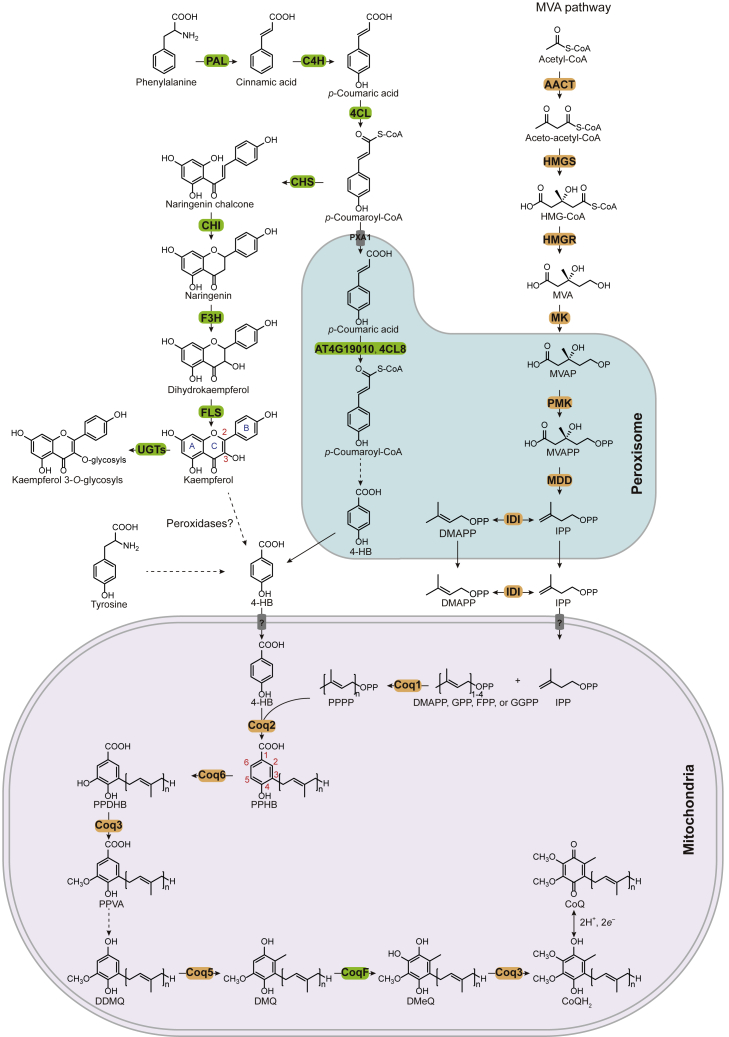
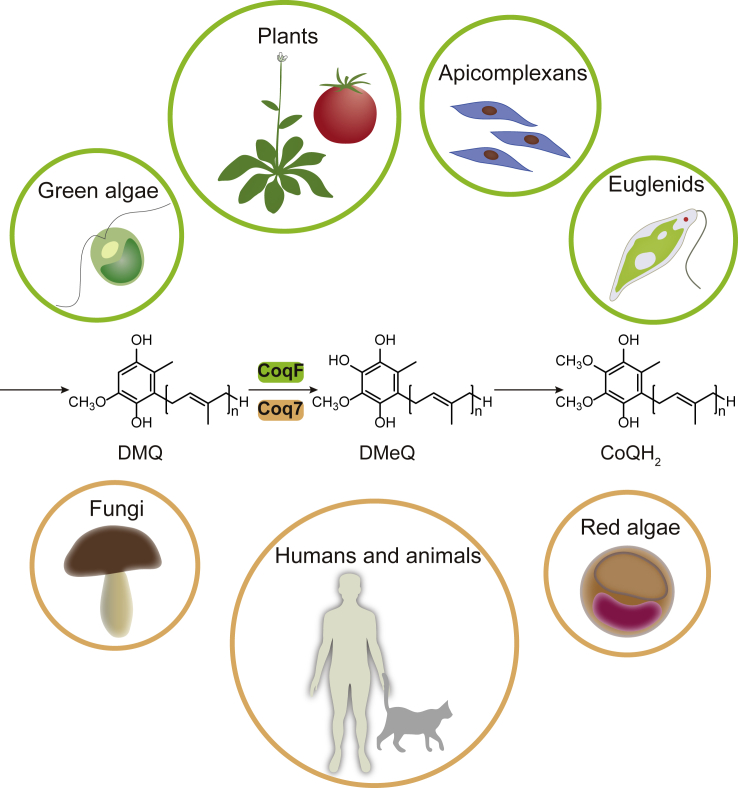
Coenzyme Q (CoQ) is a conserved redox-active lipid that has a wide distribution across the domains of life. CoQ plays a key role in the oxidative electron transfer chain and serves as a crucial antioxidant in cellular membranes. Our understanding of CoQ biosynthesis in eukaryotes has come mostly from studies of yeast. Recently, significant advances have been made in understanding CoQ biosynthesis in plants. Unique mitochondrial flavin-dependent monooxygenase and benzenoid ring precursor biosynthetic pathways have been discovered, providing new insights into the diversity of CoQ biosynthetic pathways and the evolution of phototrophic eukaryotes. We summarize research progress on CoQ biosynthesis and regulation in plants and recent efforts to increase the CoQ content in plant foods.
辅酶 Q(CoQ)是一种保守的氧化还原活性脂质,在生命领域广泛分布。CoQ 在氧化电子传递链中发挥关键作用,并作为细胞膜中的重要抗氧化剂。我们对真核生物中 CoQ 生物合成的理解主要来自于对酵母的研究。最近,人们在理解植物中 CoQ 生物合成方面取得了重大进展。发现了独特的线粒体黄素依赖性单加氧酶和苯环前体生物合成途径,为 CoQ 生物合成途径的多样性和光合真核生物的进化提供了新的见解。我们总结了植物中 CoQ 生物合成和调控的研究进展,以及最近提高植物性食物中 CoQ 含量的努力。