Klask Christian-Marco, Jäger Benedikt, Casini Isabella, Angenent Largus T, Molitor Bastian
Environmental Biotechnology Group, Geo- and Environmental Science Center, University of Tübingen, Tübingen, Germany.
Cluster of Excellence - Controlling Microbes to Fight Infections, University of Tübingen, Tübingen, Germany.
Front Microbiol. 2022 May 9;13:887578. doi: 10.3389/fmicb.2022.887578. eCollection 2022.
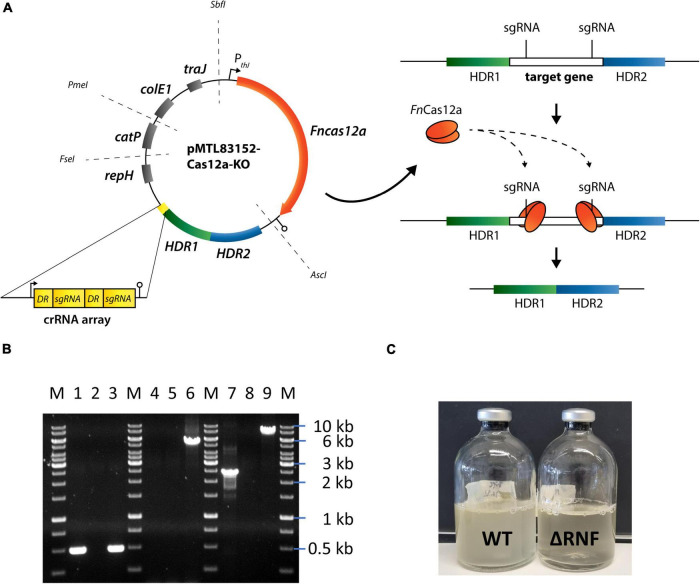
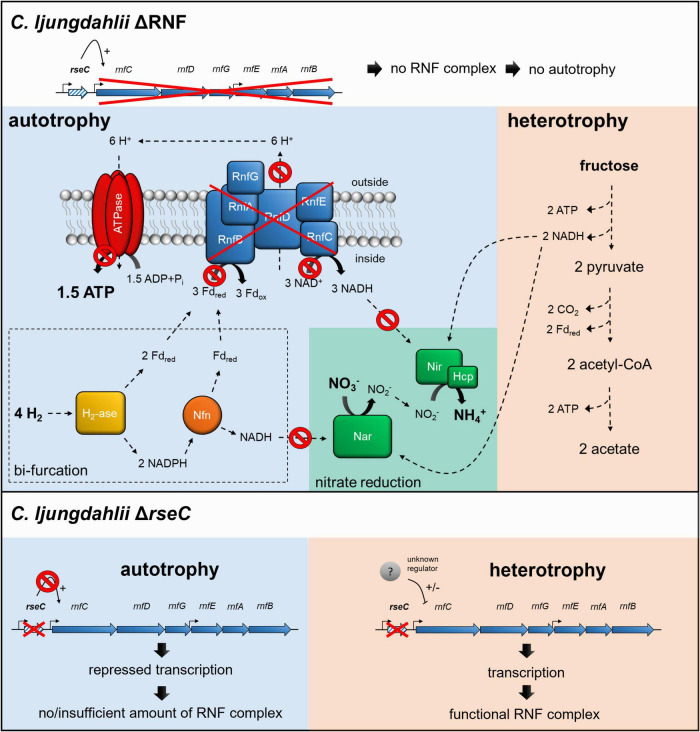
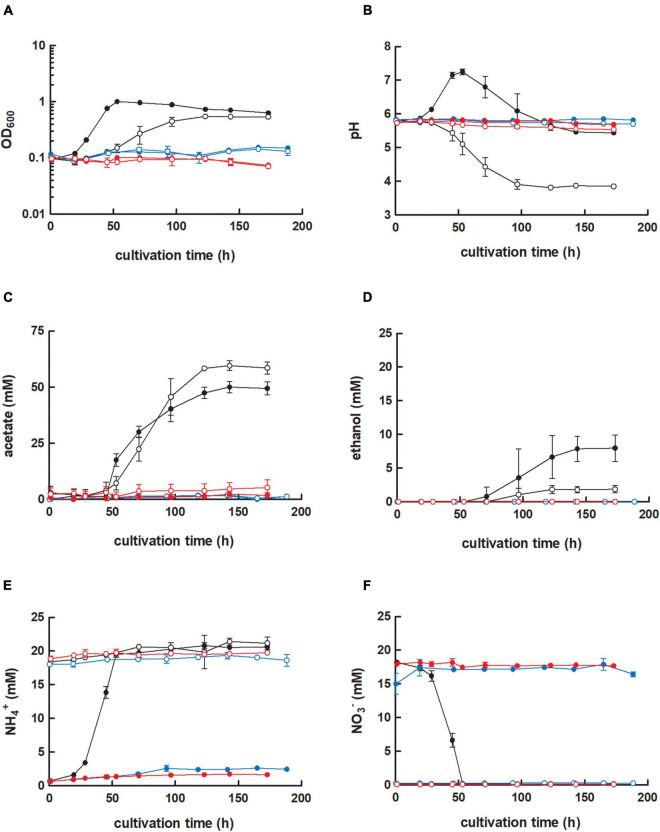
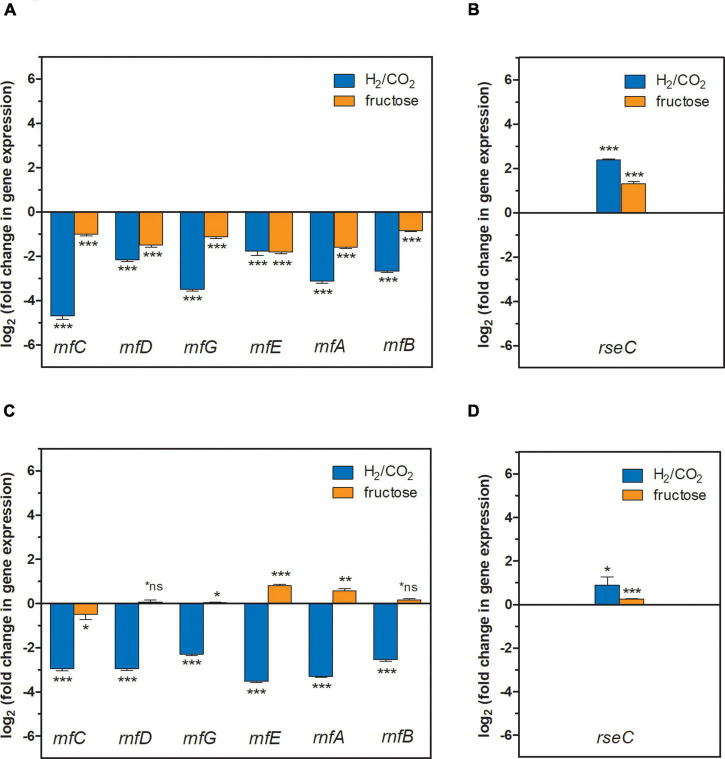
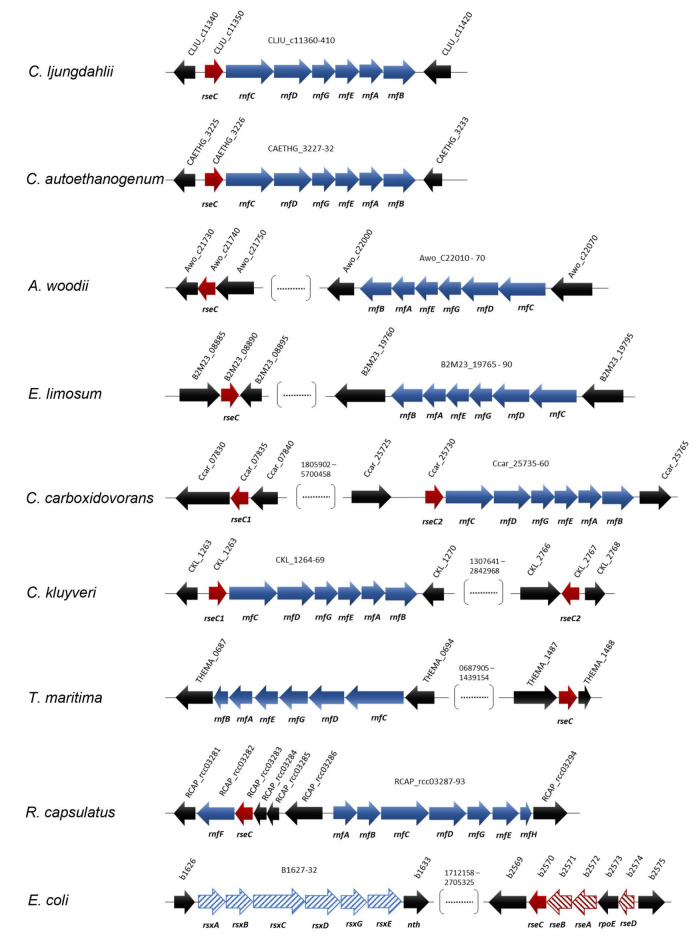
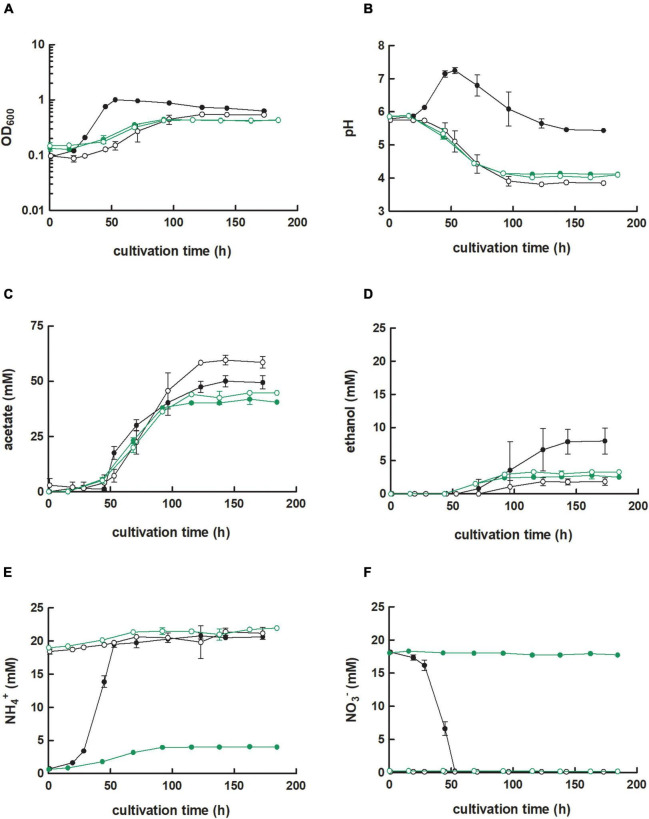
For , the RNF complex plays a key role for energy conversion from gaseous substrates such as hydrogen and carbon dioxide. In a previous study, a disruption of RNF-complex genes led to the loss of autotrophy, while heterotrophy was still possible glycolysis. Furthermore, it was shown that the energy limitation during autotrophy could be lifted by nitrate supplementation, which resulted in an elevated cellular growth and ATP yield. Here, we used CRISPR-Cas12a to delete: the RNF complex-encoding gene cluster ; the putative RNF regulator gene ; and a gene cluster that encodes for a putative nitrate reductase. The deletion of either or resulted in a complete loss of autotrophy, which could be restored by plasmid-based complementation of the deleted genes. We observed a transcriptional repression of the RNF-gene cluster in the -deletion strain during autotrophy and investigated the distribution of the gene among acetogenic bacteria. To examine nitrate reduction and its connection to the RNF complex, we compared autotrophic and heterotrophic growth of our three deletion strains with either ammonium or nitrate. The - and -deletion strains failed to reduce nitrate as a metabolic activity in non-growing cultures during autotrophy but not during heterotrophy. In contrast, the nitrate reductase deletion strain was able to grow in all tested conditions but lost the ability to reduce nitrate. Our findings highlight the important role of the gene for autotrophy, and in addition, contribute to understand the connection of nitrate reduction to energy metabolism.
对于 ,RNF复合物在从氢气和二氧化碳等气态底物进行能量转换中起关键作用。在先前的一项研究中,RNF复合物基因的破坏导致自养能力丧失,而异养通过糖酵解仍有可能。此外,研究表明,自养过程中的能量限制可以通过添加硝酸盐来解除,这导致细胞生长和ATP产量提高。在这里,我们使用CRISPR-Cas12a删除:编码RNF复合物的基因簇 ;假定的RNF调节基因 ;以及编码假定硝酸还原酶的基因簇。删除 或 都会导致自养能力完全丧失,通过基于质粒的缺失基因互补可以恢复。我们观察到自养过程中 -缺失菌株中RNF基因簇的转录抑制,并研究了 基因在产乙酸细菌中的分布。为了研究硝酸盐还原及其与RNF复合物的联系,我们比较了我们的三个缺失菌株在以铵或硝酸盐为底物时的自养和异养生长情况。 -和 -缺失菌株在自养过程中作为非生长培养物中的代谢活性无法还原硝酸盐,但在异养过程中可以。相比之下,硝酸还原酶缺失菌株能够在所有测试条件下生长,但失去了还原硝酸盐的能力。我们的研究结果突出了 基因对自养的重要作用,此外,有助于理解硝酸盐还原与能量代谢的联系。