Fu Yiqi, Fan Mengqi, Xu Liwang, Wang Hui, Hu Qinglian, Jin Yuanxiang
College of Biotechnology and Bioengineering, Zhejiang University of Technology, Hangzhou 310032, China.
Toxics. 2022 Apr 25;10(5):215. doi: 10.3390/toxics10050215.
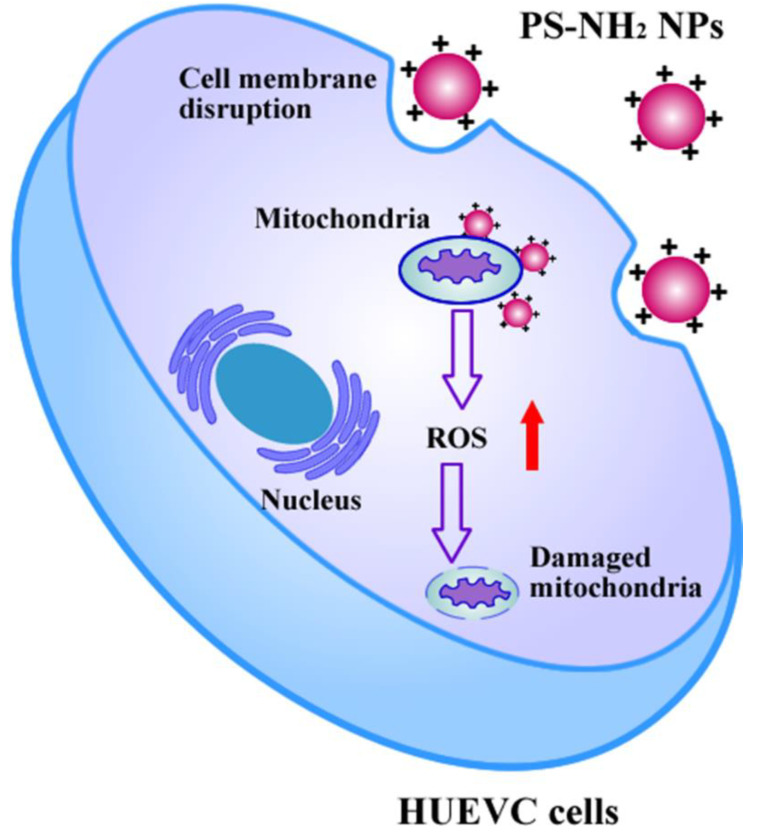
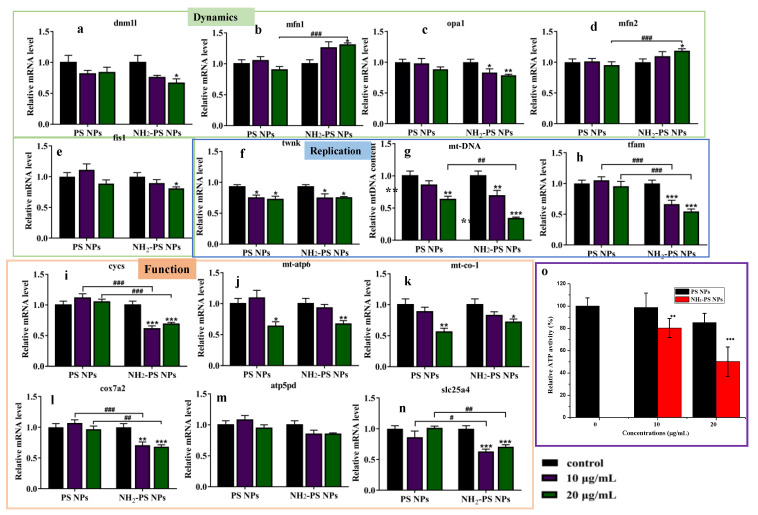
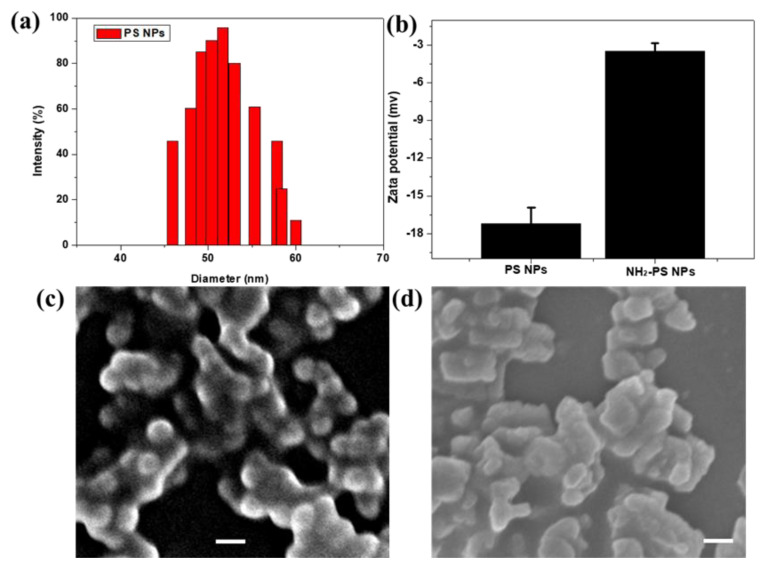
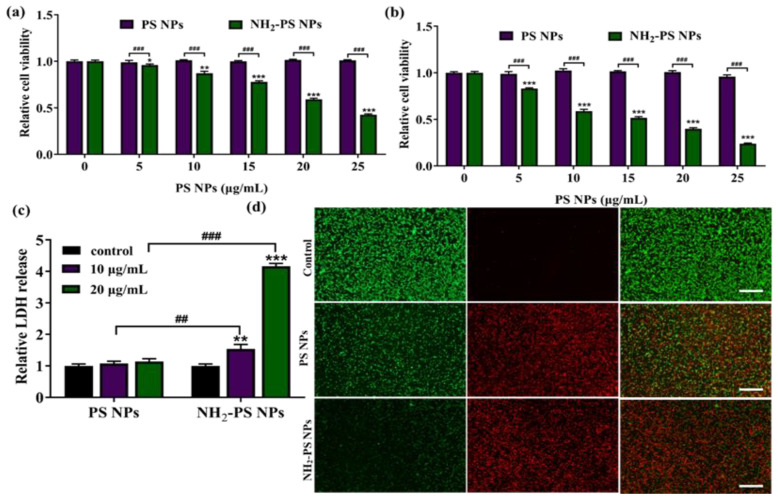
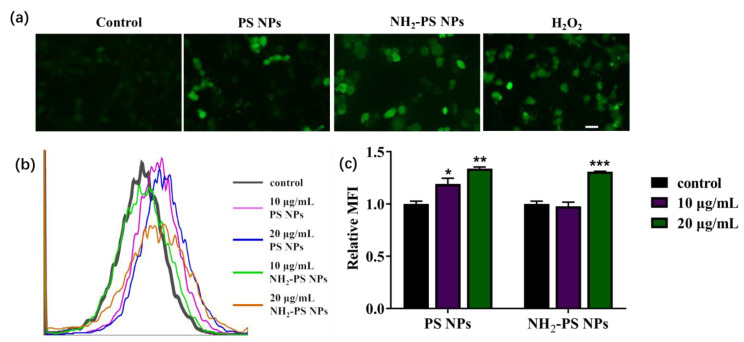
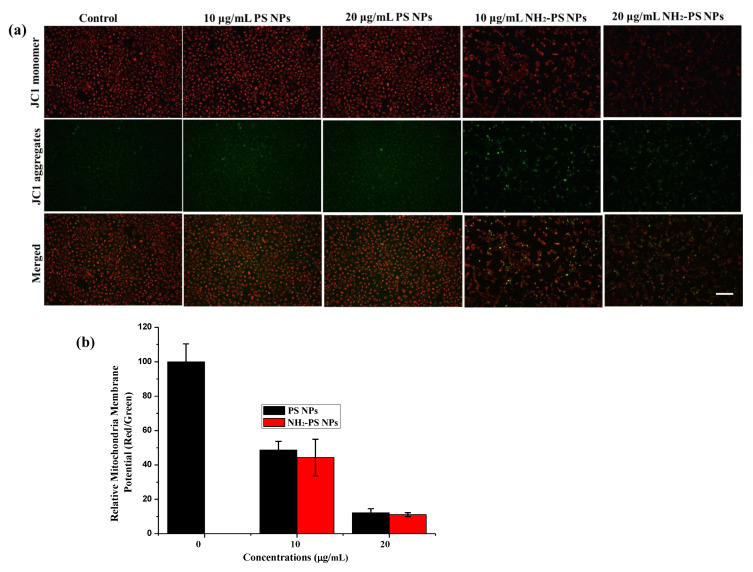
As emerging contaminants, nano-plastics have become a major cause for concern for their adverse effects on the ecosystem and human health. The nano-sized properties of nano-plastics enable their exposure risks to humans through the food chain or other ways. However, the fate and adverse impact of nano-plastics on the human cardiovascular system are lacking. In this regard, the human umbilical vein endothelial cell line HUVEC was applied as a cell model to investigate the biological effects of noncharged polystyrene nano-plastics (PS NPs) and amino-functionalized nano-plastics (NH-PS NPs). The positively charged PS NPs exhibited higher cytotoxicity to HUVEC, as evidenced by the decreased cell viability, enhanced ROS generation, and decreased mitochondria membrane potential triggered by NH-PS NPs. Importantly, RT-PCR analysis revealed that NH-PS NPs dysregulated the mitochondrial dynamics, replication, and function-related gene expression. This study demonstrated that NH-PS NPs presented higher risks to endothelial cells than non-charged nano-plastics by interfering with mitochondria, which supported the direct evidence and expanded the potential risks of PS NPs.
作为新兴污染物,纳米塑料因其对生态系统和人类健康的不利影响已成为人们主要关注的问题。纳米塑料的纳米尺寸特性使其能够通过食物链或其他途径对人类构成暴露风险。然而,纳米塑料对人类心血管系统的归宿和不良影响尚不清楚。在这方面,人类脐静脉内皮细胞系HUVEC被用作细胞模型,以研究不带电的聚苯乙烯纳米塑料(PS NPs)和氨基功能化纳米塑料(NH-PS NPs)的生物学效应。带正电荷的PS NPs对HUVEC表现出更高的细胞毒性,这通过细胞活力降低、活性氧生成增加以及NH-PS NPs引发的线粒体膜电位降低得到证明。重要的是,RT-PCR分析表明,NH-PS NPs使线粒体动力学、复制和功能相关基因表达失调。这项研究表明,NH-PS NPs通过干扰线粒体对内皮细胞的风险高于不带电的纳米塑料,这提供了直接证据并扩展了PS NPs的潜在风险。