Lezama-García Karina, Mota-Rojas Daniel, Martínez-Burnes Julio, Villanueva-García Dina, Domínguez-Oliva Adriana, Gómez-Prado Jocelyn, Mora-Medina Patricia, Casas-Alvarado Alejandro, Olmos-Hernández Adriana, Soto Paola, Muns Ramon
PhD Program in Biological and Health Sciences [Doctorado en Ciencias Biológicas y de la Salud], Universidad Autónoma Metropolitana (UAM), Mexico City 04960, Mexico.
Neurophysiology, Behavior and Animal Welfare Assessment, DPAA, Universidad Autónoma Metropolitana (UAM), Mexico City 04960, Mexico.
Vet Sci. 2022 May 23;9(5):246. doi: 10.3390/vetsci9050246.
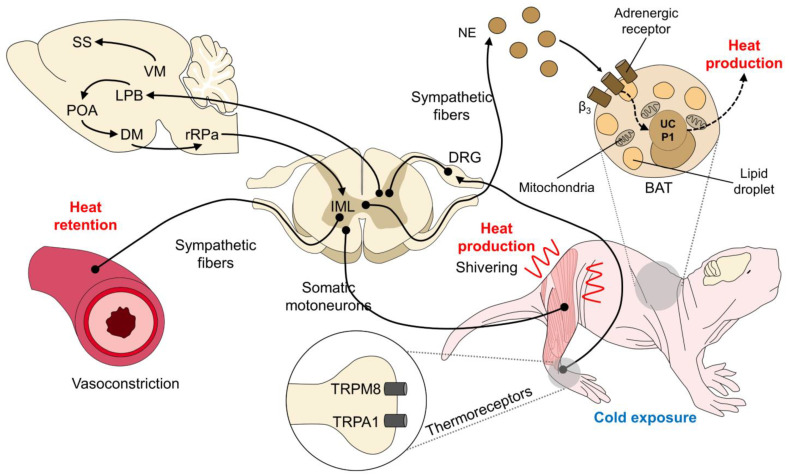
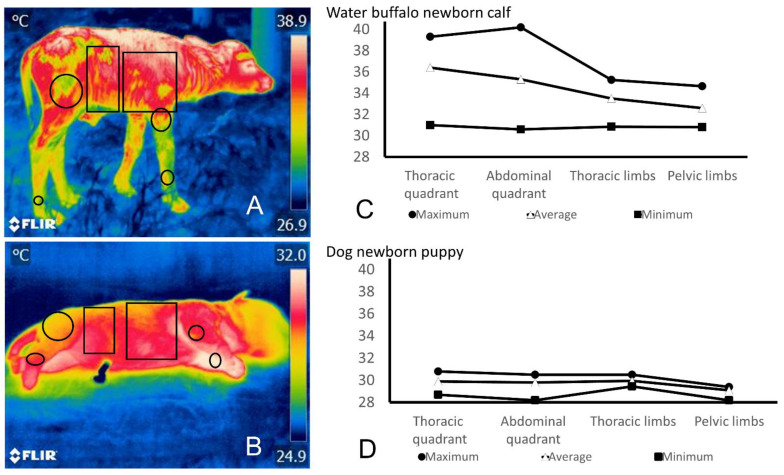
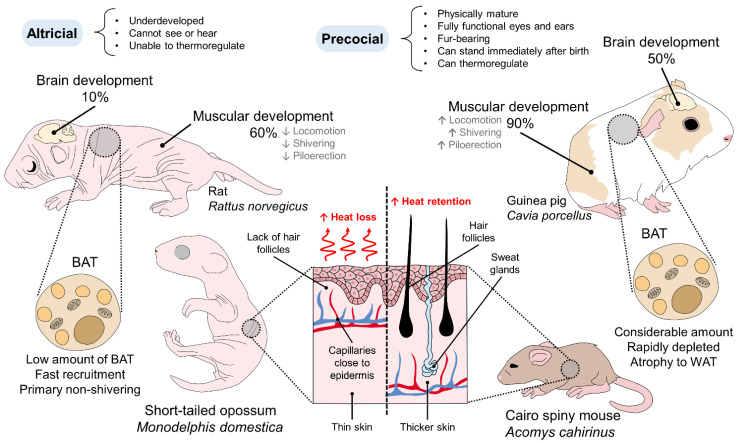
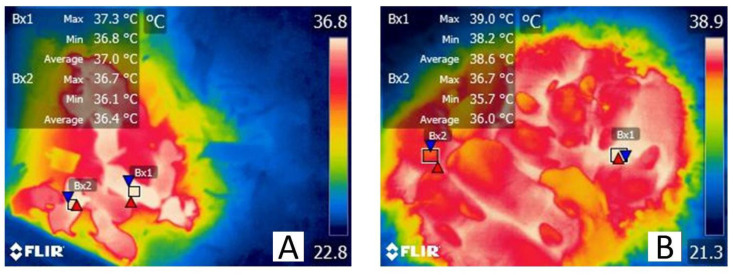
Thermoregulation in newborn mammals is an essential species-specific mechanism of the nervous system that contributes to their survival during the first hours and days of their life. When exposed to cold weather, which is a risk factor associated with mortality in neonates, pathways such as the hypothalamic-pituitary-adrenal axis (HPA) are activated to achieve temperature control, increasing the circulating levels of catecholamine and cortisol. Consequently, alterations in blood circulation and mechanisms to produce or to retain heat (e.g., vasoconstriction, piloerection, shivering, brown adipocyte tissue activation, and huddling) begin to prevent hypothermia. This study aimed to discuss the mechanisms of thermoregulation in newborn domestic mammals, highlighting the differences between altricial and precocial species. The processes that employ brown adipocyte tissue, shivering, thermoregulatory behaviors, and dermal vasomotor control will be analyzed to understand the physiology and the importance of implementing techniques to promote thermoregulation and survival in the critical post-birth period of mammals. Also, infrared thermography as a helpful method to perform thermal measurements without animal interactions does not affect these parameters.
新生哺乳动物的体温调节是一种重要的、特定物种的神经系统机制,有助于它们在出生后的最初几个小时和几天内生存。当暴露于寒冷天气时(这是与新生儿死亡率相关的一个风险因素),下丘脑-垂体-肾上腺轴(HPA)等途径会被激活以实现体温控制,从而增加儿茶酚胺和皮质醇的循环水平。因此,血液循环的改变以及产生或保留热量的机制(如血管收缩、竖毛、颤抖、棕色脂肪组织激活和挤作一团)开始预防体温过低。本研究旨在探讨新生家养哺乳动物的体温调节机制,突出晚成雏和早成雏物种之间的差异。将分析利用棕色脂肪组织、颤抖、体温调节行为和皮肤血管运动控制的过程,以了解生理学以及在哺乳动物出生后的关键时期实施促进体温调节和生存技术的重要性。此外,红外热成像作为一种在不与动物互动的情况下进行热测量的有用方法,不会影响这些参数。