• 文献检索
  • 文档翻译
  • 深度研究
  • 学术资讯
  • Suppr Zotero 插件Zotero 插件
  • 邀请有礼
  • 套餐&价格
  • 历史记录
应用&插件
Suppr Zotero 插件Zotero 插件浏览器插件Mac 客户端Windows 客户端微信小程序
定价
高级版会员购买积分包购买API积分包
服务
文献检索文档翻译深度研究API 文档MCP 服务
关于我们
关于 Suppr公司介绍联系我们用户协议隐私条款
关注我们

Suppr 超能文献

核心技术专利:CN118964589B侵权必究
粤ICP备2023148730 号-1Suppr @ 2026

文献检索

告别复杂PubMed语法,用中文像聊天一样搜索,搜遍4000万医学文献。AI智能推荐,让科研检索更轻松。

立即免费搜索

文件翻译

保留排版,准确专业,支持PDF/Word/PPT等文件格式,支持 12+语言互译。

免费翻译文档

深度研究

AI帮你快速写综述,25分钟生成高质量综述,智能提取关键信息,辅助科研写作。

立即免费体验

可穿戴设备在心脏物理监测中的应用:综述

Wearable Devices for Physical Monitoring of Heart: A Review.

机构信息

Tecnológico Nacional de México/I.T. Orizaba, Av. Oriente 9 No. 852 Col. Emiliano Zapata, Orizaba 94320, Veracruz, Mexico.

CONACYT-Tecnológico Nacional de México/I. T. Orizaba, Av. Oriente 9 No. 852 Col. Emiliano Zapata, Orizaba 94320, Veracruz, Mexico.

出版信息

Biosensors (Basel). 2022 May 2;12(5):292. doi: 10.3390/bios12050292.

DOI:10.3390/bios12050292
PMID:35624593
原文链接:https://pmc.ncbi.nlm.nih.gov/articles/PMC9138373/
Abstract

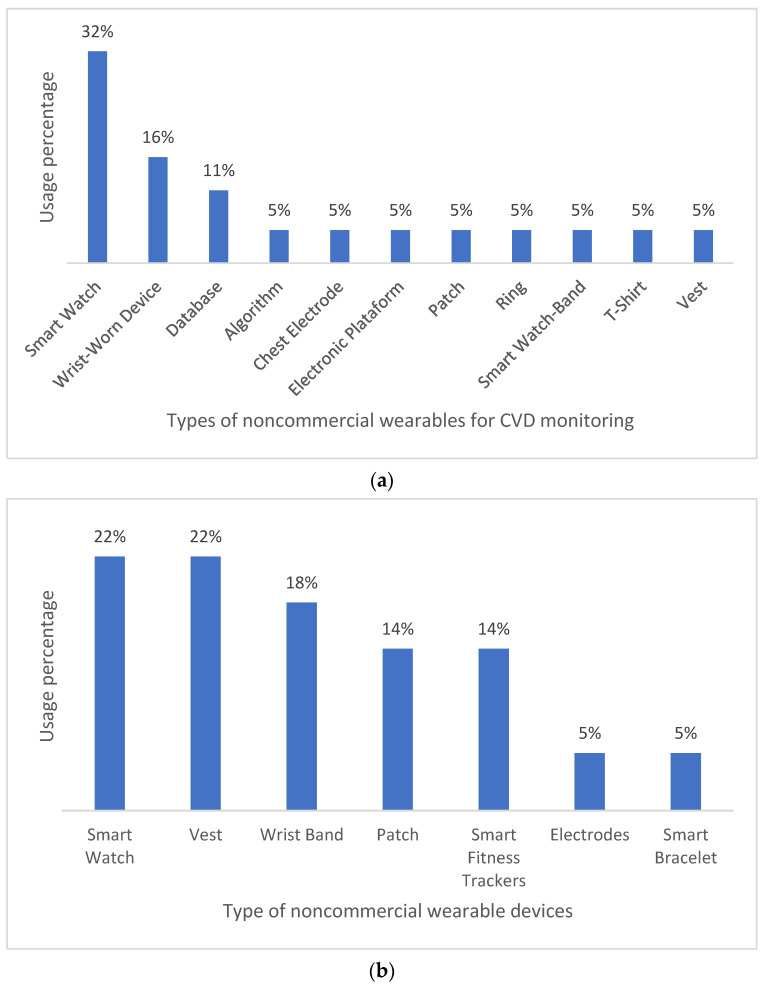
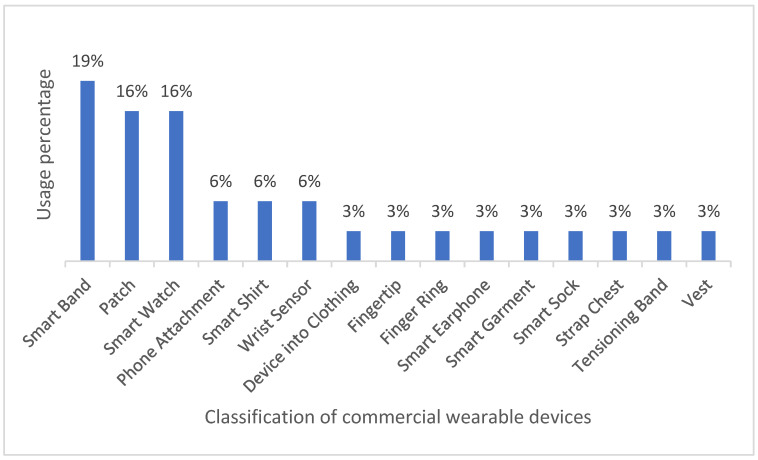
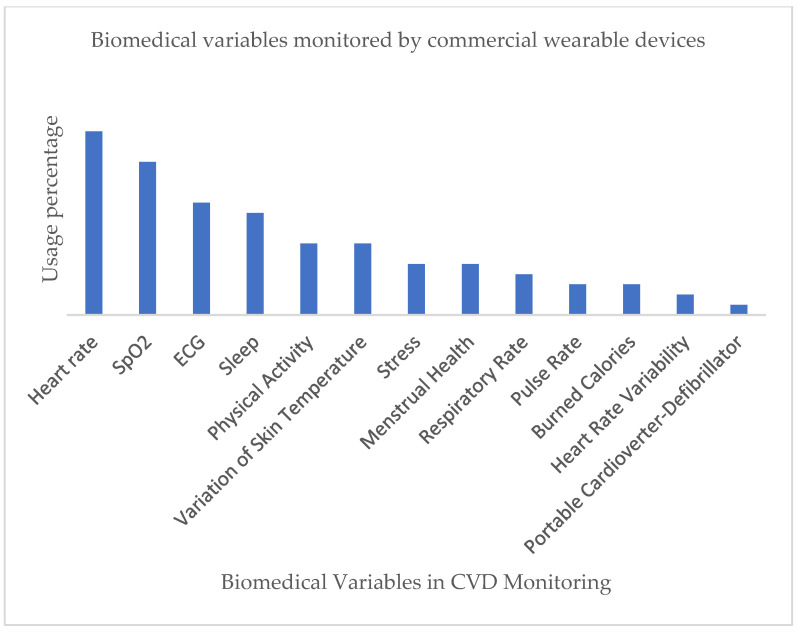
Cardiovascular diseases (CVDs) are the leading cause of death globally. An effective strategy to mitigate the burden of CVDs has been to monitor patients' biomedical variables during daily activities with wearable technology. Nowadays, technological advance has contributed to wearables technology by reducing the size of the devices, improving the accuracy of sensing biomedical variables to be devices with relatively low energy consumption that can manage security and privacy of the patient's medical information, have adaptability to any data storage system, and have reasonable costs with regard to the traditional scheme where the patient must go to a hospital for an electrocardiogram, thus contributing a serious option in diagnosis and treatment of CVDs. In this work, we review commercial and noncommercial wearable devices used to monitor CVD biomedical variables. Our main findings revealed that commercial wearables usually include smart wristbands, patches, and smartwatches, and they generally monitor variables such as heart rate, blood oxygen saturation, and electrocardiogram data. Noncommercial wearables focus on monitoring electrocardiogram and photoplethysmography data, and they mostly include accelerometers and smartwatches for detecting atrial fibrillation and heart failure. However, using wearable devices without healthy personal habits will cause disappointing results in the patient's health.

摘要

心血管疾病(CVDs)是全球范围内的主要死亡原因。减轻 CVD 负担的有效策略是利用可穿戴技术在日常活动中监测患者的生物医学变量。如今,技术进步通过减小设备尺寸、提高生物医学变量的传感准确性、使设备具有相对较低的能耗、管理患者医疗信息的安全性和隐私性、适应任何数据存储系统、以及相对于传统方案具有合理的成本,为可穿戴技术做出了贡献,传统方案中患者必须去医院进行心电图检查。因此,它为 CVD 的诊断和治疗提供了一个重要的选择。在这项工作中,我们回顾了用于监测 CVD 生物医学变量的商业和非商业可穿戴设备。我们的主要发现表明,商业可穿戴设备通常包括智能手环、贴片和智能手表,它们通常监测心率、血氧饱和度和心电图数据等变量。非商业可穿戴设备专注于监测心电图和光电容积脉搏波数据,它们主要包括加速度计和智能手表,用于检测心房颤动和心力衰竭。然而,如果不养成健康的个人习惯,使用可穿戴设备可能会导致患者健康状况不佳。
https://cdn.ncbi.nlm.nih.gov/pmc/blobs/a543/9138373/c379f9907a7e/biosensors-12-00292-g006.jpg
https://cdn.ncbi.nlm.nih.gov/pmc/blobs/a543/9138373/8d5903a7005f/biosensors-12-00292-g001.jpg
https://cdn.ncbi.nlm.nih.gov/pmc/blobs/a543/9138373/82d68d8203e3/biosensors-12-00292-g002.jpg
https://cdn.ncbi.nlm.nih.gov/pmc/blobs/a543/9138373/b96e7dc27513/biosensors-12-00292-g003.jpg
https://cdn.ncbi.nlm.nih.gov/pmc/blobs/a543/9138373/01185f370ed9/biosensors-12-00292-g004.jpg
https://cdn.ncbi.nlm.nih.gov/pmc/blobs/a543/9138373/636c4fac03e3/biosensors-12-00292-g005.jpg
https://cdn.ncbi.nlm.nih.gov/pmc/blobs/a543/9138373/c379f9907a7e/biosensors-12-00292-g006.jpg
https://cdn.ncbi.nlm.nih.gov/pmc/blobs/a543/9138373/8d5903a7005f/biosensors-12-00292-g001.jpg
https://cdn.ncbi.nlm.nih.gov/pmc/blobs/a543/9138373/82d68d8203e3/biosensors-12-00292-g002.jpg
https://cdn.ncbi.nlm.nih.gov/pmc/blobs/a543/9138373/b96e7dc27513/biosensors-12-00292-g003.jpg
https://cdn.ncbi.nlm.nih.gov/pmc/blobs/a543/9138373/01185f370ed9/biosensors-12-00292-g004.jpg
https://cdn.ncbi.nlm.nih.gov/pmc/blobs/a543/9138373/636c4fac03e3/biosensors-12-00292-g005.jpg
https://cdn.ncbi.nlm.nih.gov/pmc/blobs/a543/9138373/c379f9907a7e/biosensors-12-00292-g006.jpg

相似文献

1
Wearable Devices for Physical Monitoring of Heart: A Review.可穿戴设备在心脏物理监测中的应用:综述
Biosensors (Basel). 2022 May 2;12(5):292. doi: 10.3390/bios12050292.
2
Smart Wearables for Cardiac Monitoring-Real-World Use beyond Atrial Fibrillation.可穿戴式智能设备在心脏监测中的应用——除心房颤动外的实际应用。
Sensors (Basel). 2021 Apr 5;21(7):2539. doi: 10.3390/s21072539.
3
Wearables in cardiology: Here to stay.可穿戴设备在心脏病学中的应用:大势所趋。
Heart Rhythm. 2020 May;17(5 Pt B):889-895. doi: 10.1016/j.hrthm.2020.02.023.
4
Accuracy of Consumer Wearable Heart Rate Measurement During an Ecologically Valid 24-Hour Period: Intraindividual Validation Study.消费者可穿戴心率测量在 24 小时内的准确性:个体内验证研究。
JMIR Mhealth Uhealth. 2019 Mar 11;7(3):e10828. doi: 10.2196/10828.
5
Atrial Fibrillation Classification with Smart Wearables Using Short-Term Heart Rate Variability and Deep Convolutional Neural Networks.基于短期心率变异性和深度卷积神经网络的智能可穿戴设备心房颤动分类。
Sensors (Basel). 2021 Oct 30;21(21):7233. doi: 10.3390/s21217233.
6
Evaluating the Validity and Utility of Wearable Technology for Continuously Monitoring Patients in a Hospital Setting: Systematic Review.评估可穿戴技术在医院环境中连续监测患者的有效性和实用性:系统评价。
JMIR Mhealth Uhealth. 2021 Aug 18;9(8):e17411. doi: 10.2196/17411.
7
A Review of Commercial and Non-Commercial Wearables Devices for Monitoring Motor Impairments Caused by Neurodegenerative Diseases.商业和非商业可穿戴设备在监测神经退行性疾病引起的运动障碍中的应用综述。
Biosensors (Basel). 2022 Dec 31;13(1):72. doi: 10.3390/bios13010072.
8
Wearable Technology for Monitoring Electrocardiograms (ECGs) in Adults: A Scoping Review.可穿戴技术在成人心电图(ECG)监测中的应用:综述。
Sensors (Basel). 2024 Feb 18;24(4):1318. doi: 10.3390/s24041318.
9
Validation of Single Centre Pre-Mobile Atrial Fibrillation Apps for Continuous Monitoring of Atrial Fibrillation in a Real-World Setting: Pilot Cohort Study.单中心移动前心房颤动应用程序在真实环境中持续监测心房颤动的验证:试点队列研究
J Med Internet Res. 2019 Dec 3;21(12):e14909. doi: 10.2196/14909.
10
The Emerging Role of Wearable Technologies in Detection of Arrhythmia.可穿戴技术在心律失常检测中的新兴作用。
Can J Cardiol. 2018 Aug;34(8):1083-1087. doi: 10.1016/j.cjca.2018.05.003. Epub 2018 May 9.

引用本文的文献

1
Flexible Wearable Heart Rate Monitoring System and Low-Power Design: A Review.柔性可穿戴心率监测系统与低功耗设计:综述
Sensors (Basel). 2025 Aug 8;25(16):4913. doi: 10.3390/s25164913.
2
Validation of nocturnal resting heart rate and heart rate variability in consumer wearables.消费级可穿戴设备中夜间静息心率和心率变异性的验证
Physiol Rep. 2025 Aug;13(16):e70527. doi: 10.14814/phy2.70527.
3
Validity and Reliability of a Smartphone-Based Gait Assessment in Measuring Temporal Gait Parameters: Challenges and Recommendations.

本文引用的文献

1
Utility of wearable physical activity monitors in cardiovascular disease: a systematic review of 11 464 patients and recommendations for optimal use.可穿戴身体活动监测器在心血管疾病中的应用:对11464例患者的系统评价及最佳使用建议
Eur Heart J Digit Health. 2021 May 6;2(2):231-243. doi: 10.1093/ehjdh/ztab035. eCollection 2021 Jun.
2
Diagnostic Features and Potential Applications of PPG Signal in Healthcare: A Systematic Review.光电容积脉搏波信号在医疗保健中的诊断特征及潜在应用:一项系统综述
Healthcare (Basel). 2022 Mar 16;10(3):547. doi: 10.3390/healthcare10030547.
3
NExUS-Heart: Novel examinations using smart technologies for heart health-Data sharing from commercial wearable devices and telehealth engagement in participants with or at risk of atrial fibrillation.
基于智能手机的步态评估在测量步态时间参数方面的有效性和可靠性:挑战与建议
Biosensors (Basel). 2025 Jun 20;15(7):397. doi: 10.3390/bios15070397.
4
From Research to Practice: The Future of Cardiovascular Care.从研究到实践:心血管护理的未来。
Cureus. 2025 May 20;17(5):e84473. doi: 10.7759/cureus.84473. eCollection 2025 May.
5
A comprehensive review of machine learning for heart disease prediction: challenges, trends, ethical considerations, and future directions.心脏病预测的机器学习综合综述:挑战、趋势、伦理考量及未来方向。
Front Artif Intell. 2025 May 13;8:1583459. doi: 10.3389/frai.2025.1583459. eCollection 2025.
6
A comparative study of blood pressure submission between mobilec app users and non-users in Romania: a pilot cohort study.罗马尼亚移动应用程序用户与非用户血压提交情况的比较研究:一项前瞻性队列研究。
Front Rehabil Sci. 2025 Apr 25;6:1580991. doi: 10.3389/fresc.2025.1580991. eCollection 2025.
7
Recent Advances in Vehicle Driver Health Monitoring Systems.车辆驾驶员健康监测系统的最新进展
Sensors (Basel). 2025 Mar 14;25(6):1812. doi: 10.3390/s25061812.
8
Interoception, cardiac health, and heart failure: The potential for artificial intelligence (AI)-driven diagnosis and treatment.内感受、心脏健康与心力衰竭:人工智能驱动的诊断与治疗潜力
Physiol Rep. 2025 Jan;13(1):e70146. doi: 10.14814/phy2.70146.
9
Medication Management Initiatives Using Wearable Devices: Scoping Review.使用可穿戴设备的药物管理计划:范围综述。
JMIR Hum Factors. 2024 Nov 27;11:e57652. doi: 10.2196/57652.
10
Integrating genome-wide information and wearable device data to explore the link of anxiety and antidepressants with pulse rate variability.整合全基因组信息和可穿戴设备数据,以探索焦虑及抗抑郁药物与心率变异性之间的联系。
Mol Psychiatry. 2025 Jun;30(6):2309-2315. doi: 10.1038/s41380-024-02836-7. Epub 2024 Nov 18.
NExUS-Heart:使用智能技术促进心脏健康的新型检查——来自商业可穿戴设备的数据共享以及房颤患者或有房颤风险参与者的远程医疗参与情况
Cardiovasc Digit Health J. 2021 Aug 23;2(5):256-263. doi: 10.1016/j.cvdhj.2021.08.001. eCollection 2021 Oct.
4
"Wearables only work on patients that wear them": Barriers and facilitators to the adoption of wearable cardiac monitoring technologies.“可穿戴设备仅对佩戴者起作用”:可穿戴心脏监测技术应用的障碍与促进因素
Cardiovasc Digit Health J. 2021 Feb 12;2(2):137-147. doi: 10.1016/j.cvdhj.2021.02.001. eCollection 2021 Apr.
5
mHealth Apps for Self-Management of Cardiovascular Diseases: A Scoping Review.用于心血管疾病自我管理的移动健康应用程序:一项范围综述
Healthcare (Basel). 2022 Feb 8;10(2):322. doi: 10.3390/healthcare10020322.
6
A Systematic Review of Wearable Sensors for Monitoring Physical Activity.可穿戴传感器在监测体力活动中的应用:系统评价
Sensors (Basel). 2022 Jan 12;22(2):573. doi: 10.3390/s22020573.
7
Integration of Artificial Intelligence, Blockchain, and Wearable Technology for Chronic Disease Management: A New Paradigm in Smart Healthcare.人工智能、区块链和可穿戴技术在慢性病管理中的整合:智能医疗保健的新模式。
Curr Med Sci. 2021 Dec;41(6):1123-1133. doi: 10.1007/s11596-021-2485-0. Epub 2021 Dec 24.
8
Application of artificial intelligence in wearable devices: Opportunities and challenges.人工智能在可穿戴设备中的应用:机遇与挑战。
Comput Methods Programs Biomed. 2022 Jan;213:106541. doi: 10.1016/j.cmpb.2021.106541. Epub 2021 Nov 17.
9
Challenges and Opportunities for Applying Wearable Technology to Sleep.应用可穿戴技术进行睡眠研究的挑战与机遇
Sleep Med Clin. 2021 Dec;16(4):607-618. doi: 10.1016/j.jsmc.2021.07.002. Epub 2021 Aug 30.
10
Non-invasive wearable chemical sensors in real-life applications.可穿戴式无创化学传感器在实际生活中的应用。
Anal Chim Acta. 2021 Sep 22;1179:338643. doi: 10.1016/j.aca.2021.338643. Epub 2021 May 14.