Department of Electronics and Communications Engineering, College of Engineering and Technology, Arab Academy for Science, Technology and Maritime Transport, Alexandria 1029, Egypt.
Biosensors (Basel). 2022 May 5;12(5):299. doi: 10.3390/bios12050299.
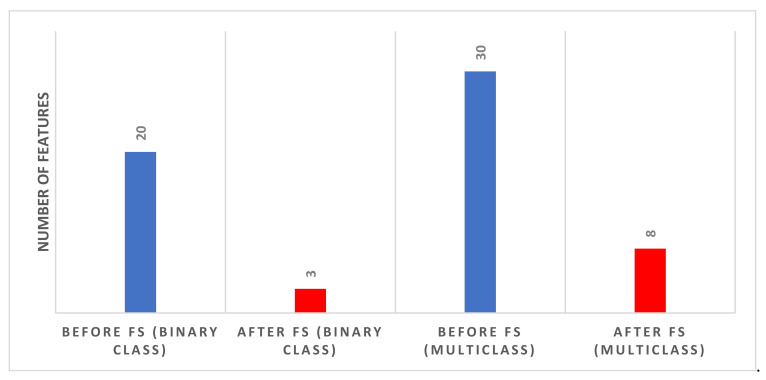
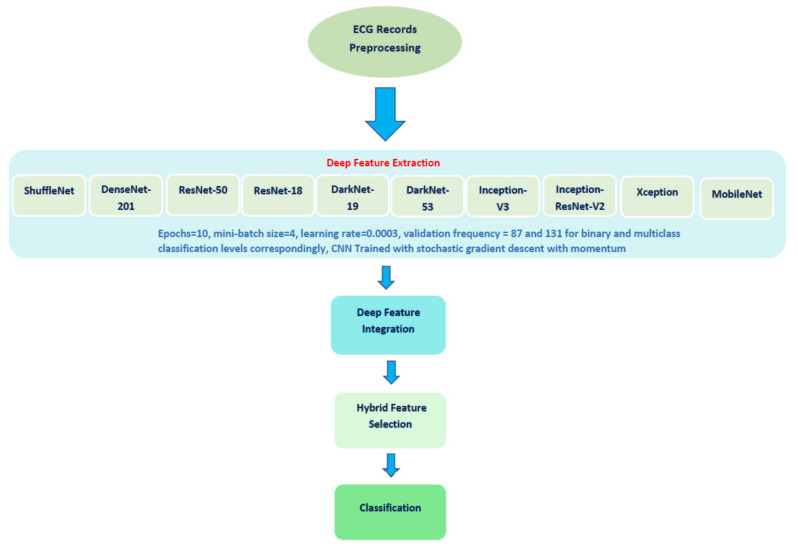
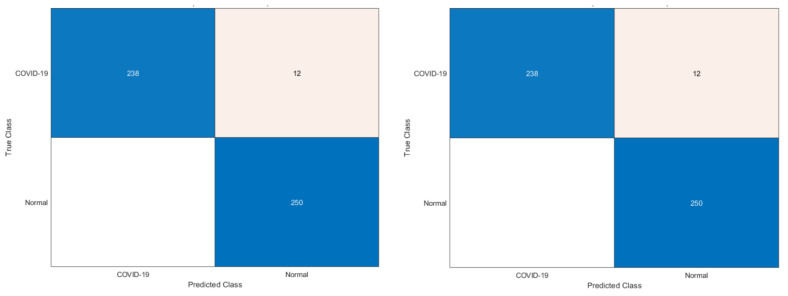
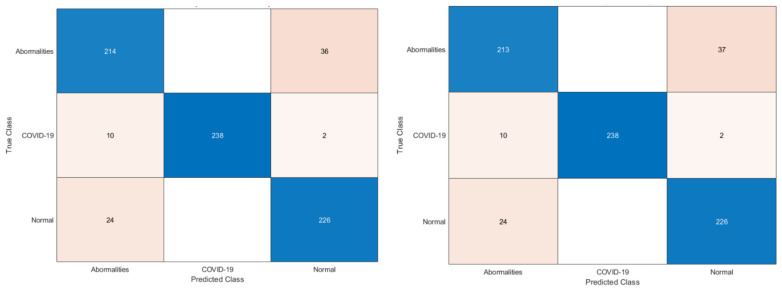
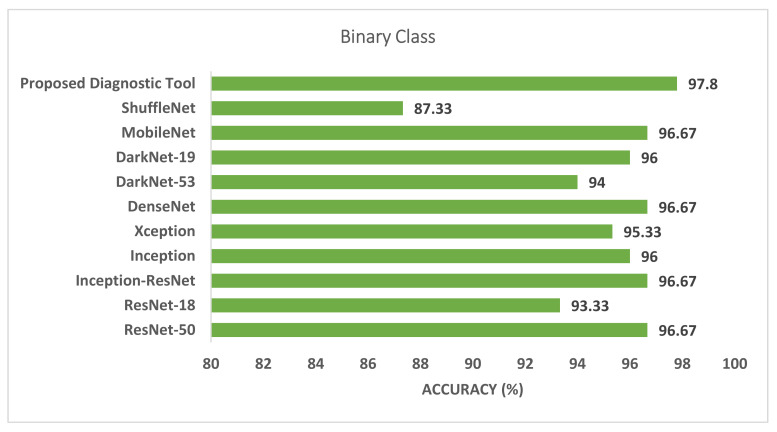
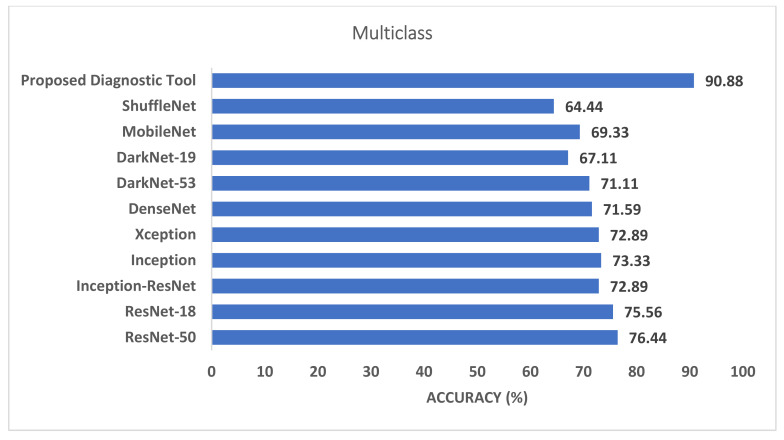
Diagnosing COVID-19 accurately and rapidly is vital to control its quick spread, lessen lockdown restrictions, and decrease the workload on healthcare structures. The present tools to detect COVID-19 experience numerous shortcomings. Therefore, novel diagnostic tools are to be examined to enhance diagnostic accuracy and avoid the limitations of these tools. Earlier studies indicated multiple structures of cardiovascular alterations in COVID-19 cases which motivated the realization of using ECG data as a tool for diagnosing the novel coronavirus. This study introduced a novel automated diagnostic tool based on ECG data to diagnose COVID-19. The introduced tool utilizes ten deep learning (DL) models of various architectures. It obtains significant features from the last fully connected layer of each DL model and then combines them. Afterward, the tool presents a hybrid feature selection based on the chi-square test and sequential search to select significant features. Finally, it employs several machine learning classifiers to perform two classification levels. A binary level to differentiate between normal and COVID-19 cases, and a multiclass to discriminate COVID-19 cases from normal and other cardiac complications. The proposed tool reached an accuracy of 98.2% and 91.6% for binary and multiclass levels, respectively. This performance indicates that the ECG could be used as an alternative means of diagnosis of COVID-19.
准确快速地诊断 COVID-19 对于控制其快速传播、减轻封锁限制和减少医疗结构的工作量至关重要。目前用于检测 COVID-19 的工具存在诸多不足。因此,需要研究新的诊断工具以提高诊断准确性并避免这些工具的局限性。早期研究表明 COVID-19 病例存在多种心血管改变的结构,这促使人们意识到可以使用心电图数据作为诊断新型冠状病毒的工具。本研究引入了一种基于心电图数据的新型自动诊断工具来诊断 COVID-19。该工具利用了十种具有不同架构的深度学习 (DL) 模型。它从每个 DL 模型的最后一个全连接层获取重要特征,然后将它们组合起来。之后,该工具基于卡方检验和顺序搜索提出了一种混合特征选择方法,以选择重要特征。最后,它使用几种机器学习分类器来执行两个分类级别。一个是区分正常和 COVID-19 病例的二进制级别,另一个是区分 COVID-19 病例与正常和其他心脏并发症的多类别级别。该工具在二进制和多类别级别上的准确率分别达到 98.2%和 91.6%。这一性能表明心电图可作为 COVID-19 的另一种诊断手段。