Pharoah Blaze M, Khodade Vinayak S, Eremiev Alexander, Bao Eric, Liu Ting, O'Rourke Brian, Paolocci Nazareno, Toscano John P
Department of Chemistry, Johns Hopkins University, Baltimore, MD 21218, USA.
Division of Cardiology, Johns Hopkins University School of Medicine, Baltimore, MD 21205, USA.
Antioxidants (Basel). 2022 May 20;11(5):1010. doi: 10.3390/antiox11051010.
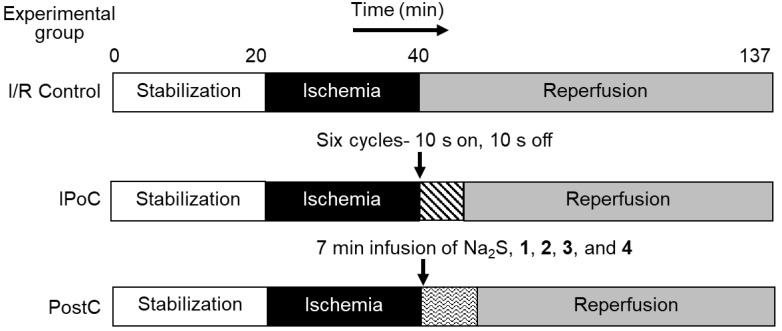
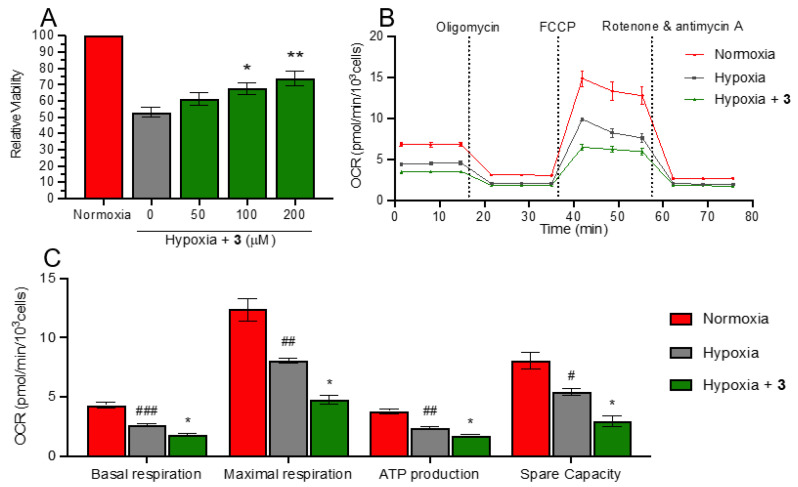
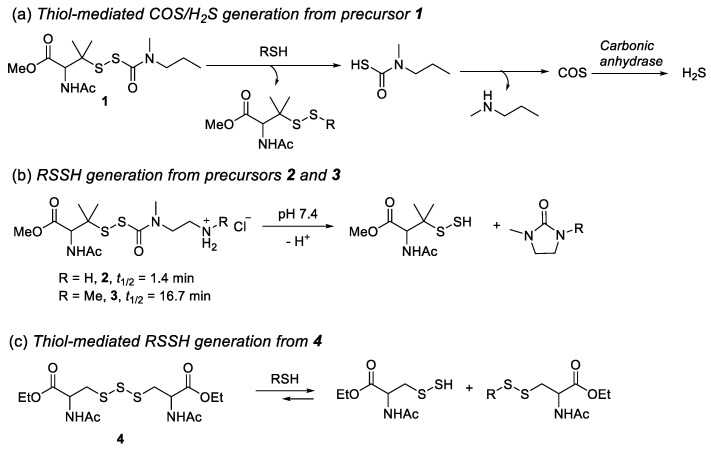
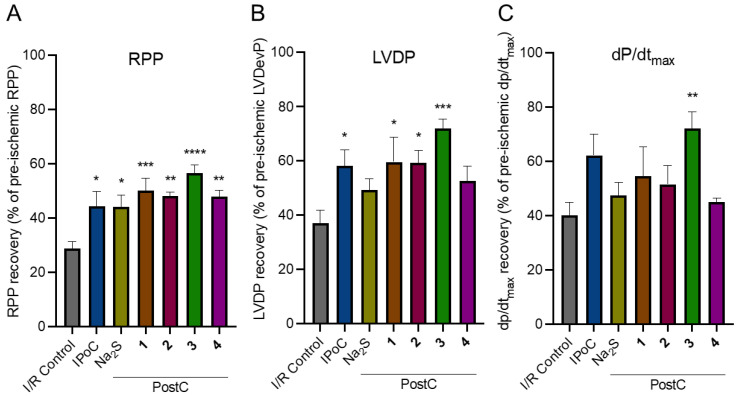
Hydrogen sulfide (HS) exhibits protective effects in cardiovascular disease such as myocardial ischemia/reperfusion (I/R) injury, cardiac hypertrophy, and atherosclerosis. Despite these findings, its mechanism of action remains elusive. Recent studies suggest that HS can modulate protein activity through redox-based post-translational modifications of protein cysteine residues forming hydropersulfides (RSSH). Furthermore, emerging evidence indicates that reactive sulfur species, including RSSH and polysulfides, exhibit cardioprotective action. However, it is not clear yet whether there are any pharmacological differences in the use of HS vs. RSSH and/or polysulfides. This study aims to examine the differing cardioprotective effects of distinct reactive sulfur species (RSS) such as HS, RSSH, and dialkyl trisulfides (RSSSR) compared with canonical ischemic post-conditioning in the context of a Langendorff ex-vivo myocardial I/R injury model. For the first time, a side-by-side study has revealed that exogenous RSSH donation is a superior approach to maintain post-ischemic function and limit infarct size when compared with other RSS and mechanical post-conditioning. Our results also suggest that RSSH preserves mitochondrial respiration in H9c2 cardiomyocytes exposed to hypoxia-reoxygenation via inhibition of oxidative phosphorylation while preserving cell viability.
硫化氢(HS)在心血管疾病如心肌缺血/再灌注(I/R)损伤、心肌肥大和动脉粥样硬化中具有保护作用。尽管有这些发现,但其作用机制仍不清楚。最近的研究表明,HS可通过对蛋白质半胱氨酸残基进行基于氧化还原的翻译后修饰形成过硫化氢(RSSH)来调节蛋白质活性。此外,新出现的证据表明,包括RSSH和多硫化物在内的活性硫物质具有心脏保护作用。然而,目前尚不清楚使用HS与RSSH和/或多硫化物在药理学上是否存在差异。本研究旨在在Langendorff离体心肌I/R损伤模型中,研究与经典缺血后处理相比,不同活性硫物质(RSS)如HS、RSSH和二烷基三硫化物(RSSSR)的不同心脏保护作用。首次有一项并列研究表明,与其他RSS和机械后处理相比,外源性RSSH供体是维持缺血后功能和限制梗死面积的更优方法。我们的结果还表明,RSSH通过抑制氧化磷酸化在暴露于缺氧-复氧的H9c2心肌细胞中保留线粒体呼吸,同时保持细胞活力。