Morowitz Jeremy M, Pogson Kaylyn B, Roque Daniel A, Church Frank C
Developmental and Stem Cell Biology Program, Duke University, Durham, NC 27708, USA.
School of Medicine, The University of North Carolina at Chapel Hill, Chapel Hill, NC 27599, USA.
Brain Sci. 2022 Apr 22;12(5):536. doi: 10.3390/brainsci12050536.
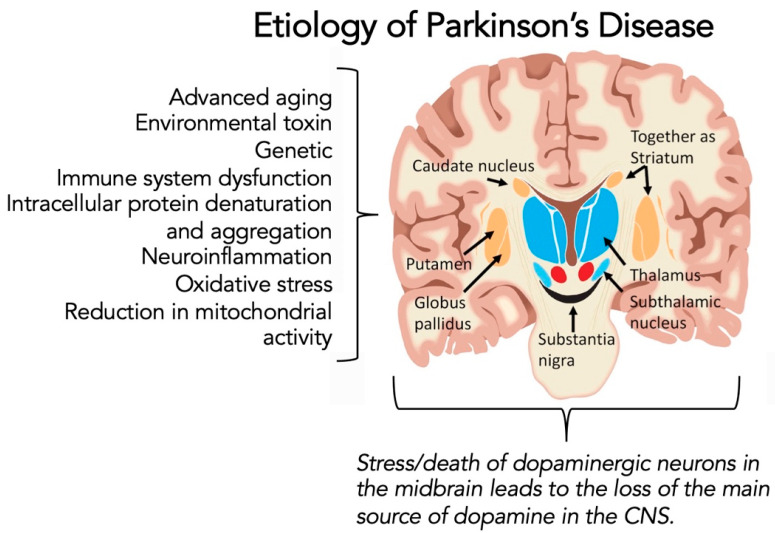
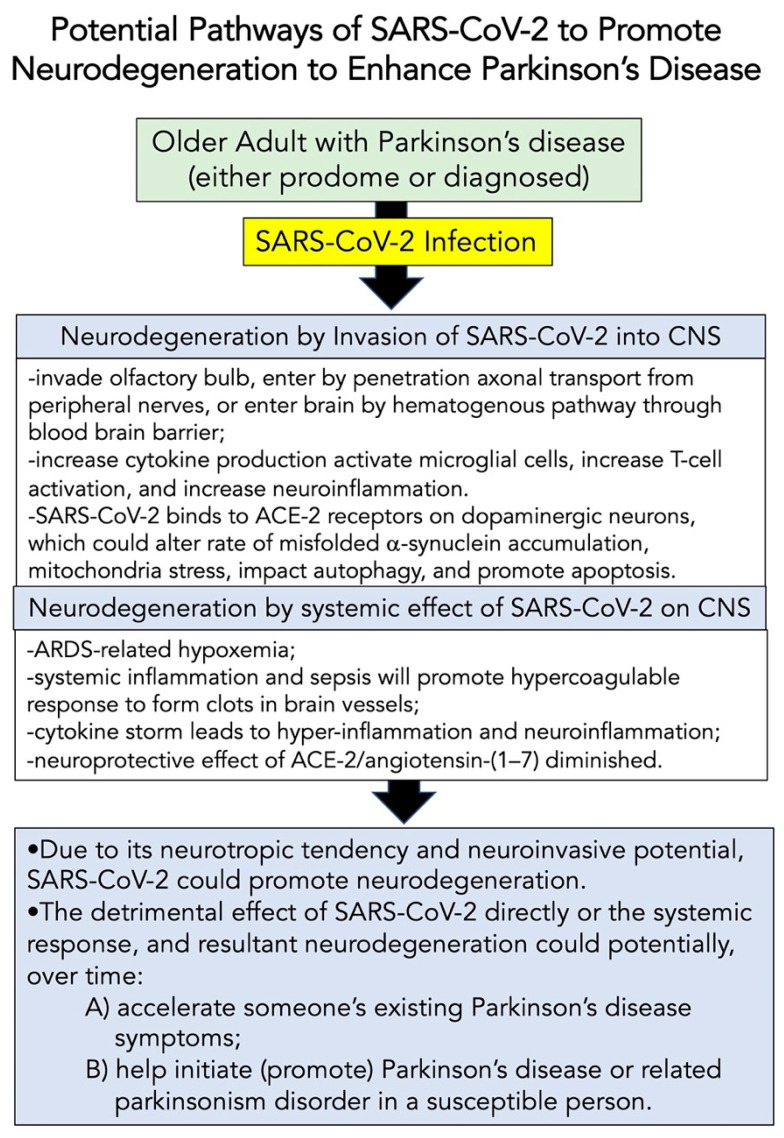
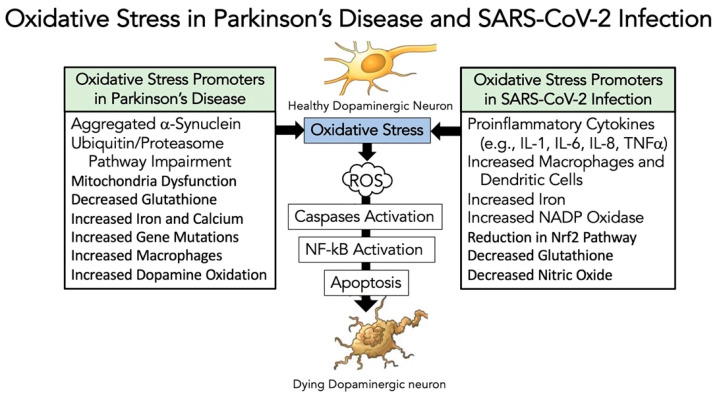
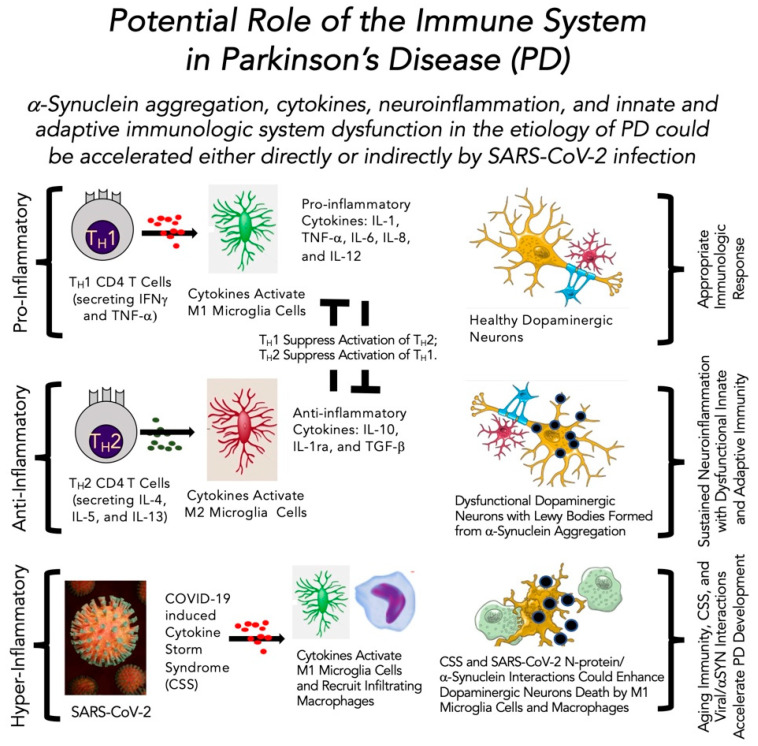
The COVID-19 pandemic, caused by SARS-CoV-2, continues to impact global health regarding both morbidity and mortality. Although SARS-CoV-2 primarily causes acute respiratory distress syndrome (ARDS), the virus interacts with and influences other organs and tissues, including blood vessel endothelium, heart, gastrointestinal tract, and brain. We are learning much about the pathophysiology of SARS-CoV-2 infection; however, we are just beginning to study and understand the long-term and chronic health consequences. Since the pandemic's beginning in late 2019, older adults, those with pre-existing illnesses, or both, have an increased risk of contracting COVID-19 and developing severe COVID-19. Furthermore, older adults are also more likely to develop the neurodegenerative disorder Parkinson's disease (PD), with advanced age as the most significant risk factor. Thus, does SARS-CoV-2 potentially influence, promote, or accelerate the development of PD in older adults? Our initial focus was aimed at understanding SARS-CoV-2 pathophysiology and the connection to neurodegenerative disorders. We then completed a literature review to assess the relationship between PD and COVID-19. We described potential molecular and cellular pathways that indicate dopaminergic neurons are susceptible, both directly and indirectly, to SARS-CoV-2 infection. We concluded that under certain pathological circumstances, in vulnerable persons-with-Parkinson's disease (PwP), SARS-CoV-2 acts as a neurodegenerative enhancer to potentially support the development or progression of PD and its related motor and non-motor symptoms.
由严重急性呼吸综合征冠状病毒2(SARS-CoV-2)引起的2019冠状病毒病大流行,在发病率和死亡率方面持续影响着全球健康。虽然SARS-CoV-2主要引起急性呼吸窘迫综合征(ARDS),但该病毒会与包括血管内皮、心脏、胃肠道和大脑在内的其他器官和组织相互作用并产生影响。我们对SARS-CoV-2感染的病理生理学了解很多;然而,我们才刚刚开始研究和理解其长期和慢性健康后果。自2019年末大流行开始以来,老年人、患有基础疾病的人或两者兼具的人感染2019冠状病毒病并发展为重症2019冠状病毒病的风险增加。此外,老年人也更有可能患上神经退行性疾病帕金森病(PD),高龄是最重要的风险因素。那么,SARS-CoV-2是否有可能影响、促进或加速老年人PD的发展呢?我们最初的重点是了解SARS-CoV-2的病理生理学以及与神经退行性疾病的联系。然后我们完成了一项文献综述,以评估PD与2019冠状病毒病之间的关系。我们描述了潜在的分子和细胞途径,这些途径表明多巴胺能神经元直接或间接易受SARS-CoV-2感染。我们得出结论,在某些病理情况下,对于帕金森病患者(PwP),SARS-CoV-2作为一种神经退行性增强剂,可能会支持PD及其相关运动和非运动症状的发展或进展。