Department of Neurology and Institute of Neurology, Ruijin Hospital, Shanghai Jiao Tong University School of Medicine, Shanghai, 200025, China.
Department of Neurology, Shanghai General Hospital, Shanghai, 200080, China.
Transl Neurodegener. 2023 Jan 30;12(1):5. doi: 10.1186/s40035-023-00337-1.
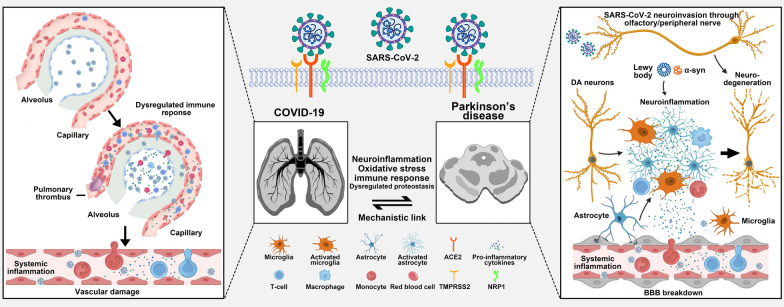
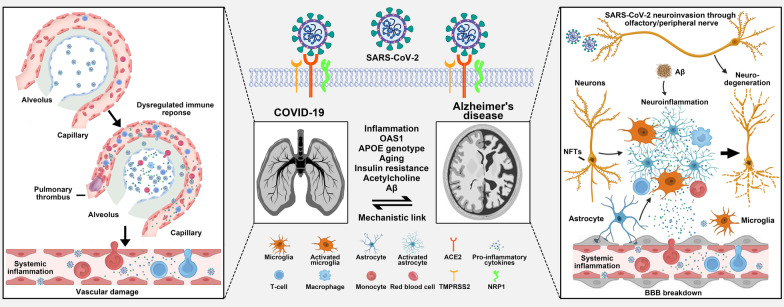
The impact of coronavirus disease 2019 (COVID-19) pandemic on patients with neurodegenerative diseases and the specific neurological manifestations of COVID-19 have aroused great interest. However, there are still many issues of concern to be clarified. Therefore, we review the current literature on the complex relationship between COVID-19 and neurodegenerative diseases with an emphasis on Parkinson's disease (PD) and Alzheimer's disease (AD). We summarize the impact of COVID-19 infection on symptom severity, disease progression, and mortality rate of PD and AD, and discuss whether COVID-19 infection could trigger PD and AD. In addition, the susceptibility to and the prognosis of COVID-19 in PD patients and AD patients are also included. In order to achieve better management of PD and AD patients, modifications of care strategies, specific drug therapies, and vaccines during the pandemic are also listed. At last, mechanisms underlying the link of COVID-19 with PD and AD are reviewed.
新型冠状病毒病 2019(COVID-19)大流行对神经退行性疾病患者和 COVID-19 的特定神经系统表现引起了极大关注。然而,仍有许多问题需要澄清。因此,我们复习了 COVID-19 与神经退行性疾病之间复杂关系的现有文献,重点是帕金森病(PD)和阿尔茨海默病(AD)。我们总结了 COVID-19 感染对 PD 和 AD 患者症状严重程度、疾病进展和死亡率的影响,并讨论了 COVID-19 感染是否会引发 PD 和 AD。此外,还包括 PD 患者和 AD 患者对 COVID-19 的易感性和预后。为了更好地管理 PD 和 AD 患者,还列出了大流行期间护理策略、特定药物治疗和疫苗的修改。最后,我们回顾了 COVID-19 与 PD 和 AD 之间联系的机制。