Cell & Molecular Biology Department, Mental Health Program, QIMR Berghofer Medical Research Institute, Brisbane, QLD 4006, Australia.
Faculty of Medicine, The University of Queensland, Brisbane, QLD 4006, Australia.
Cells. 2022 May 17;11(10):1662. doi: 10.3390/cells11101662.
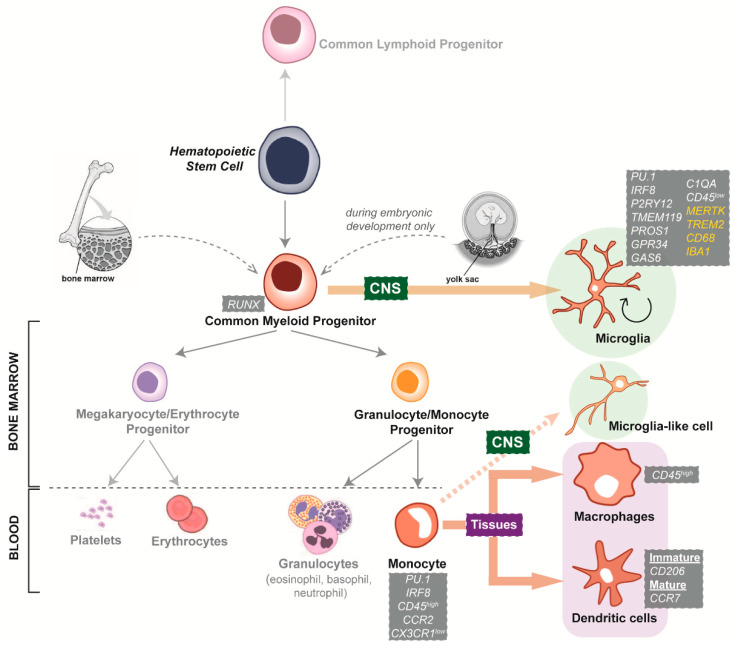
Neurodegenerative diseases are deteriorating conditions of the nervous system that are rapidly increasing in the ageing population. Increasing evidence suggests that neuroinflammation, largely mediated by microglia, the resident immune cells of the brain, contributes to the onset and progression of neurodegenerative diseases. Hence, microglia are considered a major therapeutic target that could potentially yield effective disease-modifying treatments for neurodegenerative diseases. Despite the interest in studying microglia as drug targets, the availability of cost-effective, flexible, and patient-specific microglia cellular models is limited. Importantly, the current model systems do not accurately recapitulate important pathological features or disease processes, leading to the failure of many therapeutic drugs. Here, we review the key roles of microglia in neurodegenerative diseases and provide an update on the current microglial plaforms utilised in neurodegenerative diseases, with a focus on human microglia-like cells derived from peripheral blood mononuclear cells as well as human-induced pluripotent stem cells. The described microglial platforms can serve as tools for investigating disease biomarkers and improving the clinical translatability of the drug development process in neurodegenerative diseases.
神经退行性疾病是神经系统的进行性恶化疾病,在老年人群体中迅速增加。越来越多的证据表明,神经炎症在很大程度上由小胶质细胞介导,小胶质细胞是大脑的常驻免疫细胞,有助于神经退行性疾病的发病和进展。因此,小胶质细胞被认为是一个主要的治疗靶点,有可能为神经退行性疾病提供有效的疾病修饰治疗方法。尽管人们对将小胶质细胞作为药物靶点进行了研究,但具有成本效益、灵活性和患者特异性的小胶质细胞细胞模型的可用性有限。重要的是,目前的模型系统不能准确地再现重要的病理特征或疾病过程,导致许多治疗药物的失败。在这里,我们综述了小胶质细胞在神经退行性疾病中的关键作用,并提供了当前用于神经退行性疾病的小胶质细胞平台的最新进展,重点介绍了源自外周血单核细胞的人类小胶质样细胞以及人类诱导多能干细胞。所描述的小胶质细胞平台可用作研究疾病生物标志物的工具,并提高神经退行性疾病药物开发过程的临床转化能力。