State Key Laboratory of Pathogenesis, Prevention and Treatment of High Incidence Diseases in Central Asia, Clinical Medical Research Institute, The First Affiliated Hospital of Xinjiang Medical University, Urumqi 830054, China.
Department of Pathology, Basic Medicine College, Xinjiang Medical University, Urumqi 830017, China.
Cells. 2022 May 17;11(10):1665. doi: 10.3390/cells11101665.
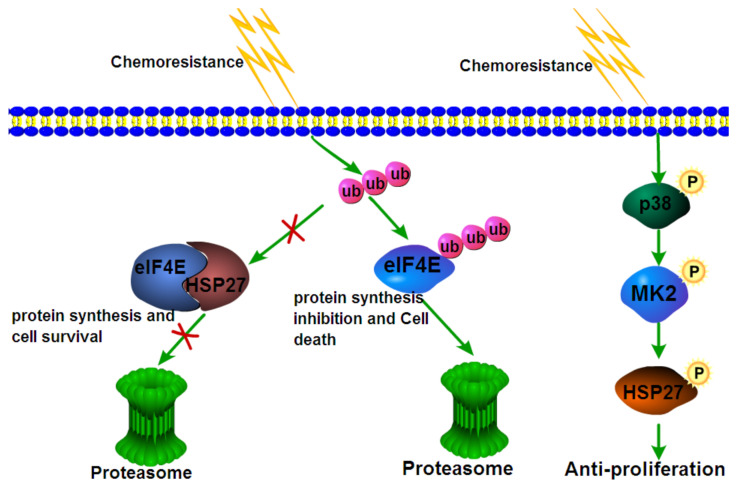
Initially discovered to be induced by heat shock, heat shock protein 27 (HSP27, also called HSPB1), a member of the small HSP family, can help cells better withstand or avoid heat shock damage. After years of studies, HSP27 was gradually found to be extensively engaged in various physiological or pathophysiological activities. Herein, revisiting the previously published data concerning HSP27, we conducted a critical review of the literature regarding its role in squamous cell carcinoma (SCC) from the perspective of clinicopathological and prognostic significance, excluding studies conducted on adenocarcinoma, which is very different from SCC, to understand the enigmatic role of HSP27 in the tumorigenesis of SCC, including normal mucosa, dysplasia, intraepithelial neoplasm, carcinoma in situ and invasive SCC.
最初发现热休克蛋白 27(HSP27,也称为 HSPB1)是由热休克诱导产生的,它是小分子 HSP 家族的一员,可帮助细胞更好地耐受或避免热休克损伤。经过多年的研究,HSP27 逐渐被发现广泛参与各种生理或病理生理活动。在此,我们重新审视了之前有关 HSP27 的发表数据,从临床病理和预后意义的角度对其在鳞状细胞癌(SCC)中的作用进行了文献综述,排除了对腺癌(与 SCC 非常不同)的研究,以了解 HSP27 在 SCC 肿瘤发生中的神秘作用,包括正常黏膜、发育不良、上皮内瘤变、原位癌和浸润性 SCC。