Coleman Mia J, Espino Luis M, Lebensohn Hernan, Zimkute Marija V, Yaghooti Negar, Ling Christina L, Gross Jessica M, Listwan Natalia, Cano Sandra, Garcia Vanessa, Lovato Debbie M, Tigert Susan L, Jones Drew R, Gullapalli Rama R, Rakov Neal E, Torrazza Perez Euriko G, Castillo Eliseo F
University of New Mexico School of Medicine, University of New Mexico Health Sciences Center, Albuquerque, NM 87131, USA.
Clinical and Translational Science Center, University of New Mexico Health Sciences Center, Albuquerque, NM 87131, USA.
Metabolites. 2022 May 11;12(5):431. doi: 10.3390/metabo12050431.
Metabolic Syndrome (MetS) is a clinical diagnosis where patients exhibit three out of the five risk factors: hypertriglyceridemia, low high-density lipoprotein (HDL) cholesterol, hyperglycemia, elevated blood pressure, or increased abdominal obesity. MetS arises due to dysregulated metabolic pathways that culminate with insulin resistance and put individuals at risk to develop various comorbidities with far-reaching medical consequences such as non-alcoholic fatty liver disease (NAFLD) and cardiovascular disease. As it stands, the exact pathogenesis of MetS as well as the involvement of the gastrointestinal tract in MetS is not fully understood. Our study aimed to evaluate intestinal health in human subjects with MetS.
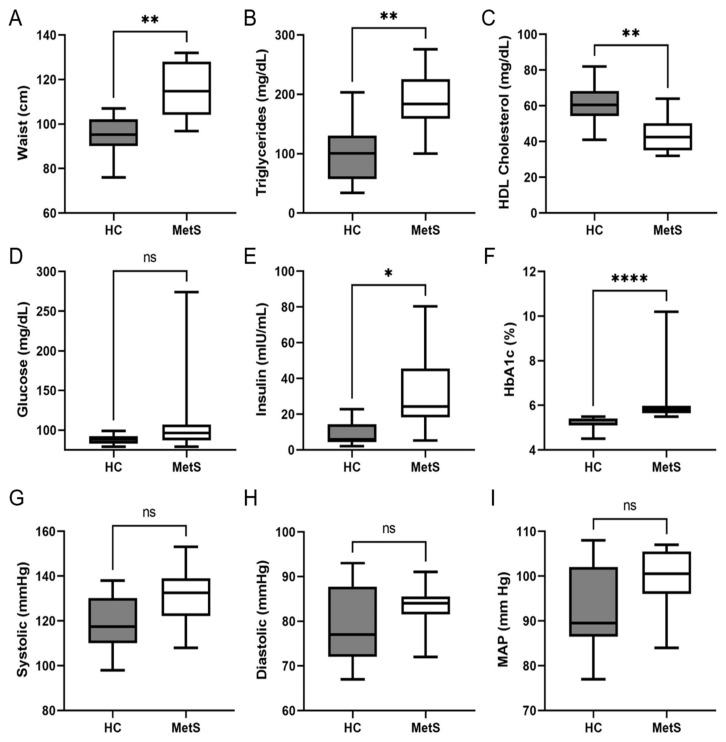
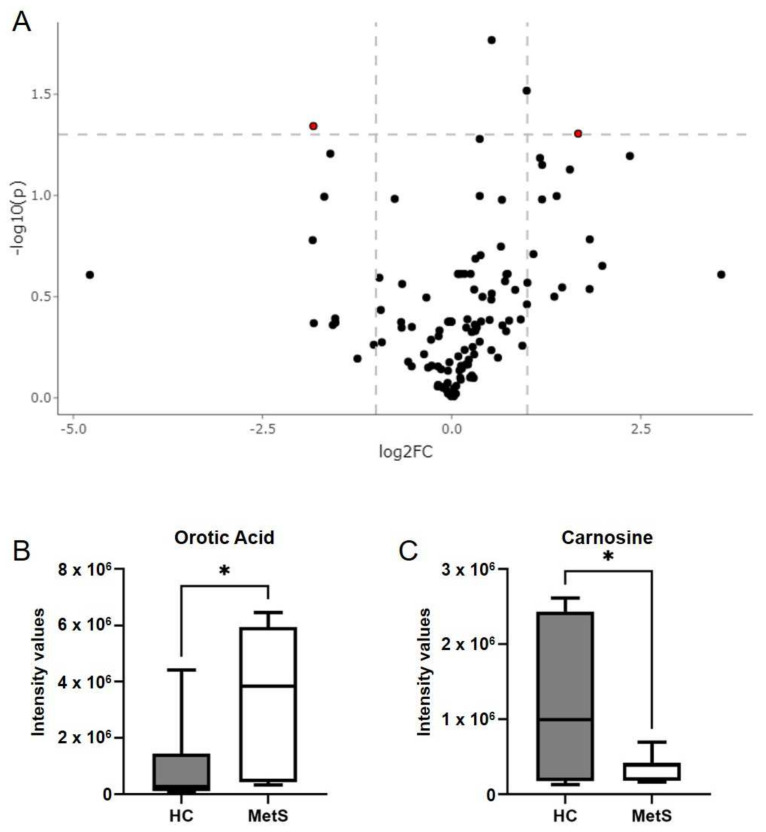
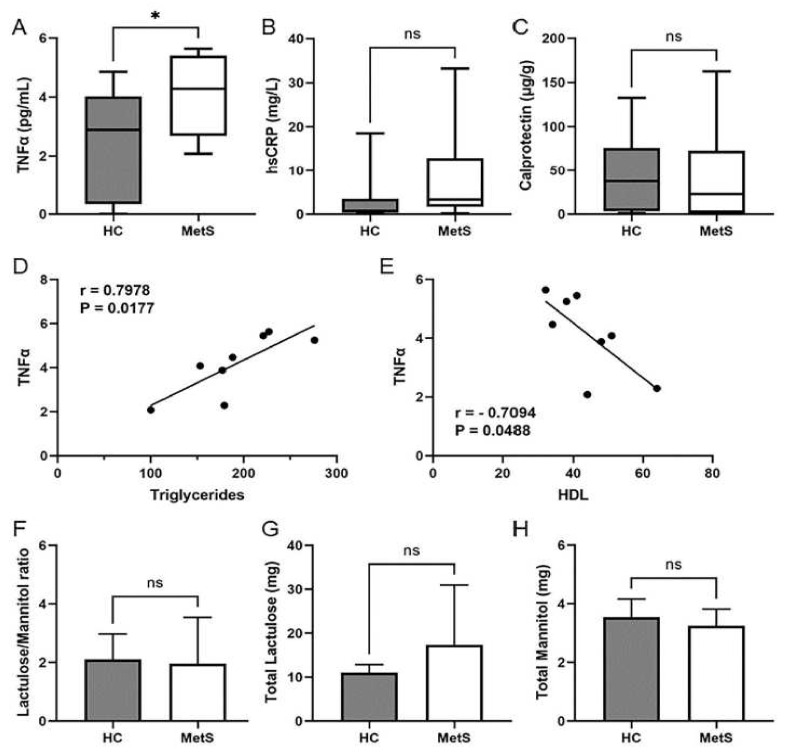
We examined MetS risk factors in individuals through body measurements and clinical and biochemical blood analysis. To evaluate intestinal health, gut inflammation was measured by fecal calprotectin, intestinal permeability through the lactulose-mannitol test, and utilized fecal metabolomics to examine alterations in the host-microbiota gut metabolism.
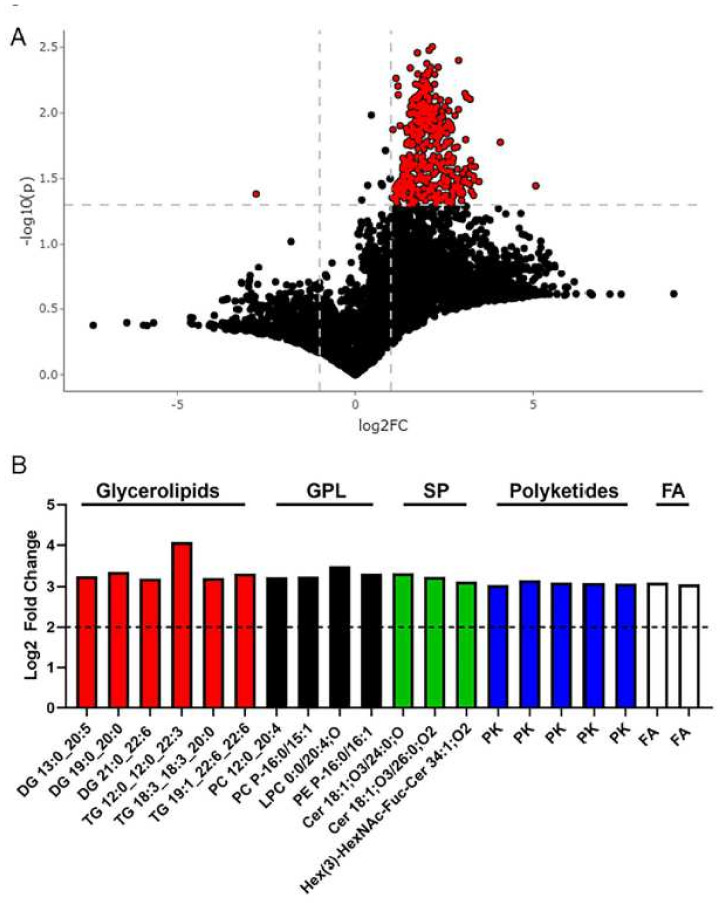
No signs of intestinal inflammation or increased intestinal permeability were observed in the MetS group compared to our control group. However, we found a significant increase in 417 lipid features of the gut lipidome in our MetS cohort. An identified fecal lipid, diacyl-glycerophosphocholine, showed a strong correlation with several MetS risk factors. Although our MetS cohort showed no signs of intestinal inflammation, they presented with increased levels of serum TNFα that also correlated with increasing triglyceride and fecal diacyl-glycerophosphocholine levels and decreasing HDL cholesterol levels.
Taken together, our main results show that MetS subjects showed major alterations in fecal lipid profiles suggesting alterations in the intestinal host-microbiota metabolism that may arise before concrete signs of gut inflammation or intestinal permeability become apparent. Lastly, we posit that fecal metabolomics could serve as a non-invasive, accurate screening method for both MetS and NAFLD.
代谢综合征(MetS)是一种临床诊断,患者表现出以下五个风险因素中的三个:高甘油三酯血症、低高密度脂蛋白(HDL)胆固醇、高血糖、血压升高或腹部肥胖增加。MetS是由于代谢途径失调导致胰岛素抵抗而引起的,使个体有患各种合并症的风险,这些合并症会产生深远的医学后果,如非酒精性脂肪性肝病(NAFLD)和心血管疾病。目前,MetS的确切发病机制以及胃肠道在MetS中的作用尚未完全了解。我们的研究旨在评估患有MetS的人类受试者的肠道健康状况。
我们通过身体测量以及临床和生化血液分析来检查个体的MetS风险因素。为了评估肠道健康,通过粪便钙卫蛋白测量肠道炎症,通过乳果糖-甘露醇试验测量肠道通透性,并利用粪便代谢组学来检查宿主-微生物群肠道代谢的变化。
与我们的对照组相比,MetS组未观察到肠道炎症迹象或肠道通透性增加。然而,我们发现MetS队列中肠道脂质组的417种脂质特征显著增加。一种已鉴定的粪便脂质二酰甘油磷酸胆碱与几种MetS风险因素密切相关。虽然我们的MetS队列没有肠道炎症迹象,但他们的血清TNFα水平升高,这也与甘油三酯和粪便二酰甘油磷酸胆碱水平升高以及HDL胆固醇水平降低相关。
综上所述,我们的主要结果表明,MetS受试者的粪便脂质谱存在重大改变,这表明肠道宿主-微生物群代谢发生了改变,这种改变可能在肠道炎症或肠道通透性的具体迹象出现之前就已发生。最后,我们认为粪便代谢组学可以作为一种用于MetS和NAFLD的非侵入性、准确的筛查方法。