Arnone Djésia, Vallier Marie, Hergalant Sébastien, Chabot Caroline, Ndiaye Ndeye Coumba, Moulin David, Aignatoaei Anda-Maria, Alberto Jean-Marc, Louis Huguette, Boulard Olivier, Mayeur Camille, Dreumont Natacha, Peuker Kenneth, Strigli Anne, Zeissig Sebastian, Hansmannel Franck, Chamaillard Matthias, Kökten Tunay, Peyrin-Biroulet Laurent
Inserm U1256, Nutrition Genetics and Exposition NGERE, Université de Lorraine, Nancy, France.
Section of Evolutionary Medicine, Institute for Experimental Medicine, Kiel University and Max Planck Institute for Evolutionary Biology, Plön, Germany.
Front Nutr. 2021 Nov 18;8:758518. doi: 10.3389/fnut.2021.758518. eCollection 2021.
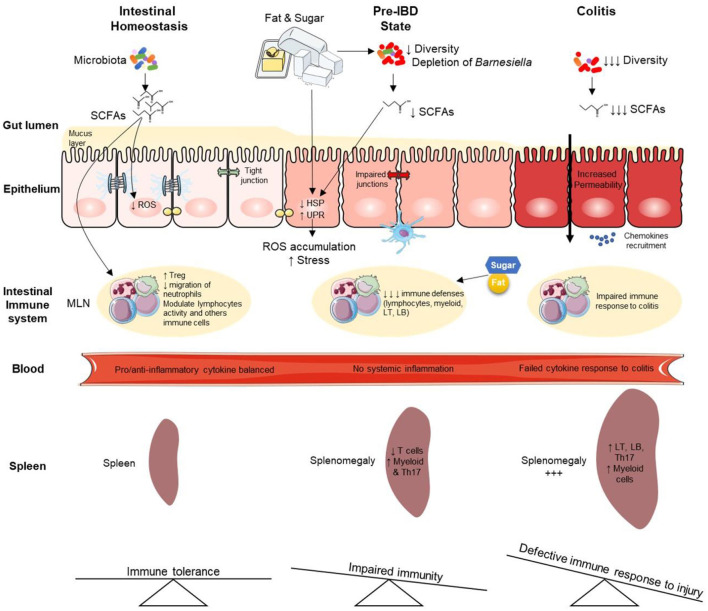
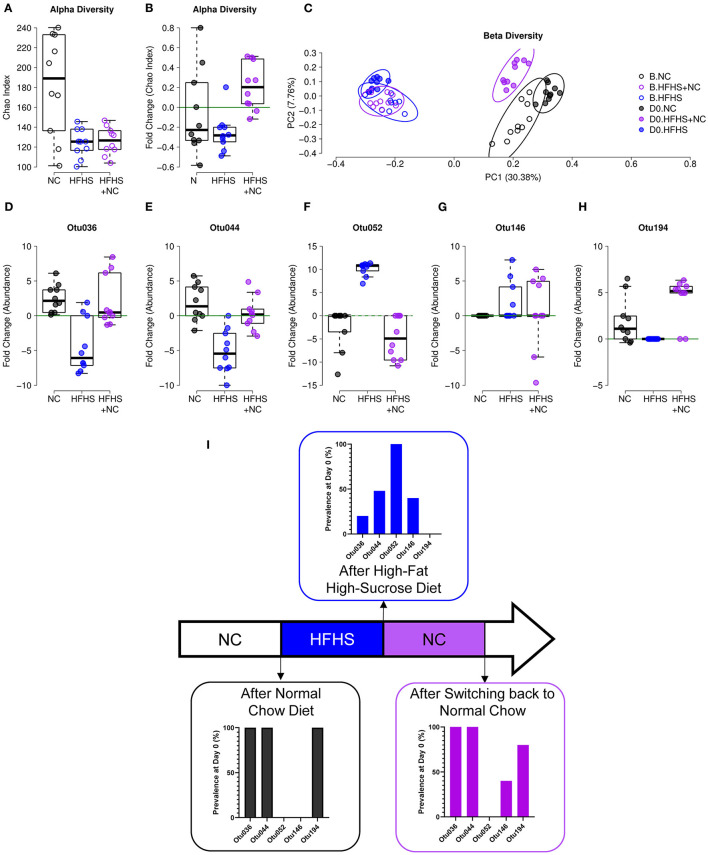
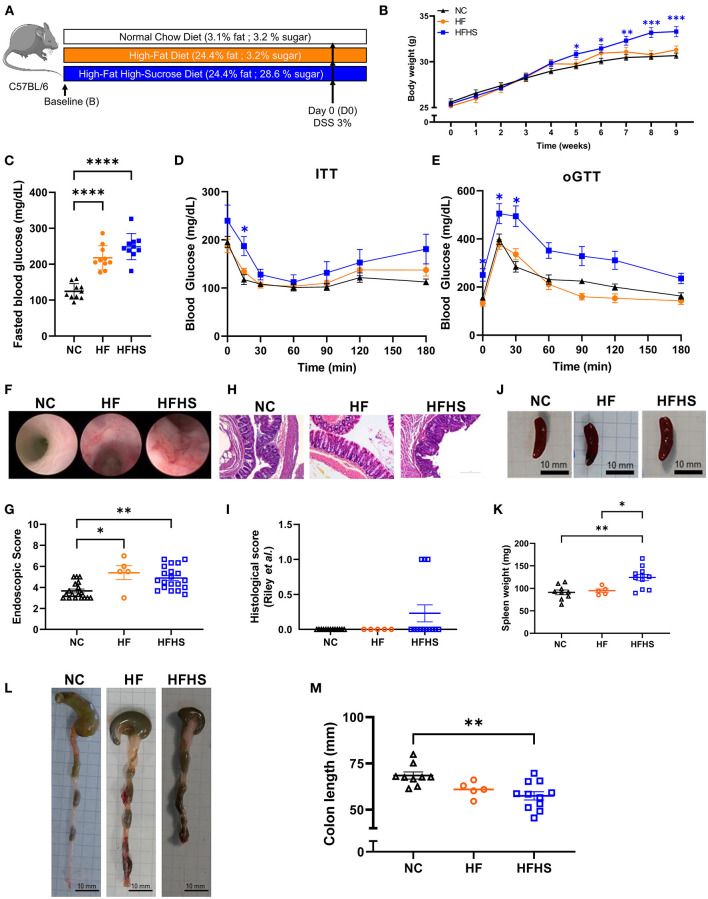
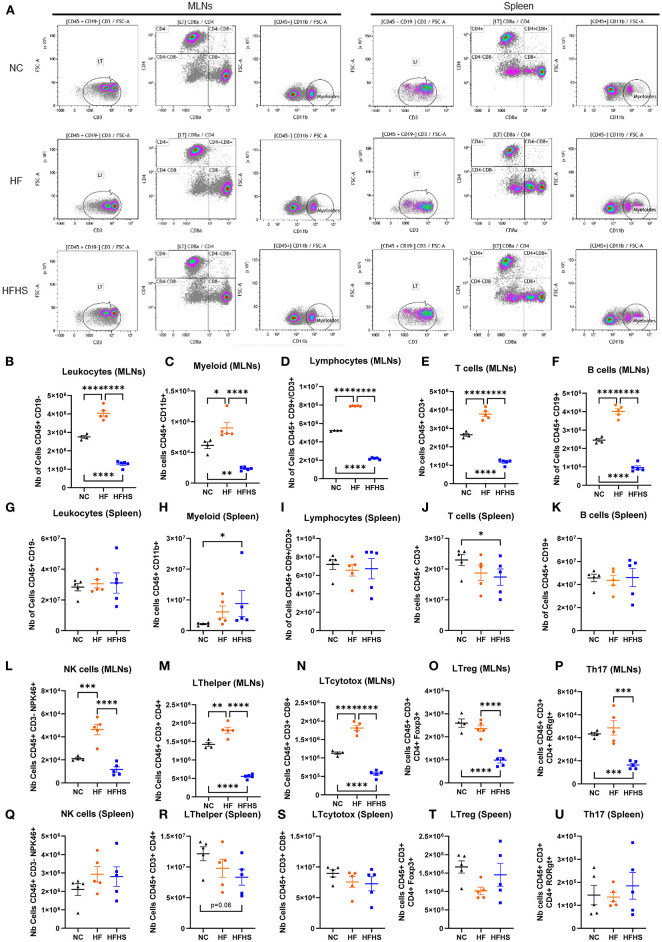
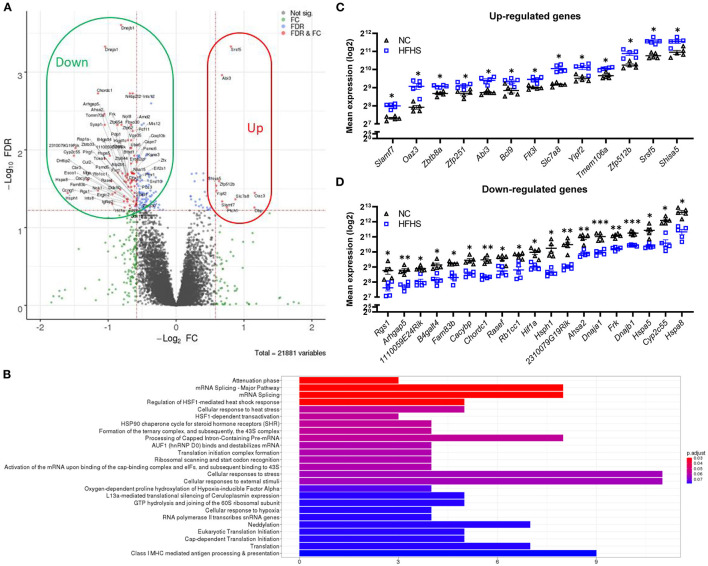
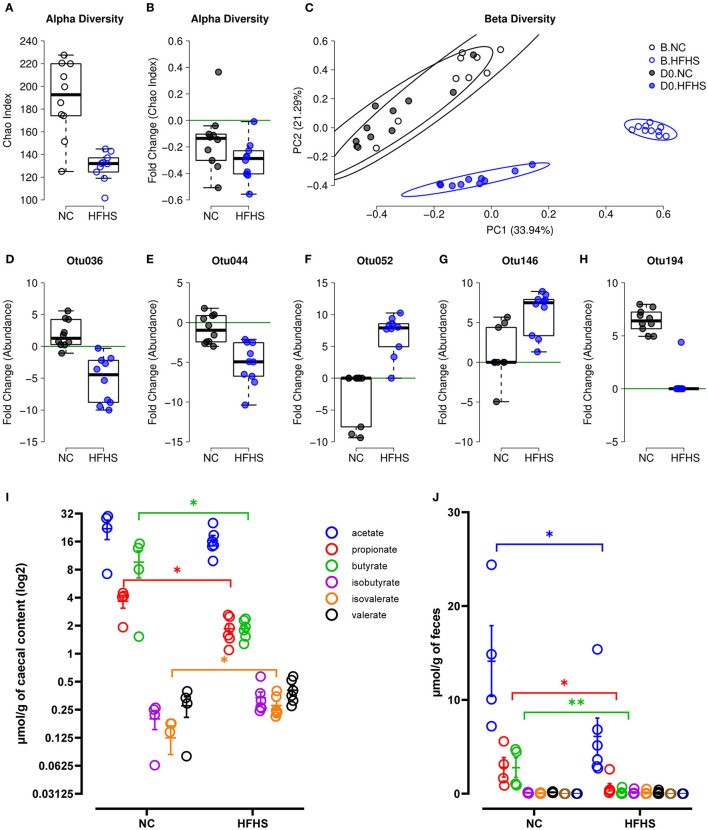
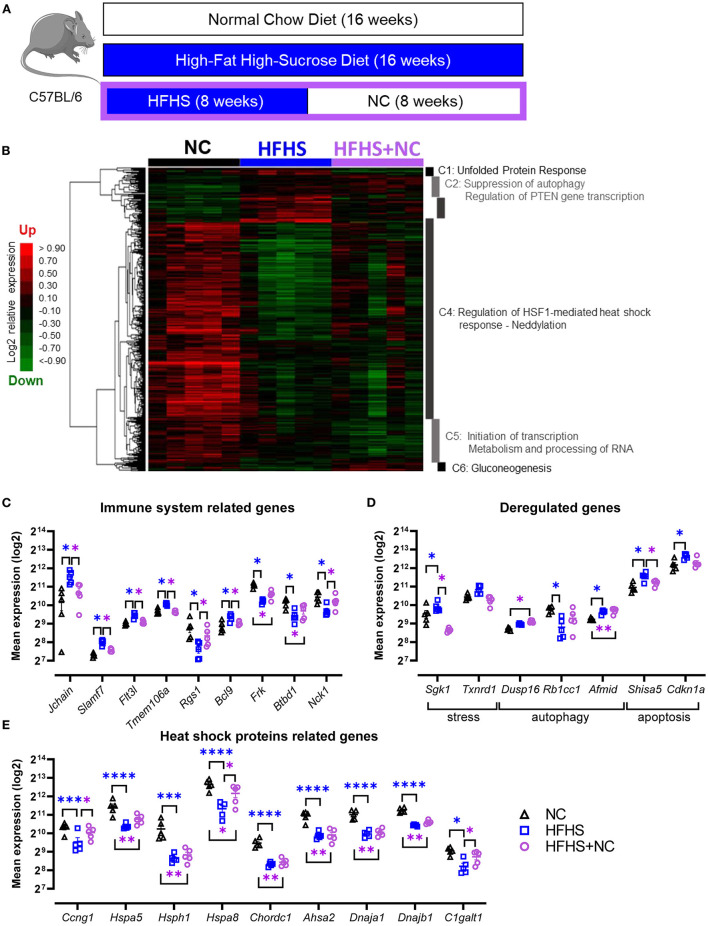
Nutrition appears to be an important environmental factor involved in the onset of inflammatory bowel diseases (IBD) through yet poorly understood biological mechanisms. Most studies focused on fat content in high caloric diets, while refined sugars represent up to 40% of caloric intake within industrialized countries and contribute to the growing epidemics of inflammatory diseases. Herein we aim to better understand the impact of a high-fat-high-sucrose diet on intestinal homeostasis in healthy conditions and the subsequent colitis risk. We investigated the early events and the potential reversibility of high caloric diet-induced damage in mice before experimental colitis. C57BL/6 mice were fed with a high-fat or high-fat high-sucrose or control diet before experimental colitis. In healthy mice, a high-fat high-sucrose diet induces a pre-IBD state characterized by gut microbiota dysbiosis with a total depletion of bacteria belonging to Barnesiella that is associated with subclinical endoscopic lesions. An overall down-regulation of the colonic transcriptome converged with broadly decreased immune cell populations in the mesenteric lymph nodes leading to the inability to respond to tissue injury. Such effects on microbiome and transcriptome were partially restored when returning to normal chow. Long-term consumption of diet enriched in sucrose and fat predisposes mice to colitis. This enhanced risk is preceded by gut microbiota dysbiosis and transcriptional reprogramming of colonic genes related to IBD. Importantly, diet-induced transcriptome and microbiome disturbances are partially reversible after switching back to normal chow with persistent sequelae that may contribute to IBD predisposition in the general population.
营养似乎是通过尚未完全了解的生物学机制参与炎症性肠病(IBD)发病的重要环境因素。大多数研究集中在高热量饮食中的脂肪含量,而在工业化国家,精制糖占热量摄入的40%,并导致炎症性疾病的流行日益增加。在此,我们旨在更好地了解高脂肪高糖饮食对健康状态下肠道稳态的影响以及随后的结肠炎风险。我们研究了实验性结肠炎前高热量饮食诱导的小鼠损伤的早期事件及其潜在的可逆性。在实验性结肠炎前,给C57BL/6小鼠喂食高脂肪或高脂肪高糖或对照饮食。在健康小鼠中,高脂肪高糖饮食会诱导一种IBD前期状态,其特征是肠道微生物群失调,属于巴恩斯氏菌属的细菌完全缺失,这与亚临床内镜病变有关。结肠转录组的整体下调与肠系膜淋巴结中免疫细胞群体的广泛减少相一致,导致无法对组织损伤作出反应。当恢复正常饮食时,对微生物组和转录组的这种影响会部分恢复。长期食用富含蔗糖和脂肪的饮食会使小鼠易患结肠炎。这种增加的风险之前是肠道微生物群失调和与IBD相关的结肠基因的转录重编程。重要的是,饮食诱导的转录组和微生物组紊乱在恢复正常饮食后部分可逆,但会留下持续的后遗症,这可能导致普通人群易患IBD。