Division of Plastic, Aesthetic and Reconstructive Surgery, Department of Sugery, Medical University of Graz, 8036 Graz, Austria.
Medicina (Kaunas). 2022 Apr 19;58(5):563. doi: 10.3390/medicina58050563.
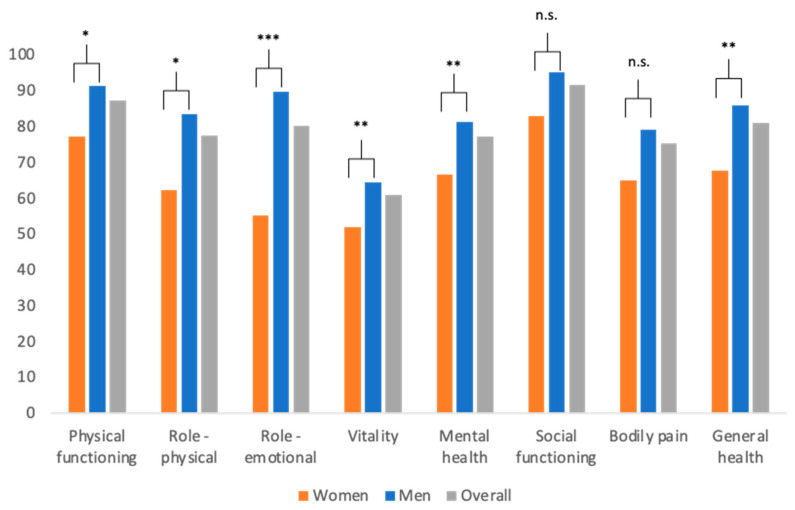
Background and Objectives: After burns, social reintegration is a primary long-term objective. At the same time, substance-abuse disorders are more common in burn patients. The aim of this study was to assess prevalence of substance abuse pre- and postburn as well as living situation and relationship status relative to patient-reported health-related quality of life (HRQoL). Patients and Methods: Burn survivors treated as inpatients between 1 January 2012 and 31 December 2019 were retrospectively identified. Collected clinical data included: age, gender, time since injury, burn extent (%TBSA), and substance abuse. Patient-reported living situation, relationship status, smoking habits, alcohol and drug consumption pre- and postburn as well as the SF-36 study were ascertained via telephone survey. Inductive statistical analysis comprised uni- and multivariate testing. A p < 0.05 was considered as statistically significant. Results: A total of 128 patients, 93 (72.7%) men, with a mean age of 40.0 ± 15.7 years were included. Mean TBSA was 9.2 ± 11.0% and significantly lower in women (p = 0.005). General health SF-36 scores were significantly lower in women (67.6 ± 29.8) than men (86.0 ± 20.8, p = 0.002). Smoking decreased from 38.8% pre- to 31.1% postburn. A significant reduction in alcohol consumption was noted over time (p = 0.019). The rate of never-drinkers was 18.0% pre- and 27.3% postburn. Drug abuse was rare both pre- (7.8%) and postburn (5.3%). Living situation remained stable. None of the participants depended on assisted living or lived in a care facility postburn. In total, 75.8% and 67.2% were in a relationship pre- and postburn. Patients with higher alcohol consumption postburn were significantly more often male (p = 0.013) and had higher SF-36 general health scores (p < 0.001). Conclusions: HRQoL is better in men than in women after burn injury. A slight decrease in substance abuse postburn was noted. The connection between HRQoL and substance abuse after burn injuries needs to be investigated further in the future.
烧伤后,社会重新融入是一个主要的长期目标。与此同时,烧伤患者中物质滥用障碍更为常见。本研究的目的是评估烧伤前和烧伤后物质滥用的发生率,以及与患者报告的健康相关生活质量(HRQoL)相关的生活状况和关系状况。
回顾性确定 2012 年 1 月 1 日至 2019 年 12 月 31 日期间住院治疗的烧伤幸存者。收集的临床数据包括:年龄、性别、受伤时间、烧伤面积(%TBSA)和物质滥用。通过电话调查确定患者报告的生活状况、关系状况、吸烟习惯、烧伤前后的酒精和药物使用情况以及 SF-36 研究。进行单变量和多变量检验的归纳统计分析。p < 0.05 被认为具有统计学意义。
共纳入 128 名患者,93 名(72.7%)为男性,平均年龄为 40.0 ± 15.7 岁。平均 TBSA 为 9.2 ± 11.0%,女性明显较低(p = 0.005)。女性的一般健康 SF-36 评分明显低于男性(67.6 ± 29.8)(p = 0.002)。吸烟从烧伤前的 38.8%降至烧伤后的 31.1%。随着时间的推移,酒精摄入量显著减少(p = 0.019)。从不饮酒者的比例烧伤前为 18.0%,烧伤后为 27.3%。烧伤前后药物滥用均罕见(分别为 7.8%和 5.3%)。烧伤后,生活状况保持稳定。无一人依赖辅助生活或居住在护理机构。总的来说,烧伤前有 75.8%和烧伤后有 67.2%的人处于恋爱关系中。烧伤后饮酒量较高的患者中,男性明显较多(p = 0.013),SF-36 一般健康评分也较高(p < 0.001)。
烧伤后,男性的 HRQoL 优于女性。烧伤后物质滥用略有减少。烧伤后 HRQoL 与物质滥用之间的关系需要进一步研究。