Division of Plastic, Aesthetic and Reconstructive Surgery, Department of Surgery, Medical University of Graz, 8036 Graz, Austria.
Medicina (Kaunas). 2022 Apr 27;58(5):599. doi: 10.3390/medicina58050599.
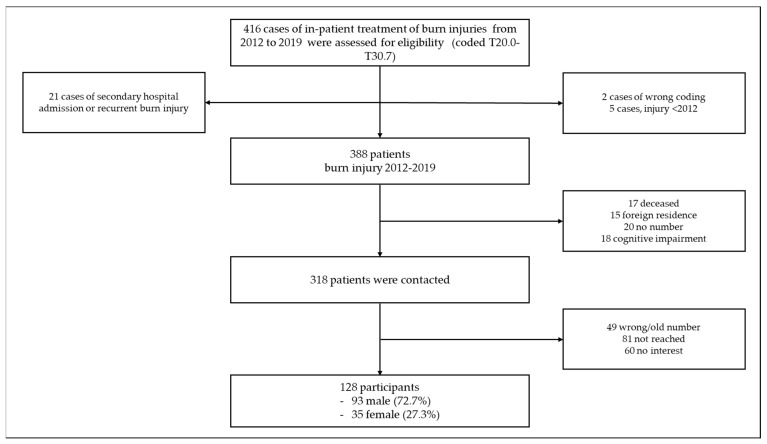
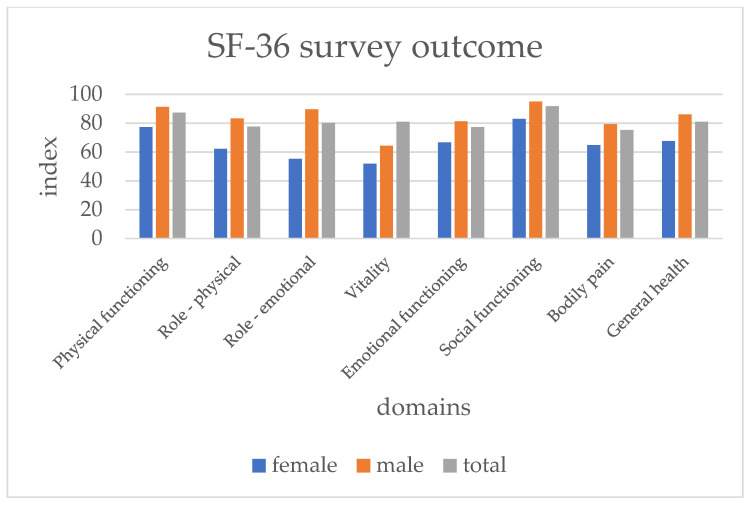
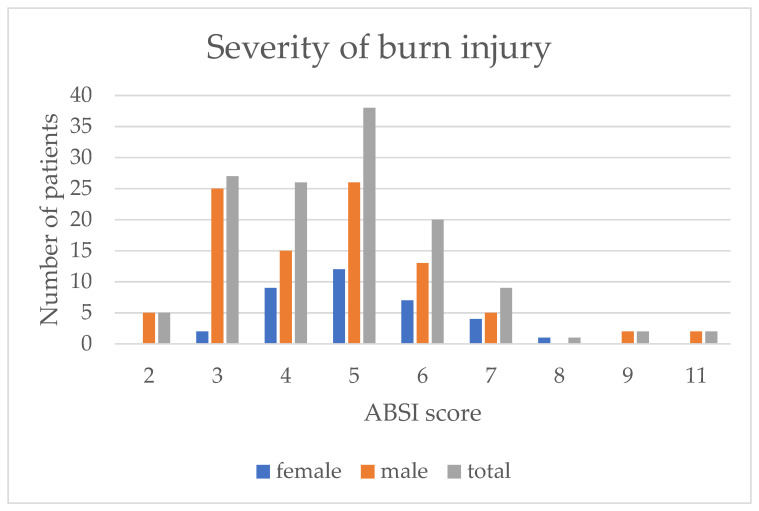
Background and Objectives: As advances in medicine are proceeding, so are treatment goals shifting from sheer mortality rates to improving HRQoL and social reintegration after burn injury. Following this trend, we aimed to assess HRQoL, employment and life satisfaction after burn injury to gain insight on confounding factors. Materials and Methods: This single-center follow-up study was conducted using the SF-36 V1.0 in German and further questions evaluating employment and life satisfaction. It reached 128 adult in-patients (recall 33.0%) with former burn injuries, treated between 2012 and 2019 at the Division of Plastic, Aesthetic and Reconstructive Surgery at the University Hospital of Graz. The questionnaire outcomes were set into relation with clinical data obtained from the medical records. Statistical analysis was performed with SPSS 27.0 for Windows. Results: Of the 128 participants, 72.7% were male and 27.3% female. The mean age at the time of injury was 40.0 ± 15.7 years and mean %TBSA among the study population was 9.2 ± 11.0%. The male patients had sustained more extensive injuries (p = 0.005). However, the female patients scored significantly (p < 0.05) and consistently lower in all the domains of the SF-36, except for “bodily pain” (p = 0.061). Moreover, the female patients scored lower in all the domains of life satisfaction, although significant differences were only found in the domains of fulfillment (p = 0.050) and mental wellbeing (p = 0.015). Furthermore, employment status differed significantly between the male and female patients before as well as after the burn injury. Proportionally less women were employed at both time points. Overall, unemployment had declined. Conclusions: Life satisfaction after burn injury in this study cohort seems to be good. Return to work has shown a promising trend. Strikingly, HRQoL and life satisfaction were lower in women after burn injury. Further research on the reasons for this gender discrepancy might improve HRQoL and life satisfaction after burns.
随着医学的进步,治疗目标也从单纯的死亡率转向提高烧伤后患者的生命质量和社会融合度。为了跟上这一趋势,我们旨在评估烧伤患者的生命质量、就业和生活满意度,以了解相关的混杂因素。
这是一项在德国进行的单中心随访研究,使用 SF-36 V1.0 量表和进一步评估就业和生活满意度的问题进行。研究对象为 2012 年至 2019 年期间在格拉茨大学医院整形、美容和重建外科接受治疗的 128 例成年烧伤患者(召回率 33.0%)。将问卷结果与从病历中获得的临床数据进行比较。使用 SPSS 27.0 for Windows 进行统计分析。
128 名参与者中,72.7%为男性,27.3%为女性。受伤时的平均年龄为 40.0 ± 15.7 岁,研究人群中的平均烧伤面积为 9.2 ± 11.0%。男性患者的烧伤面积较大(p = 0.005)。然而,女性患者在 SF-36 的所有领域得分均显著较低(p < 0.05),除了“身体疼痛”(p = 0.061)。此外,女性患者在所有生活满意度领域的得分均较低,尽管仅在满足感(p = 0.050)和心理健康(p = 0.015)领域存在显著差异。此外,烧伤前后男女患者的就业状况存在显著差异。在这两个时间点,女性就业的比例均较低。总体而言,失业人数有所下降。
在本研究队列中,烧伤后的生活满意度似乎较好。重返工作岗位的趋势也很有希望。引人注目的是,女性烧伤后生命质量和生活满意度较低。进一步研究造成这种性别差异的原因可能会提高烧伤患者的生命质量和生活满意度。