Petrisor Gabriela, Ficai Denisa, Motelica Ludmila, Trusca Roxana Doina, Bîrcă Alexandra Cătălina, Vasile Bogdan Stefan, Voicu Georgeta, Oprea Ovidiu Cristian, Semenescu Augustin, Ficai Anton, Popitiu Mircea Ionut, Fierascu Irina, Fierascu Radu Claudiu, Radu Elena Lacramioara, Matei Lilia, Dragu Laura Denisa, Pitica Ioana Madalina, Economescu Mihaela, Bleotu Coralia
Science and Engineering of Oxide Materials and Nanomaterials, Faculty of Applied Chemistry and Materials Science, University POLITEHNICA of Bucharest, Gh. Polizu 1-7, 011061 Bucharest, Romania.
National Research Center for Food Safety, University POLITEHNICA of Bucharest, Splaiul Independentei 313, 060042 Bucharest, Romania.
Nanomaterials (Basel). 2022 May 12;12(10):1648. doi: 10.3390/nano12101648.
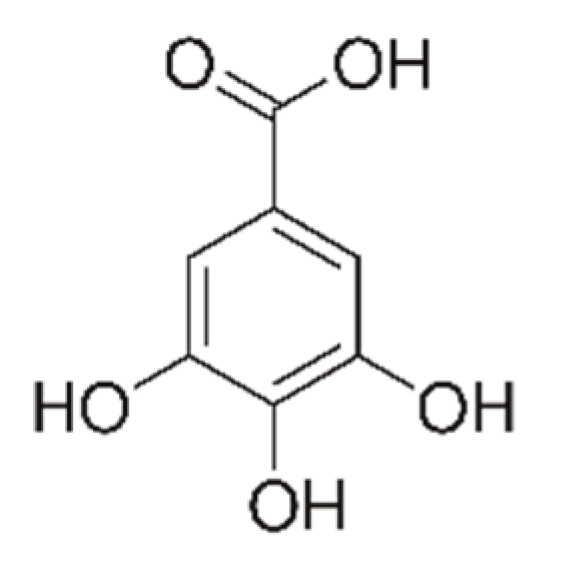
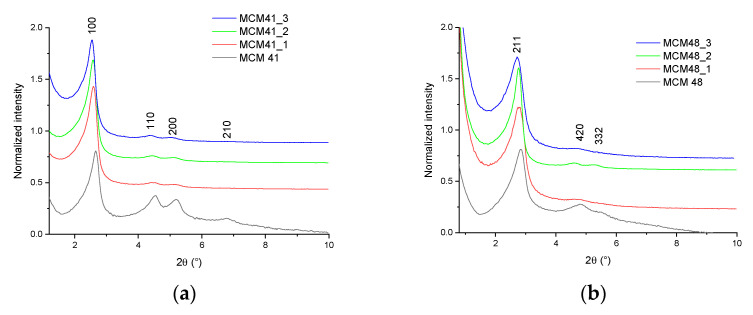
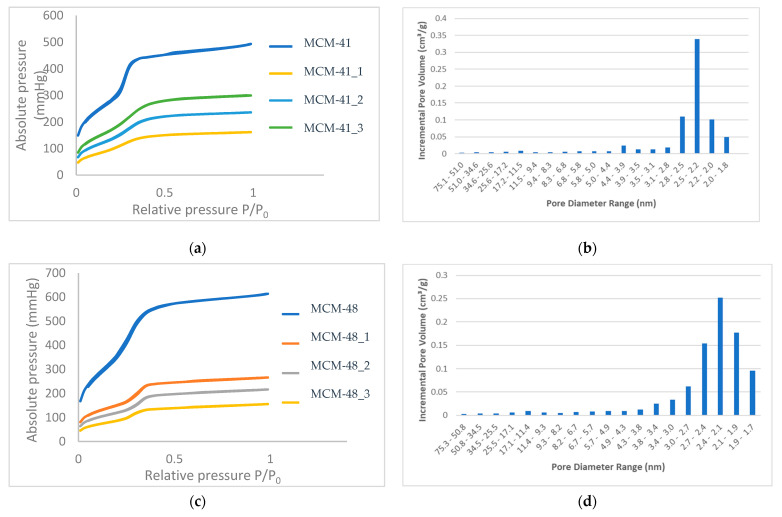
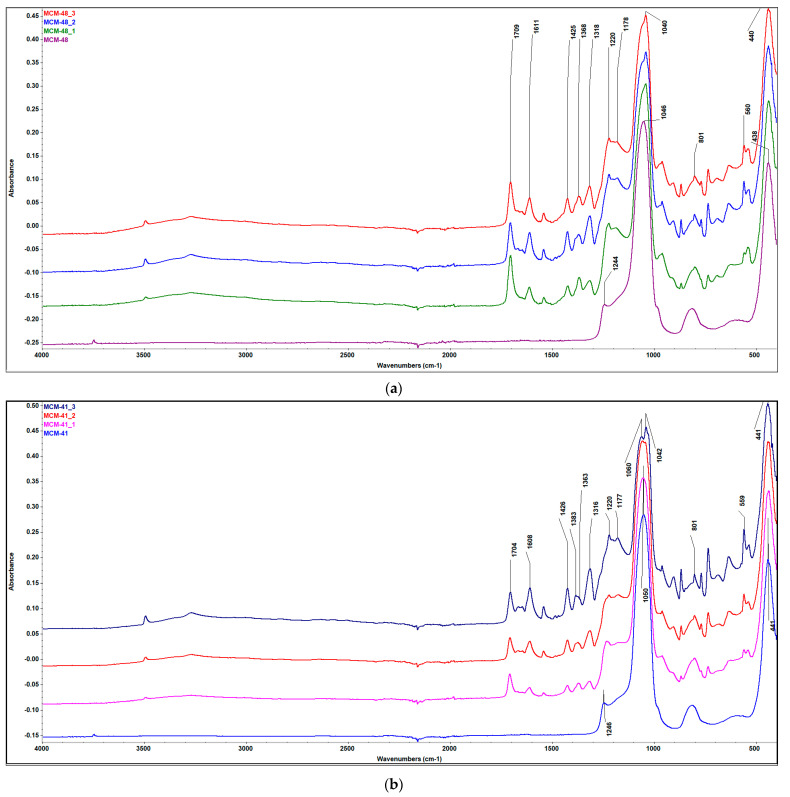
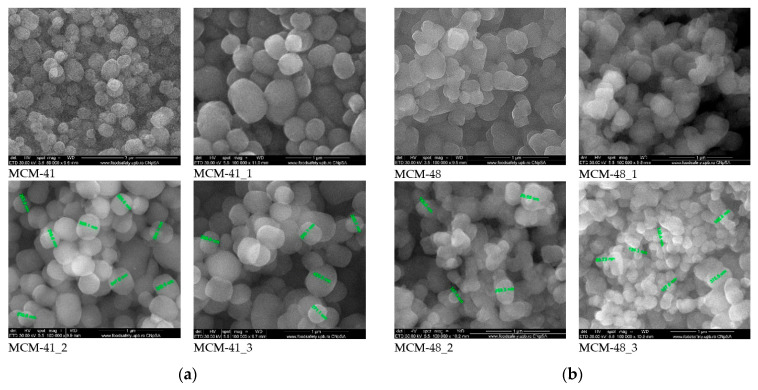
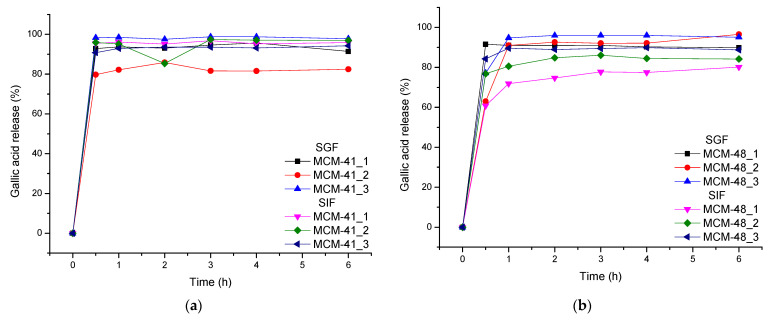
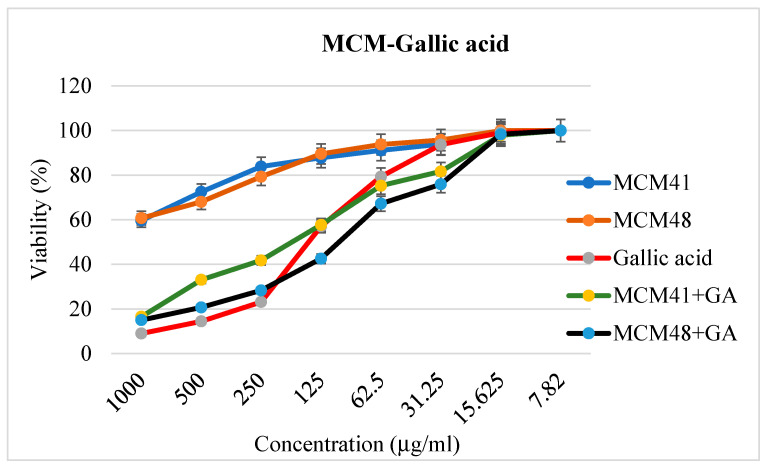
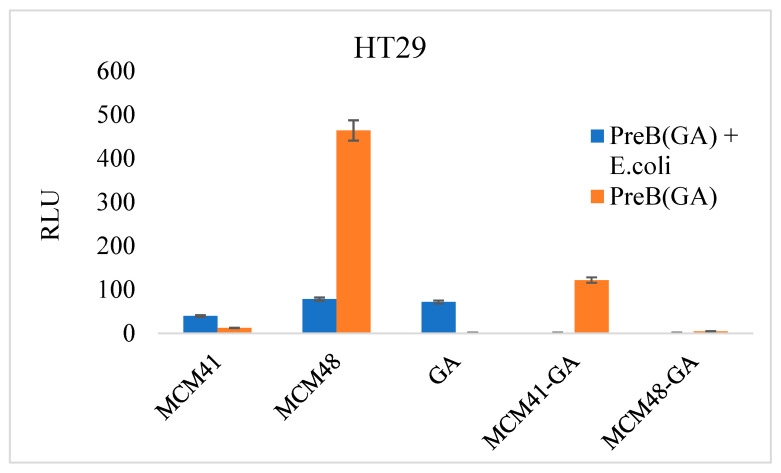
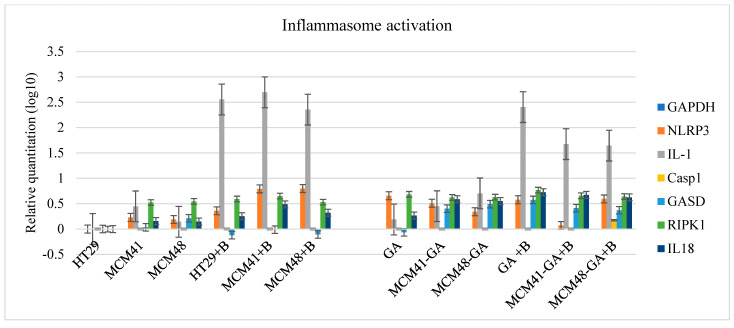
This paper aimed to develop two types of support materials with a mesoporous structure of mobile crystalline matter (known in the literature as MCM, namely MCM-41 and MCM-48) and to load them with gallic acid. Soft templating methodology was chosen for the preparation of the mesoporous structures-the cylindrical micelles with certain structural characteristics being formed due to the hydrophilic and hydrophobic intermolecular forces which occur between the molecules of the surfactants (cetyltrimethylammonium bromide-CTAB) when a minimal micellar ionic concentration is reached. These mesoporous supports were loaded with gallic acid using three different types of MCM-gallic acid ratios (1:0.41; 1:0.82 and 1:1.21)-and their characterizations by FTIR, SEM, XRD, BET and drug release were performed. It is worth mentioning that the loading was carried out using a vacuum-assisted methodology: the mesoporous materials are firstly kept under vacuum at ~0.1 barr for 30 min followed by the addition of the polyphenol solutions. The concentration of the solutions was adapted such that the final volume covered the wet mesoporous support and-in this case-upon reaching normal atmospheric pressure, the solution was pushed inside the pores, and thus the polyphenols were mainly loaded inside the pores. Based on the S data, it can be seen that the specific surface area decreased considerably with the increasing ratio of gallic acid; the specific surface area decreased 3.07 and 4.25 times for MCM-41 and MCM-48, respectively. The sample with the highest polyphenol content was further evaluated from a biological point of view, alone or in association with amoxicillin administration. As expected, the MCM-41 and MCM-48 were not protective against infections-but, due to the loading of the gallic acid, a potentiated inhibition was recorded for the tested gram-negative bacterial strains. Moreover, it is important to mention that these systems can be efficient solutions for the recovery of the gut microbiota after exposure to antibiotics, for instance.
本文旨在开发两种具有介孔结构的移动结晶物质载体材料(在文献中称为MCM,即MCM-41和MCM-48),并将没食子酸负载于其上。制备介孔结构选用了软模板法——当达到最小胶束离子浓度时,由于表面活性剂(十六烷基三甲基溴化铵-CTAB)分子间的亲水和疏水相互作用力,形成具有一定结构特征的圆柱形胶束。使用三种不同类型的MCM-没食子酸比例(1:0.41;1:0.82和1:1.21)将没食子酸负载到这些介孔载体上,并通过傅里叶变换红外光谱(FTIR)、扫描电子显微镜(SEM)、X射线衍射(XRD)、比表面积测定(BET)和药物释放对其进行表征。值得一提的是,负载过程采用真空辅助方法:首先将介孔材料在约0.1巴的真空下保持30分钟,然后加入多酚溶液。调整溶液浓度,使最终体积覆盖湿介孔载体,在这种情况下,当达到正常大气压时,溶液被压入孔内,从而多酚主要负载在孔内。根据数据可以看出,随着没食子酸比例的增加,比表面积显著降低;MCM-41和MCM-48的比表面积分别降低了3.07倍和4.25倍。从生物学角度对多酚含量最高的样品进行了进一步评估,单独评估或与阿莫西林联合给药评估。正如预期的那样,MCM-41和MCM-48对感染没有保护作用,但由于负载了没食子酸,对测试的革兰氏阴性细菌菌株记录到了增强的抑制作用。此外,重要的是要提到,例如,这些系统可以是暴露于抗生素后恢复肠道微生物群的有效解决方案。