Petrișor Gabriela, Motelica Ludmila, Ficai Denisa, Ilie Cornelia-Ioana, Trușcǎ Roxana Doina, Surdu Vasile-Adrian, Oprea Ovidiu-Cristian, Mȋrț Andreea-Luiza, Vasilievici Gabriel, Semenescu Augustin, Ficai Anton, Dițu Lia-Mara
Science and Engineering of Oxide Materials and Nanomaterials, Faculty of Chemical Engineering and Biotechnologies, University POLITEHNICA of Bucharest, Gh. Polizu 1-7, 011061 Bucharest, Romania.
National Research Center for Food Safety, University POLITEHNICA of Bucharest, Splaiul Independentei 313, 060042 Bucharest, Romania.
Pharmaceutics. 2023 Feb 16;15(2):660. doi: 10.3390/pharmaceutics15020660.
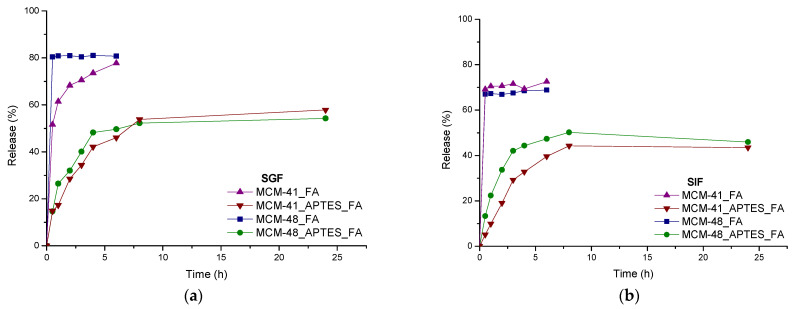
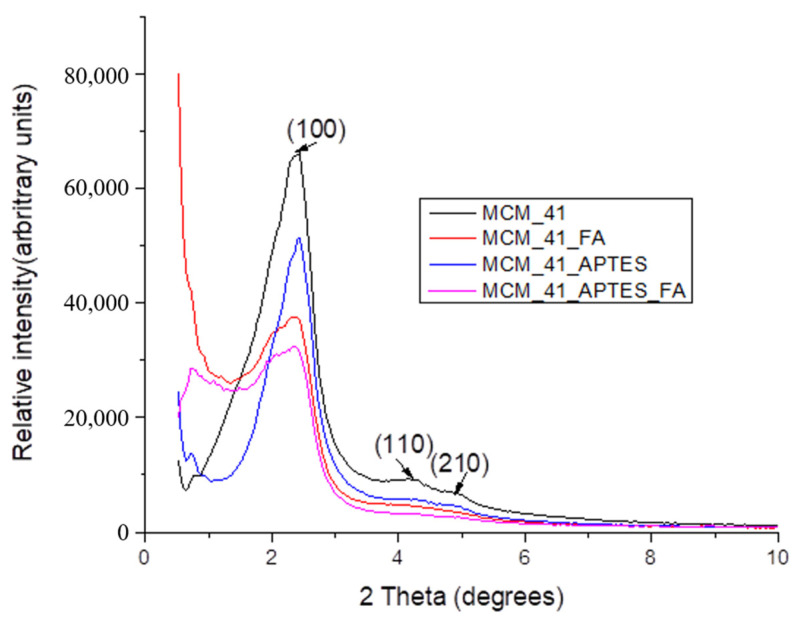
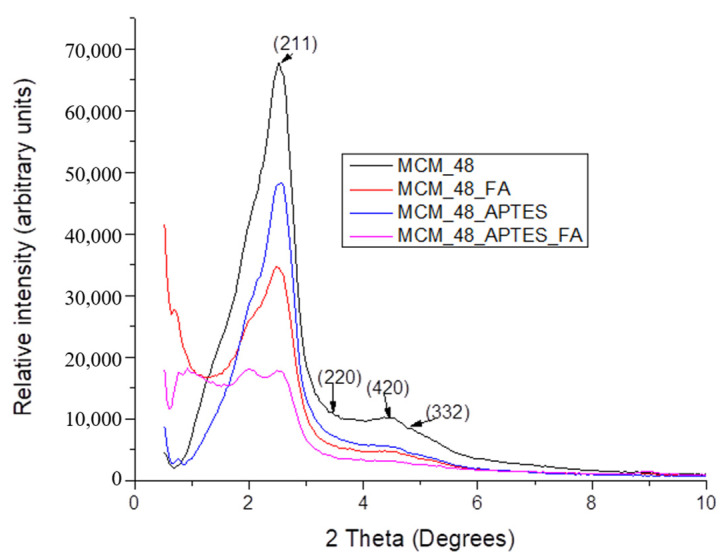
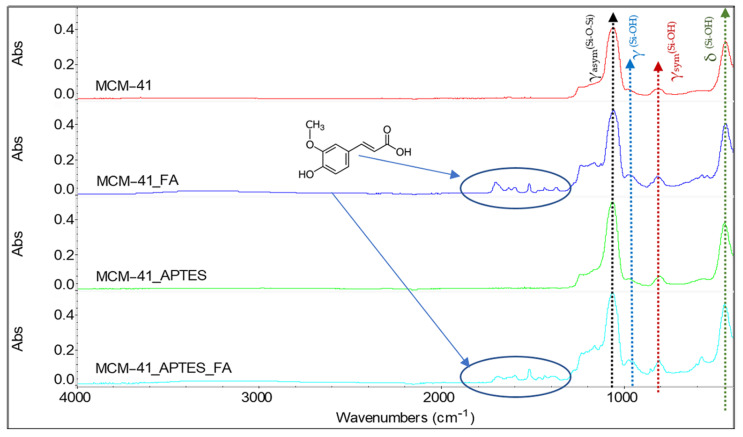
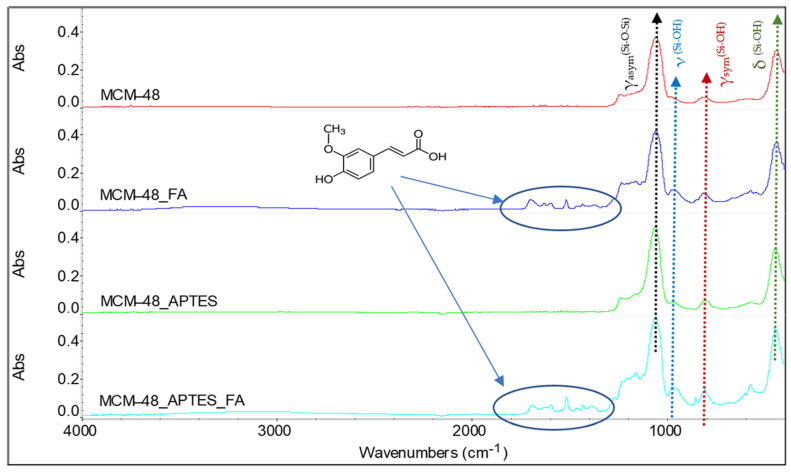
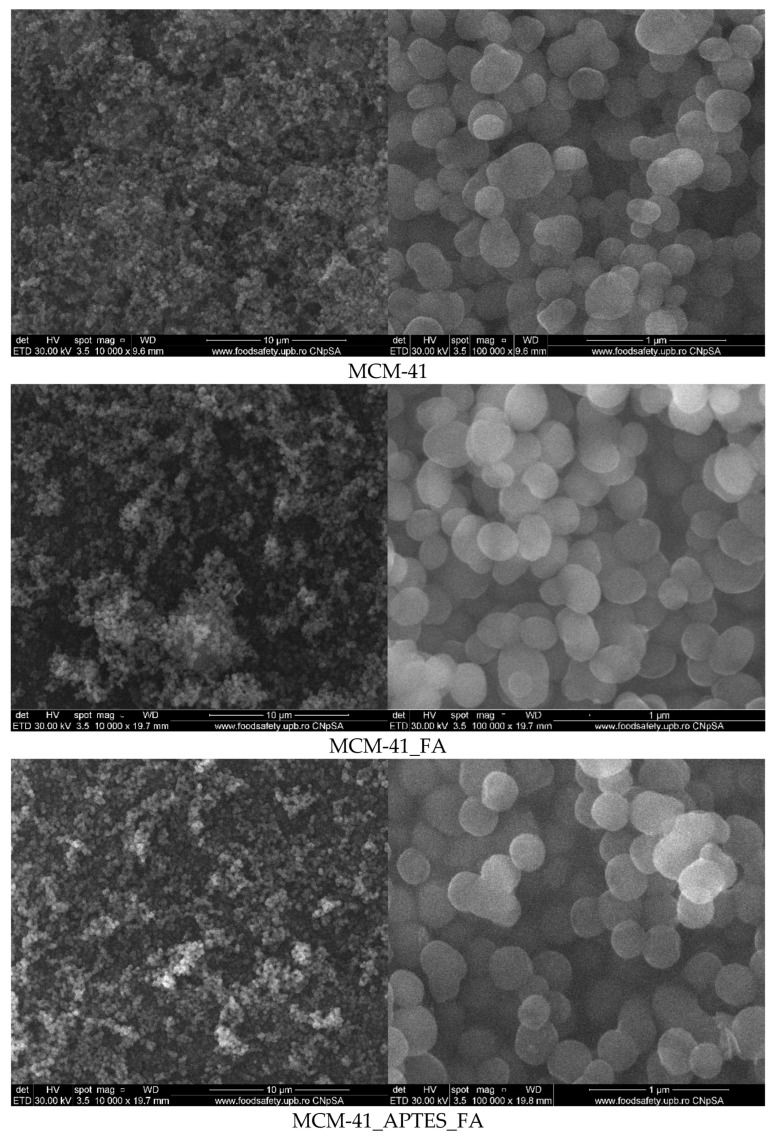
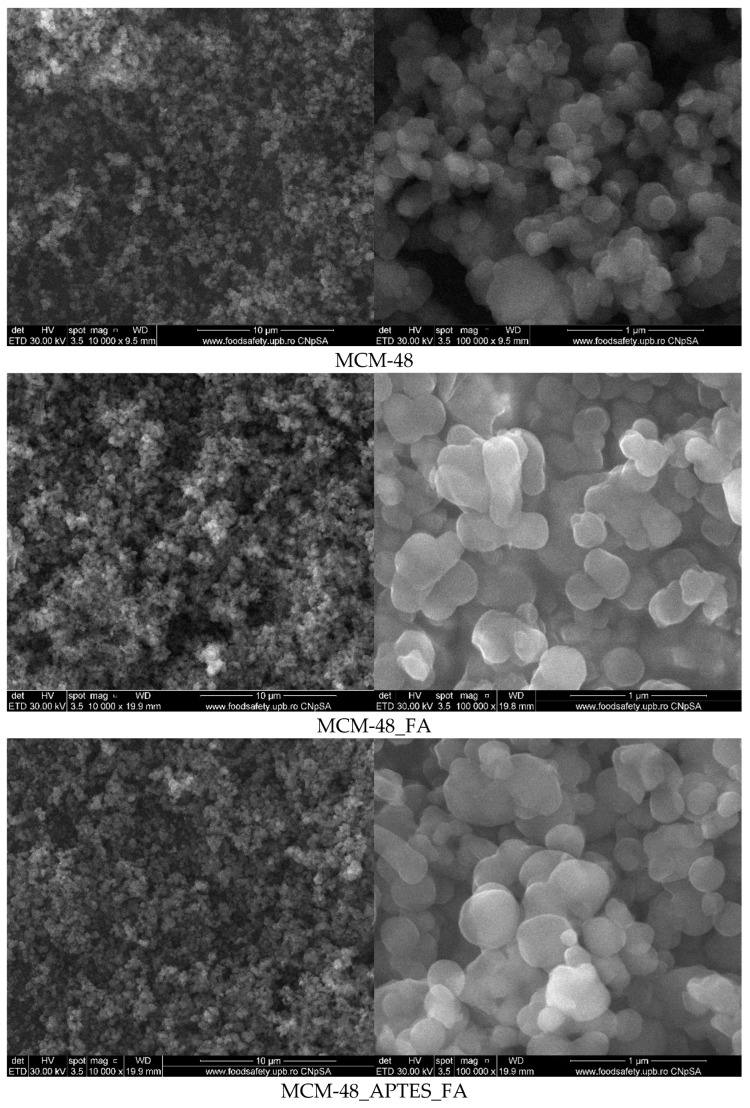
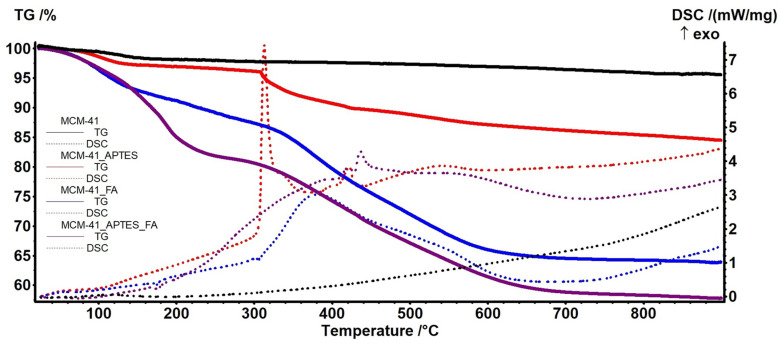
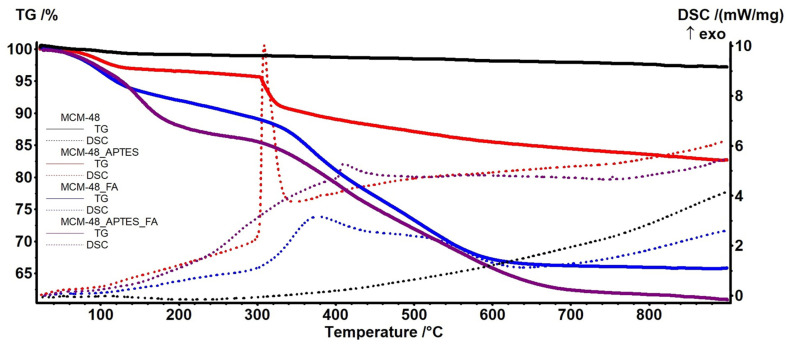
Two types of mesoporous materials, MCM-41 and MCM-48, were functionalized by the soft-template method using (3-aminopropyl)triethoxysilane (APTES) as a modifying agent. The obtained mesoporous silica materials were loaded with trans-ferulic acid (FA). In order to establish the morphology and structure of mesoporous materials, a series of specific techniques were used such as: X-ray Diffraction (XRD), Scanning Electron Microscopy (SEM), Brunauer-Emmet-Teller (BET), Fourier Transform Infrared Spectroscopy (FTIR) and thermogravimetric analysis (TGA). We monitored the in vitro release of the loaded FA at two different pH values, by using simulated gastric fluid (SGF) and simulated intestinal fluid (SIF). Additionally, ATCC 25923, ATCC 25922, ATCC 27853 and ATCC 10231 were used to evaluate the antimicrobial activity of FA loaded mesoporous silica materials. In conclusion such functionalized mesoporous materials can be employed as controlled release systems for polyphenols extracted from natural sources.
使用(3-氨基丙基)三乙氧基硅烷(APTES)作为改性剂,通过软模板法对两种介孔材料MCM-41和MCM-48进行功能化处理。将获得的介孔二氧化硅材料负载反式阿魏酸(FA)。为了确定介孔材料的形态和结构,使用了一系列特定技术,如:X射线衍射(XRD)、扫描电子显微镜(SEM)、布鲁诺尔-埃米特-泰勒(BET)、傅里叶变换红外光谱(FTIR)和热重分析(TGA)。通过使用模拟胃液(SGF)和模拟肠液(SIF),我们监测了负载的FA在两种不同pH值下的体外释放情况。此外,使用美国典型培养物保藏中心(ATCC)25923、ATCC 25922、ATCC 27853和ATCC 10231来评估负载FA的介孔二氧化硅材料的抗菌活性。总之,这种功能化的介孔材料可用作从天然来源提取的多酚的控释系统。