Liu Chang, Dong Shuhan, Wang Xue, Xu Huiqing, Liu Chang, Yang Xi, Wu Shanli, Jiang Xin, Kan Mujie, Xu Caina
Department of Biochemistry, College of Basic Medical Sciences, Jilin University, Changchun, 130021, China.
Department of Neurology and Neuroscience Center, First Hospital of Jilin University, Changchun, 130021, China.
Mater Today Bio. 2023 Jul 11;21:100729. doi: 10.1016/j.mtbio.2023.100729. eCollection 2023 Aug.
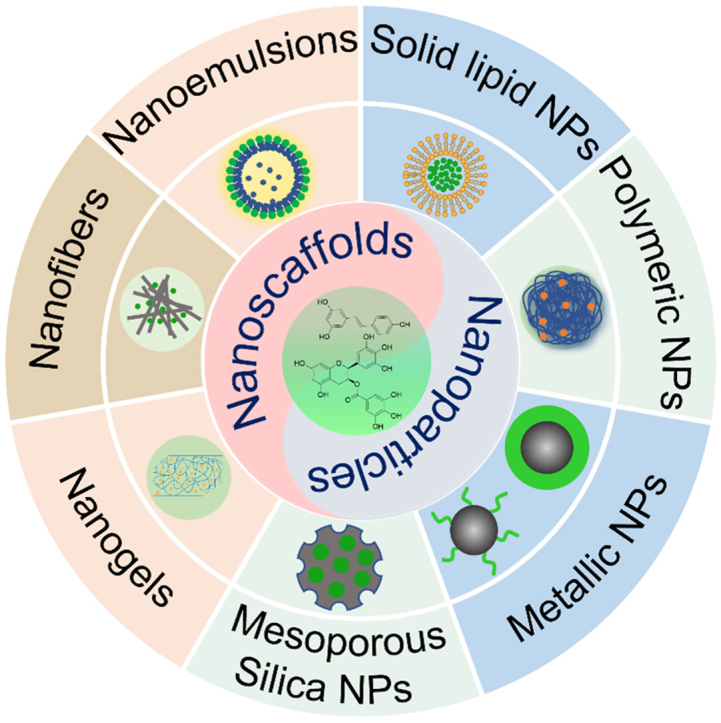
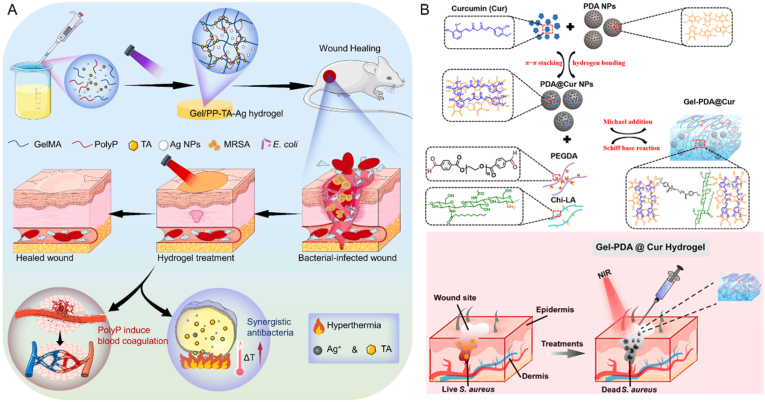
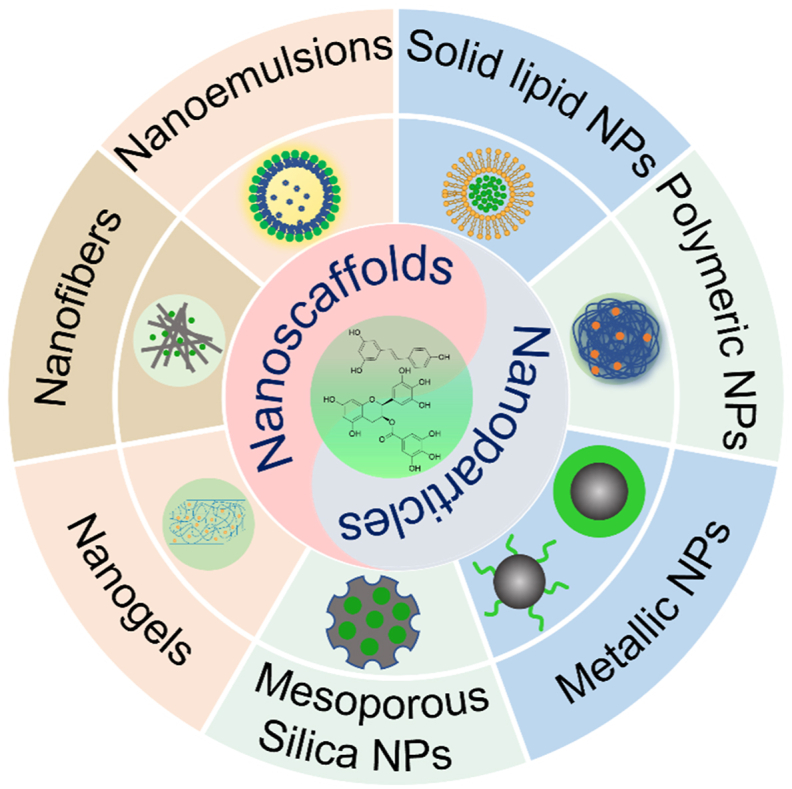
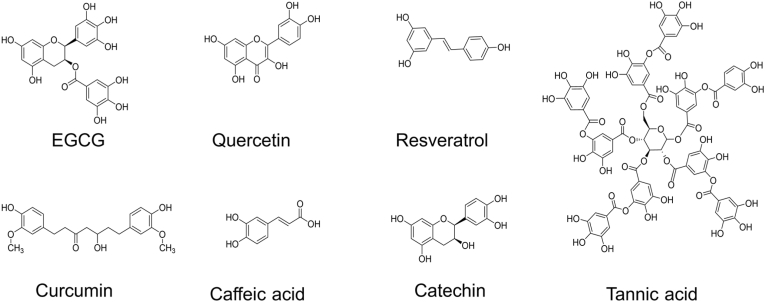
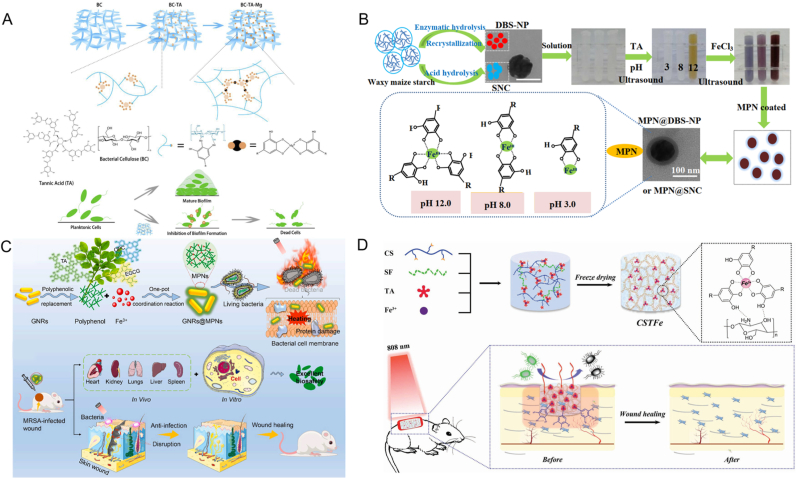
Infectious disease is one of the top 10 causes of death worldwide, especially in low-income countries. The extensive use of antibiotics has led to an increase in antibiotic resistance, which poses a critical threat to human health globally. Natural products such as polyphenolic compounds and their derivatives have been shown the positive therapeutic effects in antibacterial therapy. However, the inherent physicochemical properties of polyphenolic compounds and their derivatives limit their pharmaceutical effects, such as short half-lives, chemical instability, low bioavailability, and poor water solubility. Nanoformulations have shown promising advantages in improving antibacterial activity by controlling the release of drugs and enhancing the bioavailability of polyphenols. In this review, we listed the classification and antibacterial mechanisms of the polyphenolic compounds. More importantly, the nanoformulations for the delivery of polyphenols as the antibacterial agent were summarized, including different types of nanoparticles (NPs) such as polymer-based NPs, metal-based NPs, lipid-based NPs, and nanoscaffolds such as nanogels, nanofibers, and nanoemulsions. At the same time, we also presented the potential biological applications of the nano-system to enhance the antibacterial ability of polyphenols, aiming to provide a new therapeutic perspective for the antibiotic-free treatment of infectious diseases.
传染病是全球十大死因之一,在低收入国家尤为如此。抗生素的广泛使用导致抗生素耐药性增加,这对全球人类健康构成了严重威胁。诸如多酚类化合物及其衍生物等天然产物在抗菌治疗中已显示出积极的治疗效果。然而,多酚类化合物及其衍生物固有的物理化学性质限制了它们的药物疗效,如半衰期短、化学稳定性差、生物利用度低和水溶性差。纳米制剂在通过控制药物释放和提高多酚的生物利用度来改善抗菌活性方面已显示出有前景的优势。在本综述中,我们列出了多酚类化合物的分类和抗菌机制。更重要的是,总结了作为抗菌剂递送多酚的纳米制剂,包括不同类型的纳米颗粒(NPs),如聚合物基纳米颗粒、金属基纳米颗粒、脂质基纳米颗粒,以及纳米支架,如纳米凝胶、纳米纤维和纳米乳液。同时,我们还介绍了纳米系统增强多酚抗菌能力的潜在生物学应用,旨在为传染病的无抗生素治疗提供新的治疗视角。