School of Science, Western Sydney University, Penrith, NSW 2753, Australia.
Global Centre for Land-Based Innovation, Western Sydney University, Penrith, NSW 2753, Australia.
Nutrients. 2022 May 23;14(10):2161. doi: 10.3390/nu14102161.
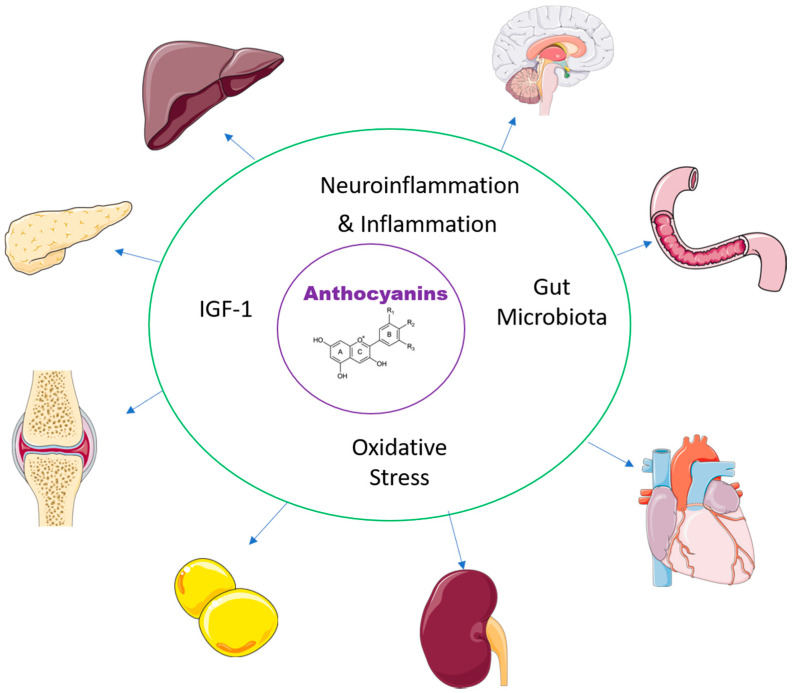
Anthocyanins are mainly purple-coloured phenolic compounds of plant origin that as secondary metabolites are important in plant survival. Understanding their health benefits in humans requires sourcing these unstable compounds in sufficient quantities at a reasonable cost, which has led to improved methods of extraction. Dark-coloured fruits, cereals and vegetables are current sources of these compounds. The range of potential sustainable sources is much larger and includes non-commercialised native plants from around the world and agri-waste containing anthocyanins. In the last 5 years, there have been significant advances in developing the therapeutic potential of anthocyanins in chronic human diseases. Anthocyanins exert their beneficial effects through improvements in gut microbiota, oxidative stress and inflammation, and modulation of neuropeptides such as insulin-like growth factor-1. Their health benefits in humans include reduced cognitive decline; protection of organs such as the liver, as well as the cardiovascular system, gastrointestinal tract and kidneys; improvements in bone health and obesity; and regulation of glucose and lipid metabolism. This review summarises some of the sources of anthocyanins and their mechanisms and benefits in the treatment of chronic human diseases.
花色苷是主要的植物来源的紫色酚类化合物,作为次生代谢物,对植物的生存至关重要。要了解花色苷对人类健康的益处,就需要以合理的成本从足够数量的稳定来源中获取这些不稳定的化合物,这就导致了提取方法的改进。深色水果、谷物和蔬菜是这些化合物的当前来源。潜在的可持续来源范围要大得多,包括来自世界各地的非商业化本地植物和含有花色苷的农业废弃物。在过去的 5 年中,花色苷在慢性人类疾病的治疗潜力方面取得了重大进展。花色苷通过改善肠道微生物群、氧化应激和炎症,以及调节胰岛素样生长因子-1 等神经肽,发挥其有益作用。花色苷对人类健康的益处包括降低认知能力下降;保护肝脏等器官,以及心血管系统、胃肠道和肾脏;改善骨骼健康和肥胖;以及调节葡萄糖和脂质代谢。本文综述了花色苷的一些来源及其在治疗慢性人类疾病中的机制和益处。