Lee Sooyoung, Song Moonsik, Han Jongdae, Lee Donghwan, Kim Bo-Hyung
Department of Life and Nanopharmaceutical Sciences, Graduate School, Kyung Hee University, Seoul 02447, Korea.
Department of Biomedical Science and Technology, Graduate School, Kyung Hee University, Seoul 02447, Korea.
Pharmaceutics. 2022 May 9;14(5):1023. doi: 10.3390/pharmaceutics14051023.
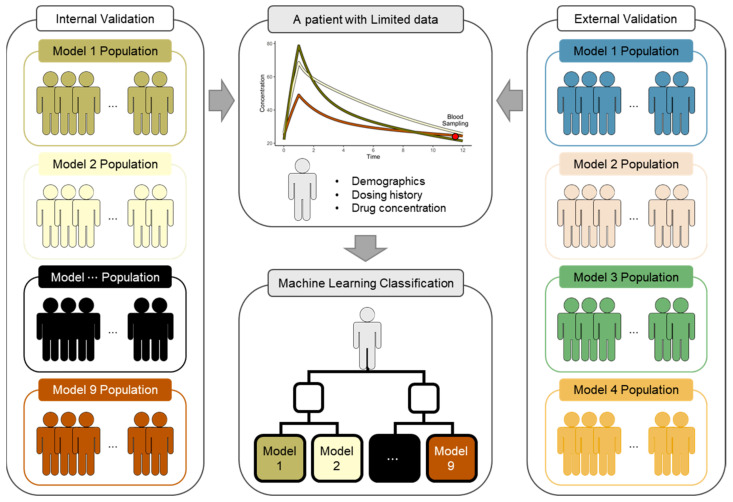
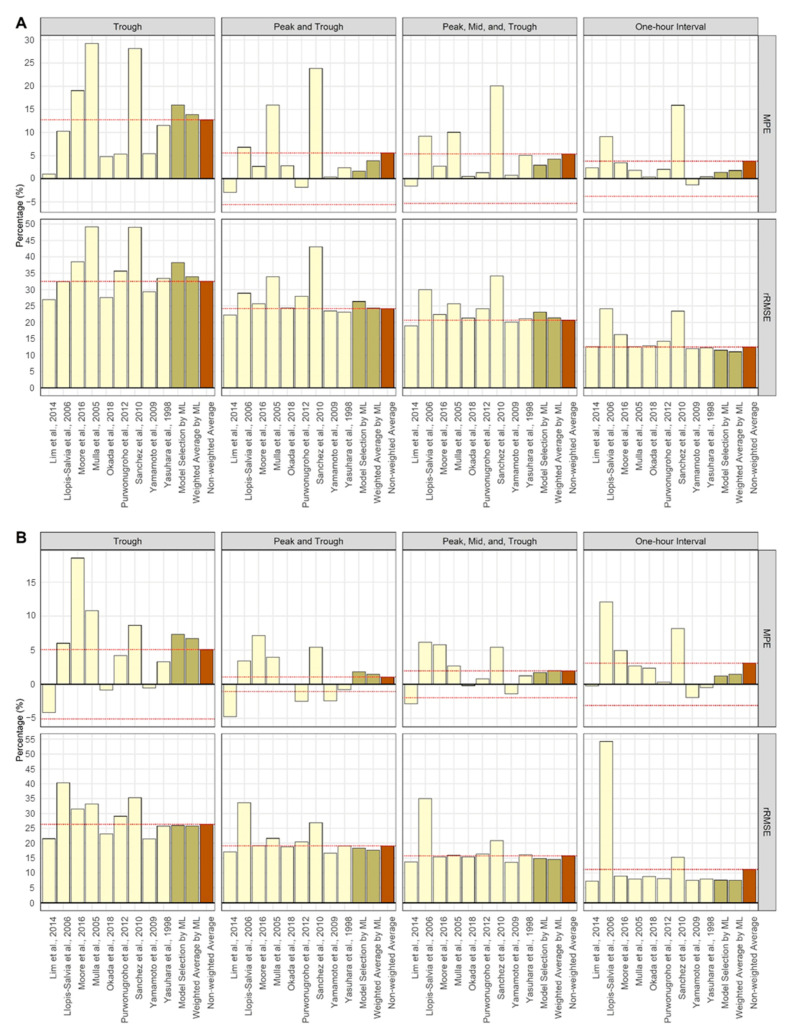
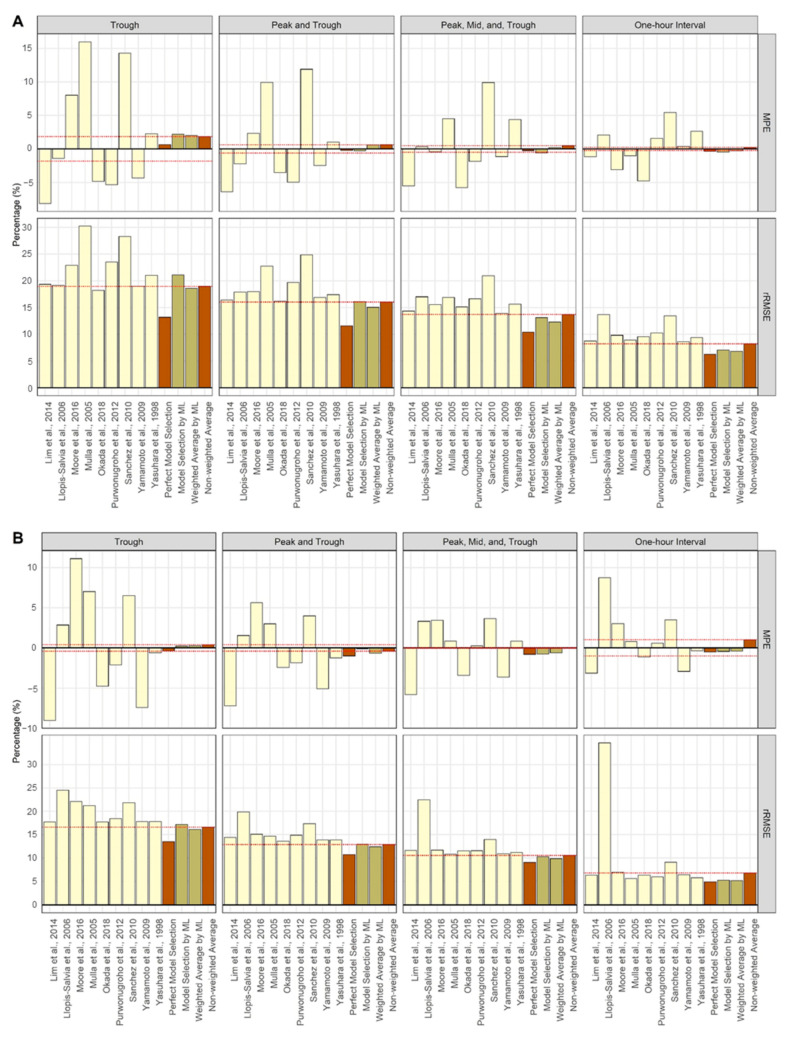
Bayesian therapeutic drug monitoring (TDM) software uses a reported pharmacokinetic (PK) model as prior information. Since its estimation is based on the Bayesian method, the estimation performance of TDM software can be improved using a PK model with characteristics similar to those of a patient. Therefore, we aimed to develop a classifier using machine learning (ML) to select a more suitable vancomycin PK model for TDM in a patient. In our study, nine vancomycin PK studies were selected, and a classifier was created to choose suitable models among them for patients. The classifier was trained using 900,000 virtual patients, and its performance was evaluated using 9000 and 4000 virtual patients for internal and external validation, respectively. The accuracy of the classifier ranged from 20.8% to 71.6% in the simulation scenarios. TDM using the ML classifier showed stable results compared with that using single models without the ML classifier. Based on these results, we have discussed further development of TDM using ML. In conclusion, we developed and evaluated a new method for selecting a PK model for TDM using ML. With more information, such as on additional PK model reporting and ML model improvement, this method can be further enhanced.
贝叶斯治疗药物监测(TDM)软件将报告的药代动力学(PK)模型用作先验信息。由于其估计基于贝叶斯方法,因此使用具有与患者相似特征的PK模型可以提高TDM软件的估计性能。因此,我们旨在开发一种使用机器学习(ML)的分类器,为患者选择更适合TDM的万古霉素PK模型。在我们的研究中,选择了九项万古霉素PK研究,并创建了一个分类器以在其中为患者选择合适的模型。该分类器使用900,000名虚拟患者进行训练,其性能分别使用9000名和4000名虚拟患者进行内部和外部验证来评估。在模拟场景中,分类器的准确率在20.8%至71.6%之间。与不使用ML分类器的单一模型相比,使用ML分类器的TDM显示出稳定的结果。基于这些结果,我们讨论了使用ML进一步开发TDM的问题。总之,我们开发并评估了一种使用ML为TDM选择PK模型的新方法。有了更多信息,例如关于额外的PK模型报告和ML模型改进,这种方法可以得到进一步增强。