Xu Xiaoqiu, Li Tong, Jin Ke
Laboratory of Human Diseases and Immunotherapies, West China Hospital, Sichuan University, Chengdu 610041, China.
Institute of Immunology and Inflammation, Frontiers Science Center for Disease-Related Molecular Network, West China Hospital, Sichuan University, Chengdu 610041, China.
Pharmaceutics. 2022 May 23;14(5):1109. doi: 10.3390/pharmaceutics14051109.
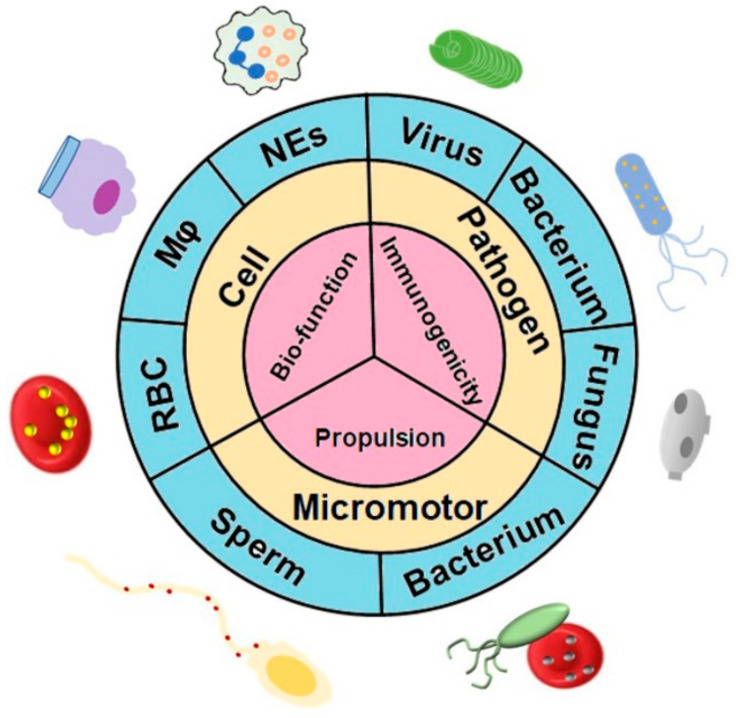
Undesirable side effects and multidrug resistance are the major obstacles in conventional chemotherapy towards cancers. Nanomedicines provide alternative strategies for tumor-targeted therapy due to their inherent properties, such as nanoscale size and tunable surface features. However, the applications of nanomedicines are hampered in vivo due to intrinsic disadvantages, such as poor abilities to cross biological barriers and unexpected off-target effects. Fortunately, biomimetic nanomedicines are emerging as promising therapeutics to maximize anti-tumor efficacy with minimal adverse effects due to their good biocompatibility and high accumulation abilities. These bioengineered agents incorporate both the physicochemical properties of diverse functional materials and the advantages of biological materials to achieve desired purposes, such as prolonged circulation time, specific targeting of tumor cells, and immune modulation. Among biological materials, mammalian cells (such as red blood cells, macrophages, monocytes, and neutrophils) and pathogens (such as viruses, bacteria, and fungi) are the functional components most often used to confer synthetic nanoparticles with the complex functionalities necessary for effective nano-biointeractions. In this review, we focus on recent advances in the development of bioinspired and biomimetic nanomedicines (such as mammalian cell-based drug delivery systems and pathogen-based nanoparticles) for targeted cancer therapy. We also discuss the biological influences and limitations of synthetic materials on the therapeutic effects and targeted efficacies of various nanomedicines.
不良副作用和多药耐药性是传统癌症化疗的主要障碍。纳米药物由于其固有的特性,如纳米级尺寸和可调节的表面特征,为肿瘤靶向治疗提供了替代策略。然而,纳米药物的应用在体内受到固有缺点的阻碍,如穿越生物屏障的能力差和意外的脱靶效应。幸运的是,仿生纳米药物正作为有前景的治疗方法出现,由于其良好的生物相容性和高积累能力,能够以最小的副作用最大化抗肿瘤疗效。这些生物工程制剂结合了多种功能材料的物理化学性质和生物材料的优点,以实现预期目的,如延长循环时间、肿瘤细胞的特异性靶向和免疫调节。在生物材料中,哺乳动物细胞(如红细胞、巨噬细胞、单核细胞和中性粒细胞)和病原体(如病毒、细菌和真菌)是最常用于赋予合成纳米颗粒有效纳米生物相互作用所需复杂功能的功能成分。在这篇综述中,我们关注用于靶向癌症治疗的生物启发和仿生纳米药物(如基于哺乳动物细胞的药物递送系统和基于病原体的纳米颗粒)开发的最新进展。我们还讨论了合成材料对各种纳米药物的治疗效果和靶向疗效的生物学影响及局限性。