• 文献检索
  • 文档翻译
  • 深度研究
  • 学术资讯
  • Suppr Zotero 插件Zotero 插件
  • 邀请有礼
  • 套餐&价格
  • 历史记录
应用&插件
Suppr Zotero 插件Zotero 插件浏览器插件Mac 客户端Windows 客户端微信小程序
定价
高级版会员购买积分包购买API积分包
服务
文献检索文档翻译深度研究API 文档MCP 服务
关于我们
关于 Suppr公司介绍联系我们用户协议隐私条款
关注我们

Suppr 超能文献

核心技术专利:CN118964589B侵权必究
粤ICP备2023148730 号-1Suppr @ 2026

文献检索

告别复杂PubMed语法,用中文像聊天一样搜索,搜遍4000万医学文献。AI智能推荐,让科研检索更轻松。

立即免费搜索

文件翻译

保留排版,准确专业,支持PDF/Word/PPT等文件格式,支持 12+语言互译。

免费翻译文档

深度研究

AI帮你快速写综述,25分钟生成高质量综述,智能提取关键信息,辅助科研写作。

立即免费体验

了解错误信息在一个农村州的新冠疫苗犹豫现象中所起的作用。

Understanding the Role of Misinformation in COVID-19 Vaccine Hesitancy in a Rural State.

作者信息

Hess Ann Marie R, Waters Colin T, Jacobs Elizabeth A, Barton Kerri L, Fairfield Kathleen M

机构信息

Maine Medical Center, Maine Health, Portland, ME 04101, USA.

College of Health Sciences, Rush University, Chicago, IL 60612, USA.

出版信息

Vaccines (Basel). 2022 May 21;10(5):818. doi: 10.3390/vaccines10050818.

DOI:10.3390/vaccines10050818
PMID:35632573
原文链接:https://pmc.ncbi.nlm.nih.gov/articles/PMC9146653/
Abstract

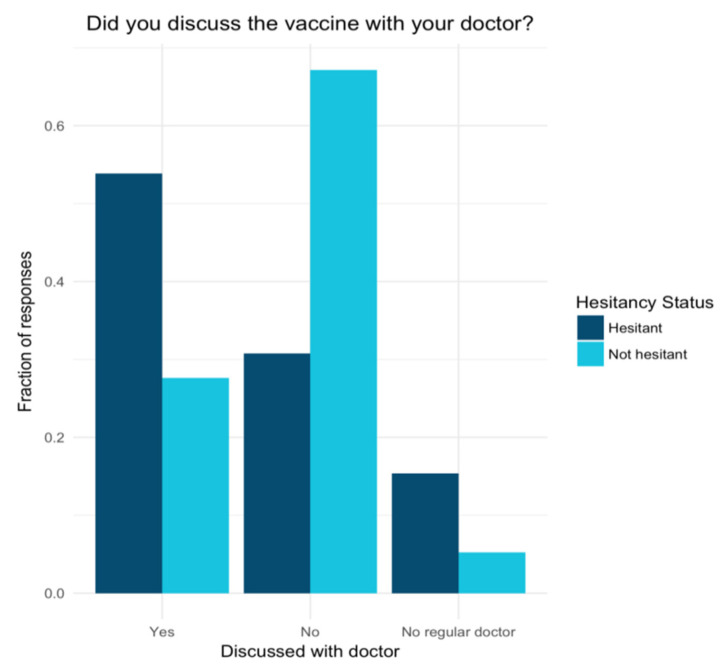
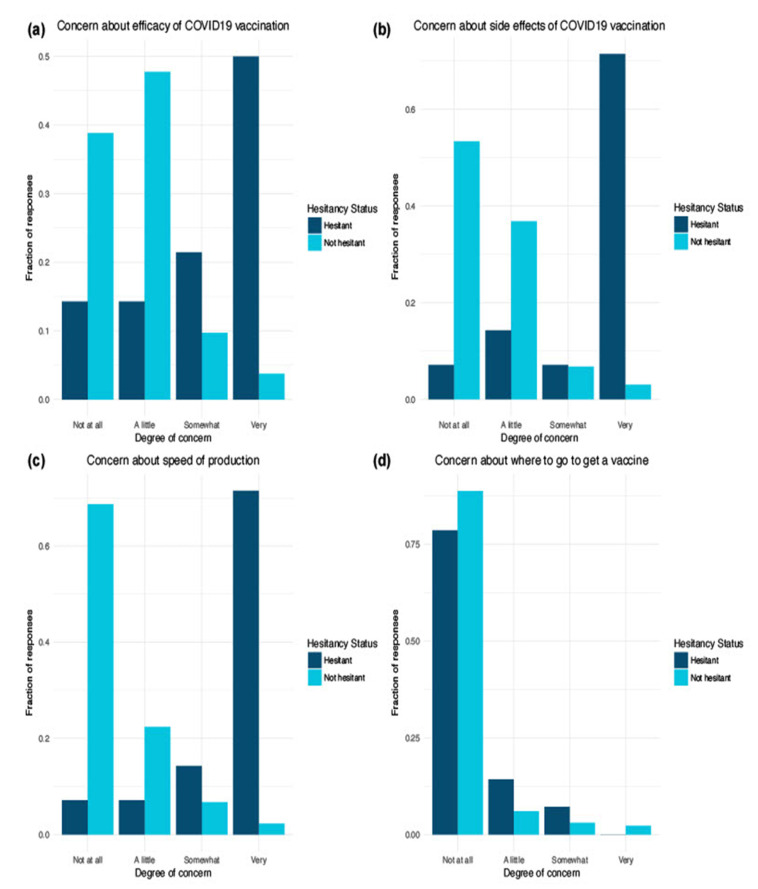
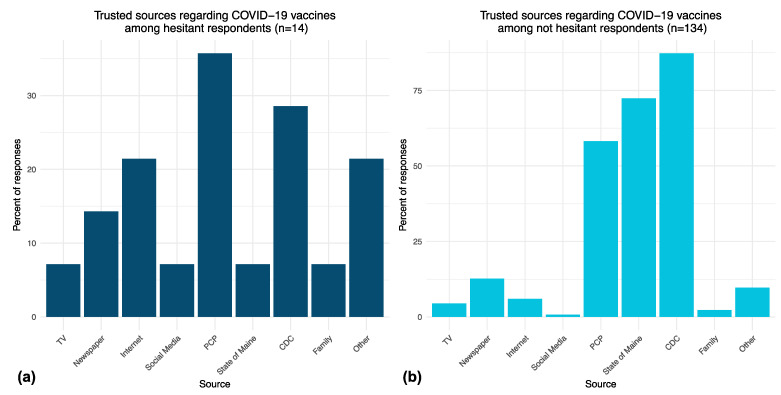
Objective: to identify factors associated with COVID19 vaccine hesitancy, including sources of information among residents of Maine. Methods: 148 study participants, recruited through community partners and primary care offices in Maine, completed an anonymous 15 item online survey. Recruitment and data collection occurred from May to September, 2021. Hesitancy was determined through a single question, “Will you get one of the COVID vaccines when it is offered to you?” Results: vaccine hesitant respondents were younger than not hesitant respondents (p = 0.01). Hesitant individuals were significantly more likely to report concerns regarding the speed of COVID-19 vaccine production, vaccine efficacy, and potential vaccine side effects (p < 0.05 for each). Hesitant individuals were also significantly more likely to have discussed vaccination with their primary physician (p = 0.04). Conclusions: overall, hesitant individuals are more likely to be younger and had less trust in information from government sources, but they sought input from primary care. They were also more concerned about efficacy, side effects, and the rapid development of COVID-19 vaccines. Primary care physicians are in key positions to address these concerns due to contact with individuals who need accurate information.

摘要

目的

确定与新冠疫苗犹豫相关的因素,包括缅因州居民的信息来源。方法:通过缅因州的社区合作伙伴和初级保健办公室招募了148名研究参与者,他们完成了一项包含15个项目的匿名在线调查。招募和数据收集于2021年5月至9月进行。通过一个单一问题“当向你提供新冠疫苗时,你会接种吗?”来确定犹豫程度。结果:对疫苗犹豫的受访者比不犹豫的受访者更年轻(p = 0.01)。犹豫的个体更有可能报告对新冠疫苗生产速度、疫苗效力和潜在疫苗副作用的担忧(每项p < 0.05)。犹豫的个体也更有可能与他们的初级保健医生讨论过疫苗接种问题(p = 0.04)。结论:总体而言,犹豫的个体更可能更年轻,对政府来源的信息信任度较低,但他们会寻求初级保健方面的建议。他们也更担心效力、副作用以及新冠疫苗的快速研发。由于与需要准确信息的个体有接触机会,初级保健医生处于解决这些担忧的关键位置。
https://cdn.ncbi.nlm.nih.gov/pmc/blobs/6a68/9146653/0fdacdce59b0/vaccines-10-00818-g003.jpg
https://cdn.ncbi.nlm.nih.gov/pmc/blobs/6a68/9146653/af625f0db8a3/vaccines-10-00818-g001.jpg
https://cdn.ncbi.nlm.nih.gov/pmc/blobs/6a68/9146653/79140b7a111f/vaccines-10-00818-g002.jpg
https://cdn.ncbi.nlm.nih.gov/pmc/blobs/6a68/9146653/0fdacdce59b0/vaccines-10-00818-g003.jpg
https://cdn.ncbi.nlm.nih.gov/pmc/blobs/6a68/9146653/af625f0db8a3/vaccines-10-00818-g001.jpg
https://cdn.ncbi.nlm.nih.gov/pmc/blobs/6a68/9146653/79140b7a111f/vaccines-10-00818-g002.jpg
https://cdn.ncbi.nlm.nih.gov/pmc/blobs/6a68/9146653/0fdacdce59b0/vaccines-10-00818-g003.jpg

相似文献

1
Understanding the Role of Misinformation in COVID-19 Vaccine Hesitancy in a Rural State.了解错误信息在一个农村州的新冠疫苗犹豫现象中所起的作用。
Vaccines (Basel). 2022 May 21;10(5):818. doi: 10.3390/vaccines10050818.
2
Perceptions and Concerns Regarding COVID-19 Vaccination in a Military Base Population.军人对 COVID-19 疫苗接种的看法和担忧。
Mil Med. 2022 Oct 29;187(11-12):e1255-e1260. doi: 10.1093/milmed/usab230.
3
COVID-19 vaccine acceptance and hesitancy in N'Djamena, Chad: A cross-sectional study of patients, community members, and healthcare workers.乍得恩贾梅纳地区COVID-19疫苗的接受情况与犹豫态度:一项针对患者、社区成员和医护人员的横断面研究
PLOS Glob Public Health. 2022 Jun 27;2(6):e0000608. doi: 10.1371/journal.pgph.0000608. eCollection 2022.
4
Parental vaccine hesitancy and concerns regarding the COVID-19 virus.家长对接种疫苗的犹豫态度以及对 COVID-19 病毒的担忧。
J Pediatr Nurs. 2022 Jul-Aug;65:10-15. doi: 10.1016/j.pedn.2022.03.010. Epub 2022 Apr 1.
5
Patient concerns and physician strategies for addressing COVID-19 vaccine hesitancy.患者关注和医生应对 COVID-19 疫苗犹豫的策略。
Vaccine. 2024 May 22;42(14):3300-3306. doi: 10.1016/j.vaccine.2024.04.025. Epub 2024 Apr 15.
6
Parental COVID-19 Vaccine Hesitancy in the United States.美国父母对 COVID-19 疫苗的犹豫
Public Health Rep. 2022 Nov-Dec;137(6):1162-1169. doi: 10.1177/00333549221114346. Epub 2022 Aug 2.
7
COVID-19 Vaccine-Related Attitudes and Beliefs in Canada: National Cross-sectional Survey and Cluster Analysis.加拿大与 COVID-19 疫苗相关的态度和信念:全国横断面调查和聚类分析。
JMIR Public Health Surveill. 2021 Dec 23;7(12):e30424. doi: 10.2196/30424.
8
Exploring Motivations for COVID-19 Vaccination Among Black Young Adults in 3 Southern US States: Cross-sectional Study.美国南部3个州黑人青年成年人中新冠病毒疫苗接种动机的探索:横断面研究
JMIR Form Res. 2022 Sep 2;6(9):e39144. doi: 10.2196/39144.
9
Understanding COVID-19 Vaccine Hesitancy in Ethnic Minorities Groups in the UK.理解英国少数民族群体对 COVID-19 疫苗的犹豫。
Front Public Health. 2022 Jul 1;10:917242. doi: 10.3389/fpubh.2022.917242. eCollection 2022.
10
COVID-19 vaccine hesitancy among patients in two urban emergency departments.城市两家急诊部门的 COVID-19 疫苗犹豫。
Acad Emerg Med. 2021 Oct;28(10):1100-1107. doi: 10.1111/acem.14376. Epub 2021 Oct 4.

引用本文的文献

1
Stop the spread: Empowering students to address misinformation through community-engaged, interdisciplinary science communication training.阻止传播:通过社区参与的跨学科科学传播培训,使学生有能力应对错误信息。
J Res Sci Teach. 2025 Mar;62(3):721-755. doi: 10.1002/tea.21971. Epub 2024 Jul 16.
2
Standardizing post-cardiac arrest care across rural-urban settings - qualitative findings on proposed post-cardiac arrest learning community intervention.在城乡环境下规范心脏停搏后护理-心脏停搏后学习社区干预措施的定性研究结果。
BMC Health Serv Res. 2023 Nov 15;23(1):1258. doi: 10.1186/s12913-023-10147-w.
3
A Comparative Case Study Analysis: Applying the HIPE Framework to Combat Harmful Health Information and Drive COVID-19 Vaccine Adoption in Underserved Communities.

本文引用的文献

1
Targeting COVID Vaccine Hesitancy in Rural Communities in Tennessee: Implications for Extending the COVID-19 Pandemic in the South.针对田纳西州农村社区的新冠疫苗犹豫问题:对南方新冠疫情蔓延的影响
Vaccines (Basel). 2021 Nov 4;9(11):1279. doi: 10.3390/vaccines9111279.
2
Exploring COVID-19 vaccine hesitancy at a rural historically black college and university.探索农村历史上的黑人学院和大学的 COVID-19 疫苗犹豫情况。
J Am Pharm Assoc (2003). 2022 Jan-Feb;62(1):340-344. doi: 10.1016/j.japh.2021.09.008. Epub 2021 Oct 1.
3
Vaccine Hesitancy and Exposure to Misinformation: a Survey Analysis.
一项比较案例研究分析:应用HIPE框架应对有害健康信息并推动在服务不足社区中采用新冠疫苗
Vaccines (Basel). 2023 Jun 16;11(6):1107. doi: 10.3390/vaccines11061107.
疫苗犹豫与错误信息暴露:一项调查分析。
J Gen Intern Med. 2022 Jan;37(1):179-187. doi: 10.1007/s11606-021-07171-z. Epub 2021 Oct 20.
4
COVID-19 vaccine hesitancy: the five Cs to tackle behavioural and sociodemographic factors.新冠疫苗犹豫:应对行为和社会人口因素的五个C
J R Soc Med. 2021 Jun;114(6):295-298. doi: 10.1177/01410768211018951. Epub 2021 Jun 2.
5
Five reasons why COVID herd immunity is probably impossible.新冠病毒群体免疫可能无法实现的五个原因。
Nature. 2021 Mar;591(7851):520-522. doi: 10.1038/d41586-021-00728-2.
6
Confidence and Receptivity for COVID-19 Vaccines: A Rapid Systematic Review.对新冠疫苗的信心和接受度:一项快速系统评价
Vaccines (Basel). 2020 Dec 30;9(1):16. doi: 10.3390/vaccines9010016.
7
COVID-19 Vaccination Hesitancy in the United States: A Rapid National Assessment.美国对 COVID-19 疫苗接种的犹豫:一项快速的全国评估。
J Community Health. 2021 Apr;46(2):270-277. doi: 10.1007/s10900-020-00958-x. Epub 2021 Jan 3.
8
I mmunosenescence and Inflammaging: Risk Factors of Severe COVID-19 in Older People.免疫衰老和炎症衰老:老年人感染严重 COVID-19 的风险因素。
Front Immunol. 2020 Oct 27;11:579220. doi: 10.3389/fimmu.2020.579220. eCollection 2020.
9
Factors Associated With US Adults' Likelihood of Accepting COVID-19 Vaccination.与美国成年人接受 COVID-19 疫苗意愿相关的因素。
JAMA Netw Open. 2020 Oct 1;3(10):e2025594. doi: 10.1001/jamanetworkopen.2020.25594.
10
Influences on Attitudes Regarding Potential COVID-19 Vaccination in the United States.美国对潜在新冠疫苗接种态度的影响因素
Vaccines (Basel). 2020 Oct 3;8(4):582. doi: 10.3390/vaccines8040582.