Laboratory of Dermatology and Immunodeficiencies, LIM-56, Department of Dermatology, Tropical Medicine Institute of São Paulo, University of São Paulo Medical School, São Paulo, Brazil.
Department of Immunology, Institute of Biomedical Sciences, University of São Paulo, São Paulo, Brazil.
Front Immunol. 2020 Oct 27;11:579220. doi: 10.3389/fimmu.2020.579220. eCollection 2020.
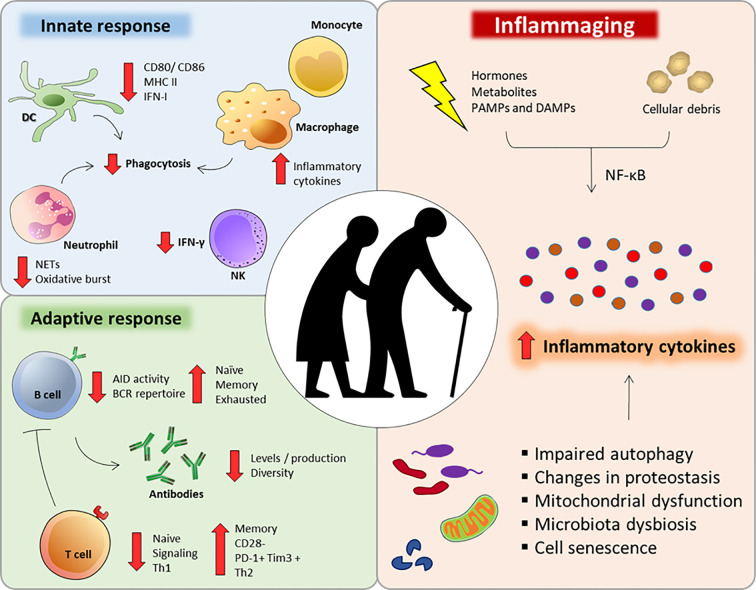
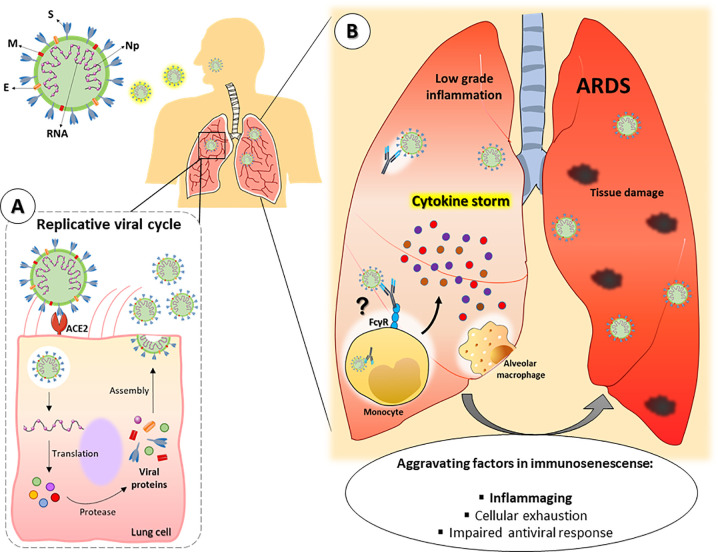
Old individuals are more susceptible to various infections due to immunological changes that occur during the aging process. These changes named collectively as "immunosenescence" include decreases in both the innate and adaptive immune responses in addition to the exacerbated production of inflammatory cytokines. This scenario of immunological dysfunction and its relationship with disease development in older people has been widely studied, especially in infections that can be fatal, such as influenza and, more recently, COVID-19. In the current scenario of SARS-CoV-2 infection, many mechanisms of disease pathogenesis in old individuals have been proposed. To better understand the dynamics of COVID-19 in this group, aspects related to immunological senescence must be well elucidated. In this article, we discuss the main mechanisms involved in immunosenescence and their possible correlations with the susceptibility of individuals of advanced age to SARS-CoV-2 infection and the more severe conditions of the disease.
老年人由于衰老过程中发生的免疫变化,更容易受到各种感染。这些变化统称为“免疫衰老”,包括先天和适应性免疫反应的下降,以及炎症细胞因子的过度产生。这种免疫功能障碍的情况及其与老年人疾病发展的关系已被广泛研究,特别是在流感等可能致命的感染以及最近的 COVID-19 感染中。在当前的 SARS-CoV-2 感染情况下,已经提出了老年人疾病发病机制的许多机制。为了更好地理解这一组人群中 COVID-19 的动态,必须充分阐明与免疫衰老相关的方面。在本文中,我们讨论了免疫衰老涉及的主要机制及其与高龄个体易感染 SARS-CoV-2 以及疾病更严重的情况的可能相关性。