Jiang Ning, Zhang Yiwen, Yao Caihong, Huang Hong, Wang Qiong, Huang Shuangxue, He Qinghu, Liu Xinmin
Research Center for Pharmacology and Toxicology, Institute of Medicinal Plant Development, Chinese Academy of Medical Sciences, Peking Union Medical College, Beijing, China.
Hunan University of Chinese Medicine, College of Traditional Chinese Medicine, Changsha, China.
Front Nutr. 2022 May 12;9:868833. doi: 10.3389/fnut.2022.868833. eCollection 2022.
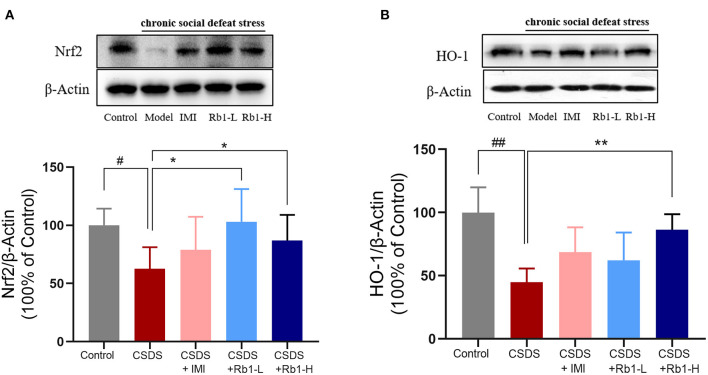
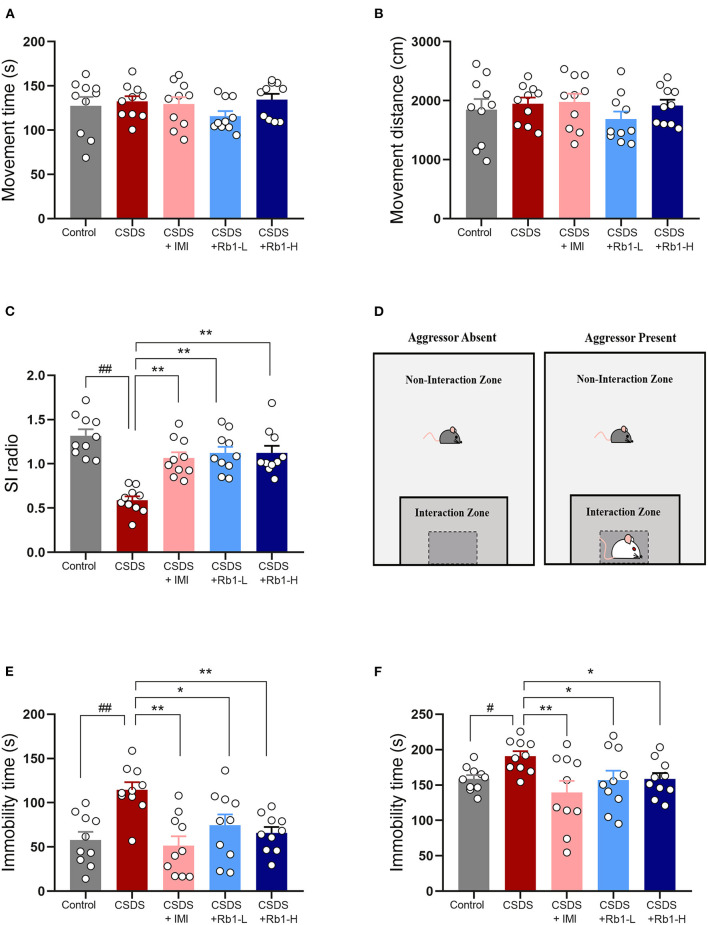
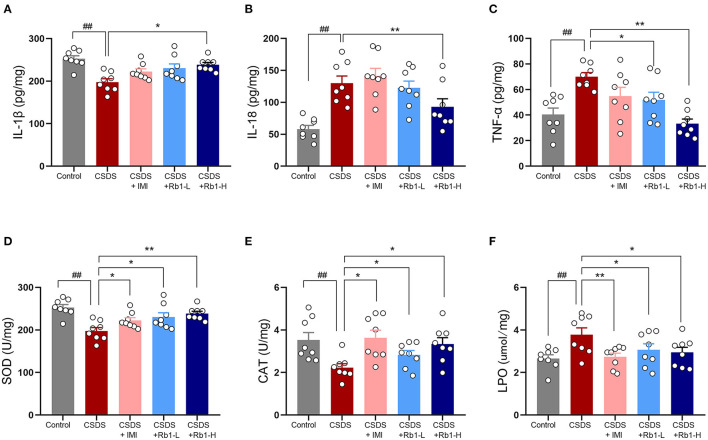
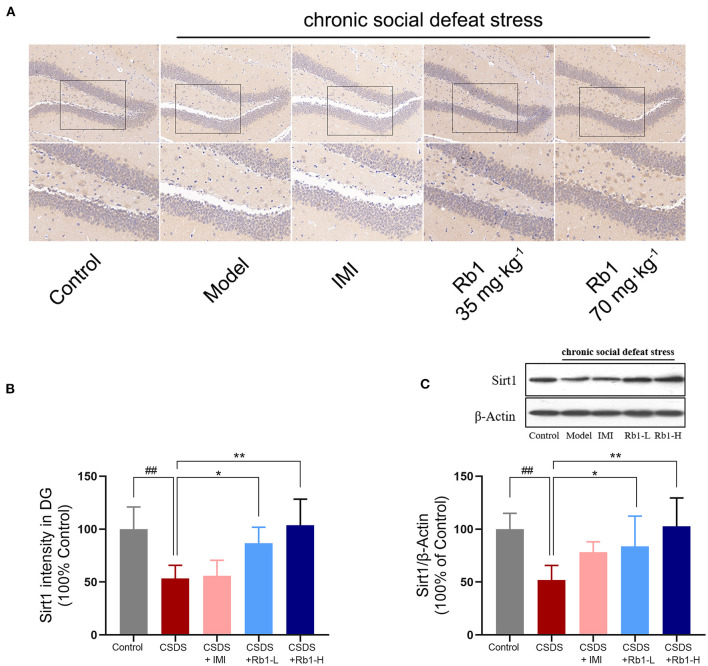
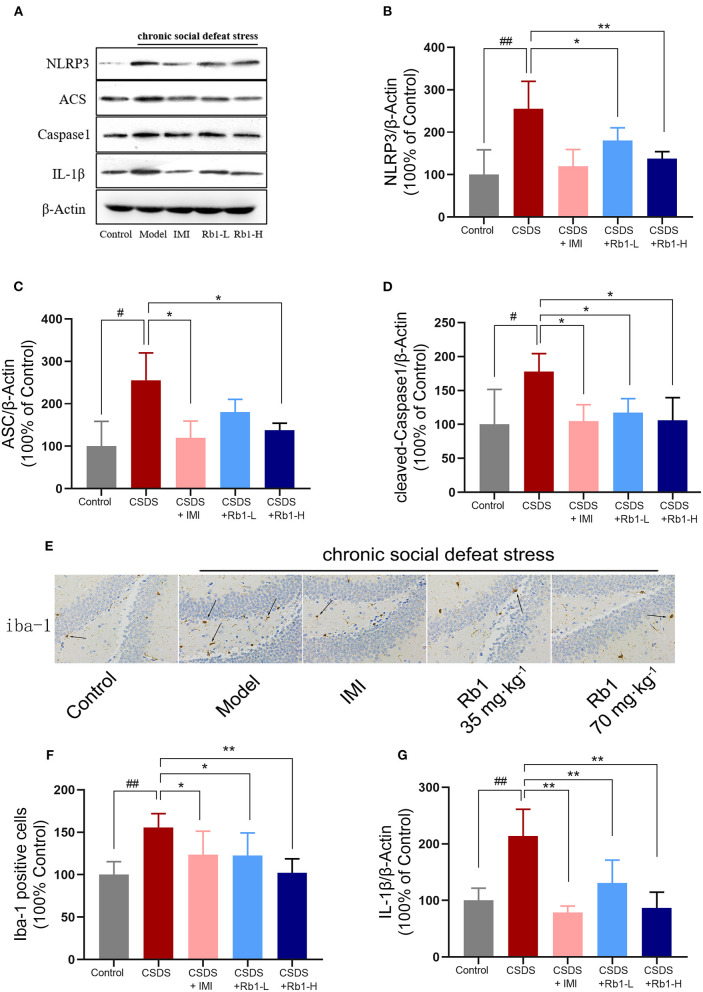
Ginsenoside Rb1, a diol-type ginseng saponin, has various positive effects on the central nervous system. This study aimed to evaluate the antidepressant effects of Rb1 on chronic social defeat stress (CSDS) induced behavioral deficits and the exact neural cascades linked with inflammatory processes. The results of behavioral tests such as social interaction, tail suspension, and forced swimming revealed that oral treatment of Rb1 (35 and 70 mg/kg) alleviates depression-like behavior. Rb1 treatment increased antioxidant enzyme activity (SOD and CAT) and reduced lipid peroxidation (LPO) content in the hippocampus. Rb1 also suppressed the production of inflammatory cytokines (TNF-α, IL-18, and IL-1β) as well as microglial activation (Iba1) in response to CSDS. Moreover, Rb1 administration considerably reduced the protein expression of NLRP3 (inflammasome) and promoted the protein expressions of Nrf2, HO-1 and Sirtuin1(SIRT1) activation in the hippocampus. Our findings showed that Rb1 effectively restores the depressive-like behavior in CSDS-induced model mice, mediated in part by the normalization of oxidative stress levels. The suppression of neuroinflammation is mediated by the regulation of SIRT1-NLRP3/Nrf2 pathways. Our results asserted that the Rb1 is a novel therapeutic candidate for treating depression.
人参皂苷Rb1是一种二醇型人参皂苷,对中枢神经系统有多种积极作用。本研究旨在评估Rb1对慢性社会挫败应激(CSDS)诱导的行为缺陷的抗抑郁作用以及与炎症过程相关的确切神经级联反应。社交互动、悬尾和强迫游泳等行为测试结果显示,口服Rb1(35和70mg/kg)可减轻抑郁样行为。Rb1治疗可提高海马体中抗氧化酶活性(超氧化物歧化酶和过氧化氢酶)并降低脂质过氧化(LPO)含量。Rb1还可抑制CSDS诱导的炎症细胞因子(肿瘤坏死因子-α、白细胞介素-18和白细胞介素-1β)的产生以及小胶质细胞激活(离子钙结合衔接分子1)。此外,给予Rb1可显著降低海马体中NLRP3(炎性小体)的蛋白表达,并促进核因子E2相关因子2、血红素加氧酶-1和沉默调节蛋白1(SIRT1)激活的蛋白表达。我们的研究结果表明,Rb1可有效恢复CSDS诱导的模型小鼠的抑郁样行为,部分是通过氧化应激水平的正常化介导的。神经炎症的抑制是由SIRT1-NLRP3/核因子E2相关因子2通路的调节介导的。我们的结果表明,Rb1是一种治疗抑郁症的新型候选药物。