Department of Microbiology and Immunology, The University of Melbourne, at the Peter Doherty Institute for Infection and Immunity, Melbourne, VIC, 3000, Australia.
School of Medicine, Tsinghua University, Beijing, China.
Mucosal Immunol. 2022 Apr;15(4):783-796. doi: 10.1038/s41385-022-00529-4. Epub 2022 May 30.
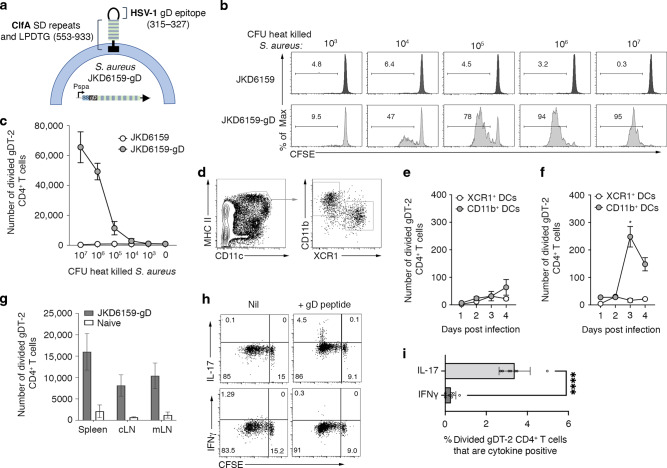
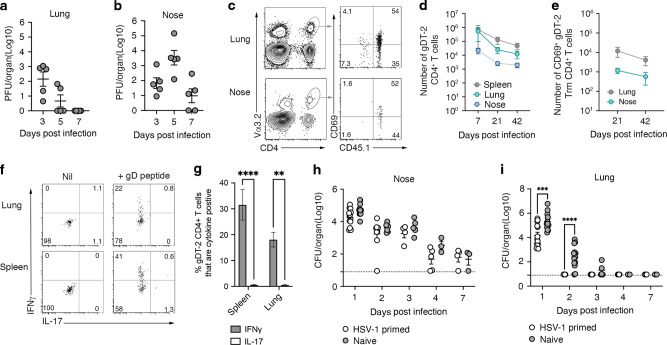
Staphylococcus aureus is a major cause of severe pulmonary infections. The evolution of multi-drug resistant strains limits antibiotic treatment options. To date, all candidate vaccines tested have failed, highlighting the need for an increased understanding of the immunological requirements for effective S. aureus immunity. Using an S. aureus strain engineered to express a trackable CD4 T cell epitope and a murine model of S. aureus pneumonia, we show strategies that lodge Th1 polarised bacterium specific CD4 tissue resident memory T cells (Trm) in the lung can significantly attenuate the severity of S. aureus pneumonia. This contrasts natural infection of mice that fails to lodge CD4 Trm cells along the respiratory tract or provide protection against re-infection, despite initially generating Th17 bacterium specific CD4 T cell responses. Interestingly, lack of CD4 Trm formation after natural infection in mice appears to be reflected in humans, where the frequency of S. aureus reactive CD4 Trm cells in lung tissue is also low. Our findings reveal the protective capacity of S. aureus specific respiratory tract CD4 Th1 polarised Trm cells and highlight the potential for targeting these cells in vaccines that aim to prevent the development of S. aureus pneumonia.
金黄色葡萄球菌是严重肺部感染的主要原因。多药耐药菌株的进化限制了抗生素治疗的选择。迄今为止,所有测试的候选疫苗都失败了,这突出表明需要增加对金黄色葡萄球菌免疫有效所需的免疫学要求的理解。我们使用一种经过工程改造以表达可追踪的 CD4 T 细胞表位的金黄色葡萄球菌菌株和金黄色葡萄球菌肺炎的小鼠模型,展示了将 Th1 极化的细菌特异性 CD4 组织驻留记忆 T 细胞(Trm)定植在肺部的策略可以显著减轻金黄色葡萄球菌肺炎的严重程度。这与小鼠的自然感染形成鲜明对比,自然感染不能在呼吸道定植 CD4 Trm 细胞,也不能提供针对再感染的保护,尽管最初产生了针对 Th17 细菌特异性 CD4 T 细胞反应。有趣的是,在小鼠中自然感染后缺乏 CD4 Trm 形成似乎反映在人类中,肺部组织中金黄色葡萄球菌反应性 CD4 Trm 细胞的频率也很低。我们的研究结果揭示了金黄色葡萄球菌特异性呼吸道 CD4 Th1 极化 Trm 细胞的保护能力,并强调了针对这些细胞的疫苗的潜力,旨在预防金黄色葡萄球菌肺炎的发展。