Department of Medicinal Chemistry and Molecular Pharmacology, Purdue Institute for Drug Discovery, West Lafayette, IN, USA.
Expert Opin Drug Discov. 2022 Aug;17(8):825-837. doi: 10.1080/17460441.2022.2084607. Epub 2022 Jun 7.
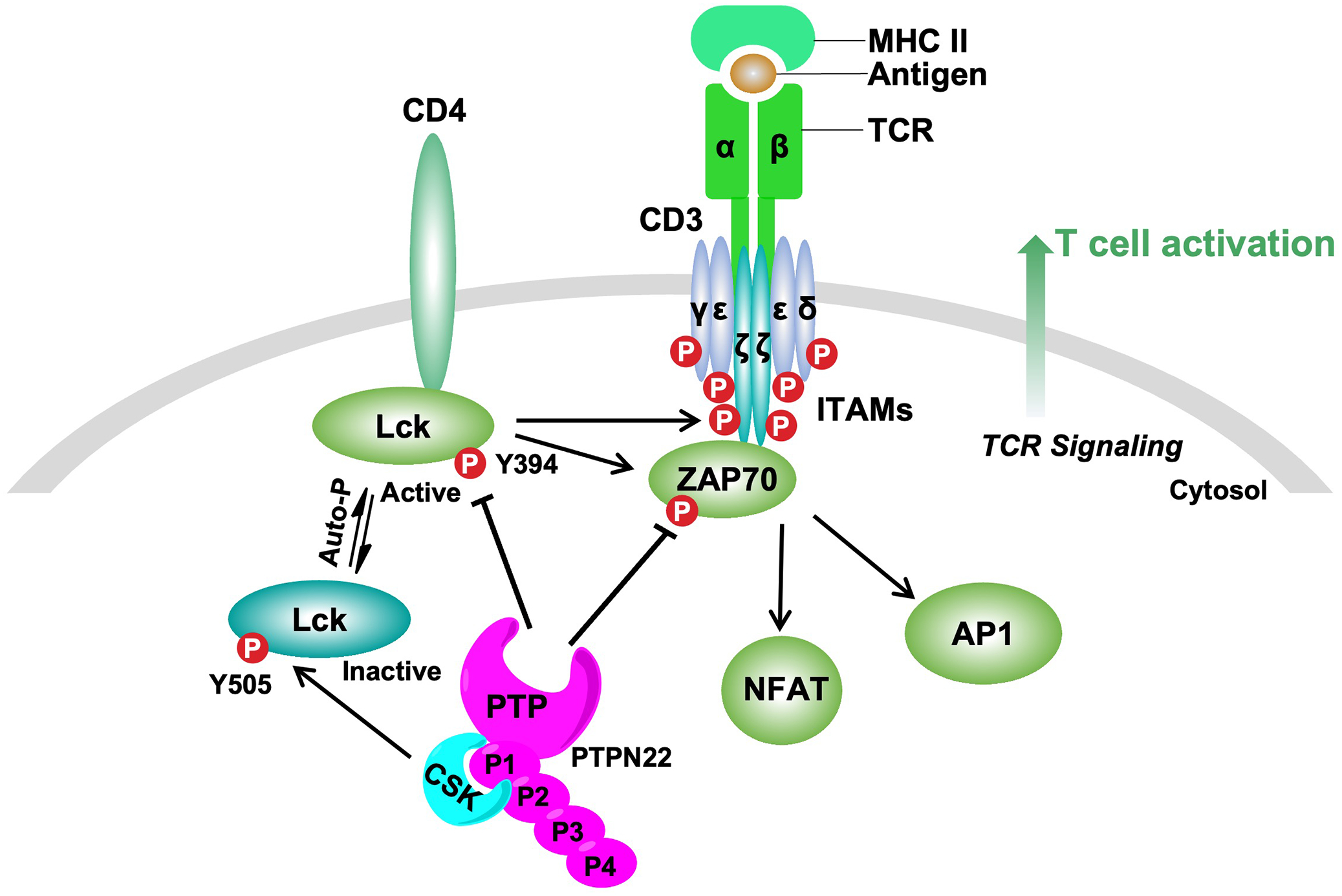
While immunotherapy strategies such as immune checkpoint inhibition and adoptive T cell therapy have become commonplace in cancer therapy, they suffer from limitations, including lack of patient response and toxicity. To wield the maximum potential of the immune system, cancer immunotherapy must integrate novel targets and therapeutic strategies with potential to augment clinical efficacy of currently utilized immunotherapies. PTPN22, a member of the protein tyrosine phosphatase (PTP) superfamily that downregulates T cell signaling and proliferation, has recently emerged as a systemically druggable and novel immunotherapy target.
This review describes the basics of PTPN22 structure and function and provides comprehensive insight into recent advances in small molecule PTPN22 inhibitor development and the immense potential of PTPN22 inhibition to synergize with current immunotherapies.
It is apparent that small molecule PTPN22 inhibitors have enormous potential to augment efficacy of current immunotherapy strategies such as checkpoint inhibition and adoptive cell transfer. Nevertheless, several constraints must be overcome before these inhibitors can be applied as useful therapeutics, namely selectivity, potency, and efficacy.
虽然免疫疗法策略,如免疫检查点抑制和过继性 T 细胞疗法,已在癌症治疗中普遍应用,但它们存在一些局限性,包括缺乏患者应答和毒性。为了充分发挥免疫系统的潜力,癌症免疫疗法必须将新的靶点和治疗策略与目前应用的免疫疗法的临床疗效增强潜力相结合。PTPN22 是蛋白酪氨酸磷酸酶(PTP)超家族的一员,可下调 T 细胞信号转导和增殖,最近已成为一种全身性可用药的新型免疫治疗靶点。
本文描述了 PTPN22 的结构和功能基础,并全面介绍了小分子 PTPN22 抑制剂的最新进展,以及 PTPN22 抑制与当前免疫疗法协同作用的巨大潜力。
小分子 PTPN22 抑制剂显然具有增强当前免疫疗法策略(如检查点抑制和过继细胞转移)疗效的巨大潜力。然而,在这些抑制剂作为有用的治疗药物之前,必须克服几个限制,包括选择性、效力和功效。