Novo Nordisk Foundation Center for Protein Research, Faculty of Health and Medical Sciences, University of Copenhagen, Blegdamsvej 3B, 2200, Copenhagen, Denmark.
Department of Cardiology, The Heart Center, Rigshospitalet, Blegdamsvej 9, 2100, Copenhagen, Denmark.
Cardiovasc Diabetol. 2022 May 31;21(1):87. doi: 10.1186/s12933-022-01527-3.
Patients diagnosed with ischemic heart disease (IHD) are becoming increasingly multi-morbid, and studies designed to analyze the full spectrum are few.
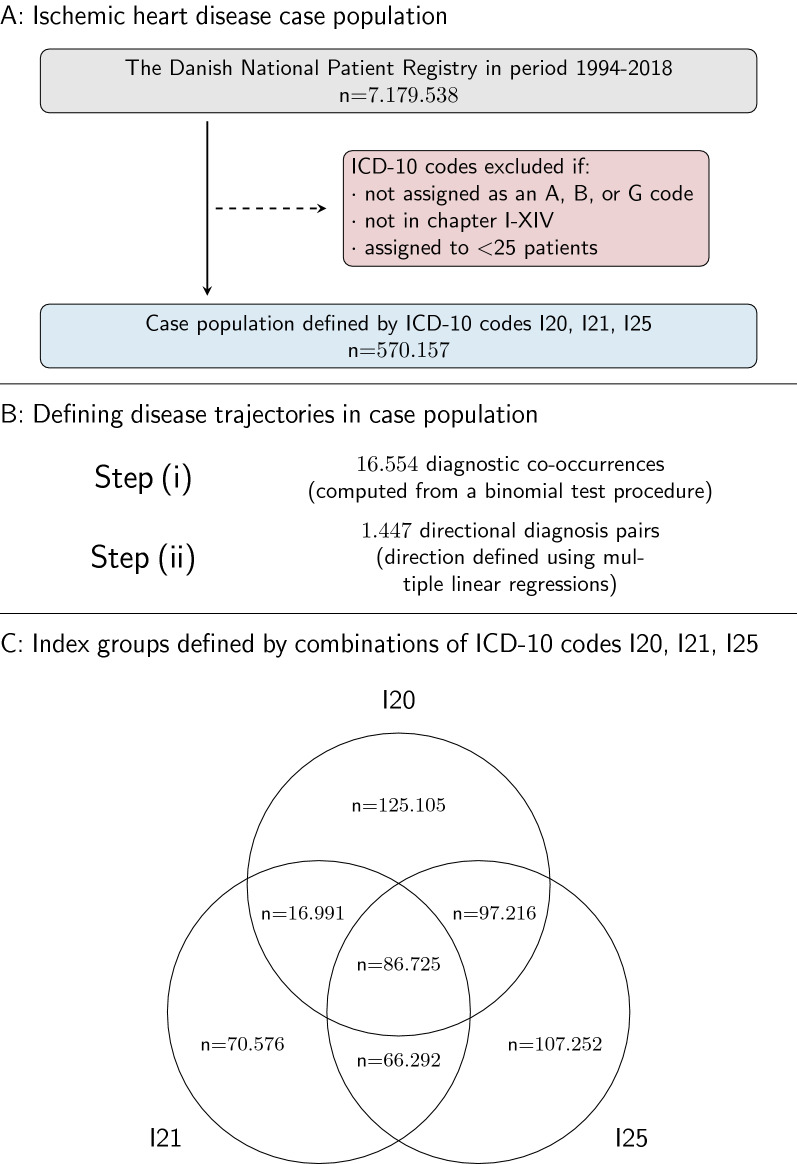
Disease trajectories, defined as time-ordered series of diagnoses, were used to study the temporality of multi-morbidity. The main data source was The Danish National Patient Register (NPR) comprising 7,179,538 individuals in the period 1994-2018. Patients with a diagnosis code for IHD were included. Relative risks were used to quantify the strength of the association between diagnostic co-occurrences comprised of two diagnoses that were overrepresented in the same patients. Multiple linear regression models were then fitted to test for temporal associations among the diagnostic co-occurrences, termed length two disease trajectories. Length two disease trajectories were then used as basis for constructing disease trajectories of three diagnoses.
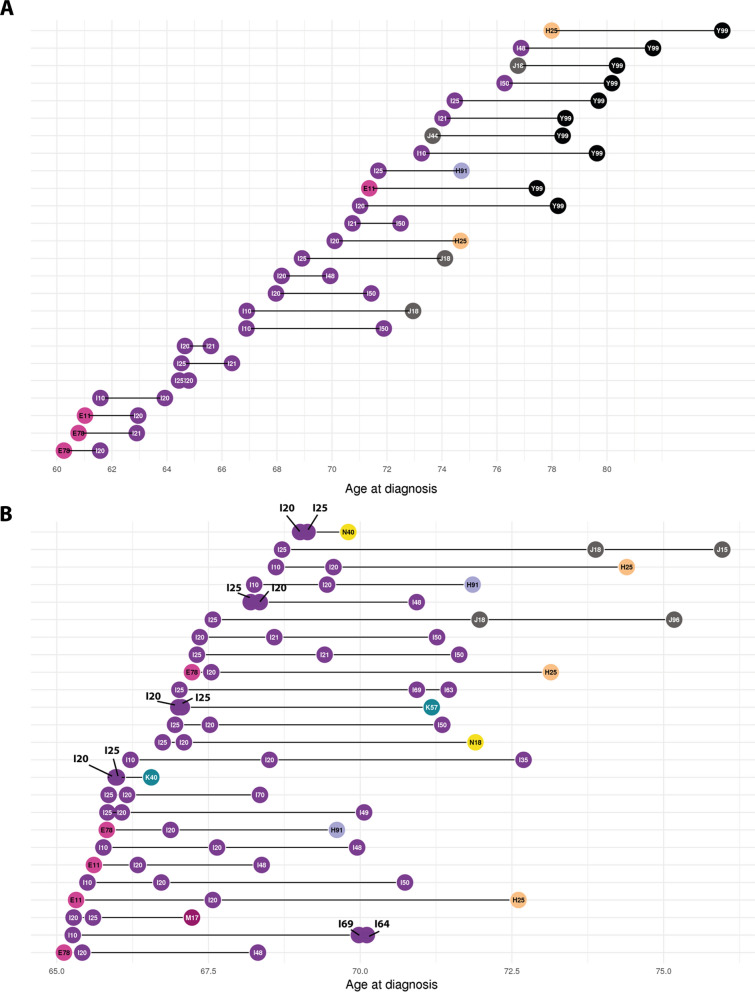
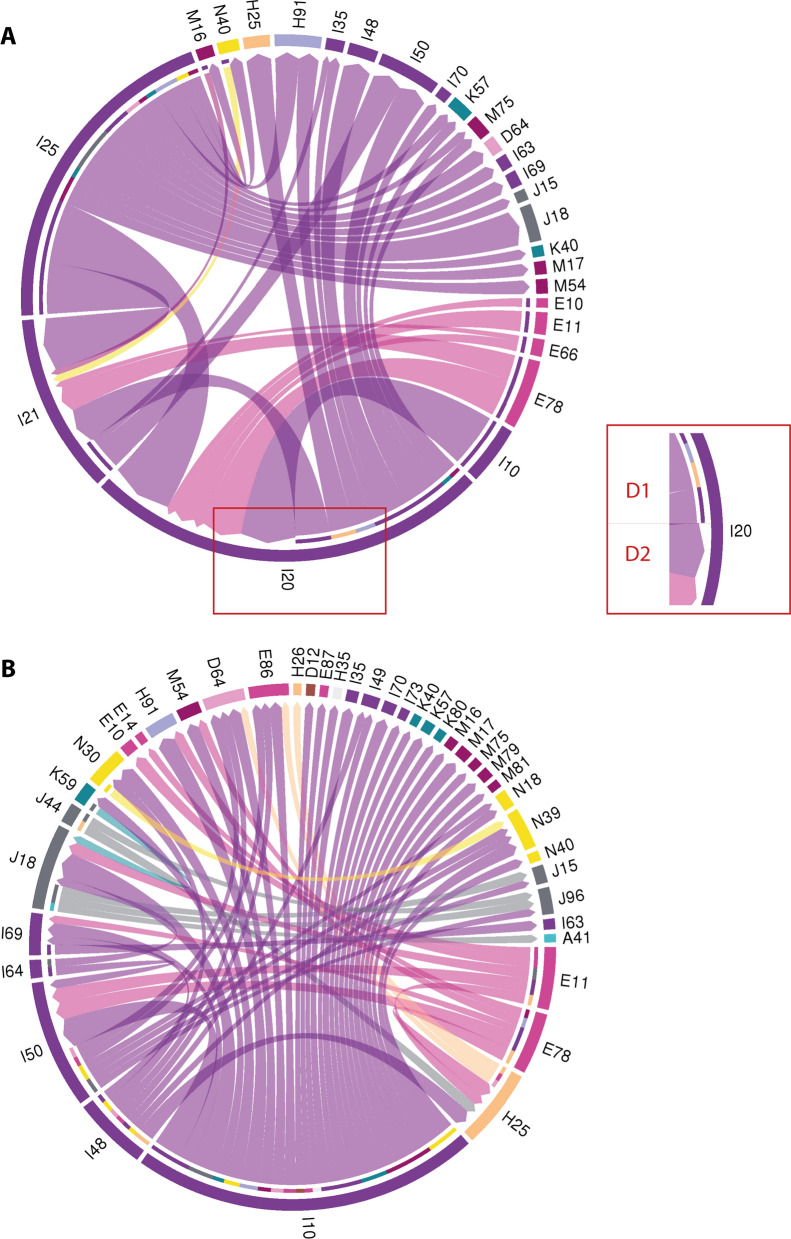
In a cohort of 570,157 IHD disease patients, we identified 1447 length two disease trajectories and 4729 significant length three disease trajectories. These included 459 distinct diagnoses. Disease trajectories were dominated by chronic diseases and not by common, acute diseases such as pneumonia. The temporal association of atrial fibrillation (AF) and IHD differed in different IHD subpopulations. We found an association between osteoarthritis (OA) and heart failure (HF) among patients diagnosed with OA, IHD, and then HF only.
The sequence of diagnoses is important in characterization of multi-morbidity in IHD patients as the disease trajectories. The study provides evidence that the timing of AF in IHD marks distinct IHD subpopulations; and secondly that the association between osteoarthritis and heart failure is dependent on IHD.
患有缺血性心脏病 (IHD) 的患者越来越多病种,而设计用于分析全貌的研究很少。
疾病轨迹,定义为按时间顺序排列的诊断系列,用于研究多种疾病的时间性。主要数据源是丹麦全国患者登记处 (NPR),其中包含 1994 年至 2018 年期间的 7179538 个人。包括有 IHD 诊断代码的患者。相对风险用于量化在同一患者中占比过高的两个诊断之间的诊断共同发生的关联强度。然后拟合多元线性回归模型来测试诊断共同发生之间的时间关联,称为长度为二的疾病轨迹。然后将长度为二的疾病轨迹用作构建三个诊断的疾病轨迹的基础。
在一个 570157 例 IHD 疾病患者队列中,我们确定了 1447 个长度为二的疾病轨迹和 4729 个具有显著意义的长度为三的疾病轨迹。这些轨迹包括 459 个不同的诊断。疾病轨迹主要由慢性病主导,而不是肺炎等常见的急性疾病。心房颤动 (AF) 和 IHD 的时间关联在不同的 IHD 亚群中有所不同。我们发现,在诊断为 OA、IHD 然后仅 HF 的患者中,OA 和 HF 之间存在关联。
在 IHD 患者的多病症特征中,诊断的顺序很重要,疾病轨迹就是证明。该研究表明,AF 在 IHD 中的发生时间标志着不同的 IHD 亚群;其次,OA 和 HF 之间的关联取决于 IHD。