Department of Environmental Biological and Pharmaceutical Sciences and Technologies (DiSTABiF), Università Degli Studi Della Campania "Luigi Vanvitelli", Caserta, Italy.
Institute of Genetics and Biophysics (IGB), "Adriano Buzzati-Traverso", Consiglio Nazionale Delle Ricerche (CNR), Naples, Italy.
Clin Epigenetics. 2022 May 28;14(1):71. doi: 10.1186/s13148-022-01292-w.
Beckwith-Wiedemann syndrome (BWS) and Pseudohypoparathyroidism type 1B (PHP1B) are imprinting disorders (ID) caused by deregulation of the imprinted gene clusters located at 11p15.5 and 20q13.32, respectively. In both of these diseases a subset of the patients is affected by multi-locus imprinting disturbances (MLID). In several families, MLID is associated with damaging variants of maternal-effect genes encoding protein components of the subcortical maternal complex (SCMC). However, frequency, penetrance and recurrence risks of these variants are still undefined. In this study, we screened two cohorts of BWS patients and one cohort of PHP1B patients for the presence of MLID, and analysed the positive cases for the presence of maternal variants in the SCMC genes by whole exome-sequencing and in silico functional studies.
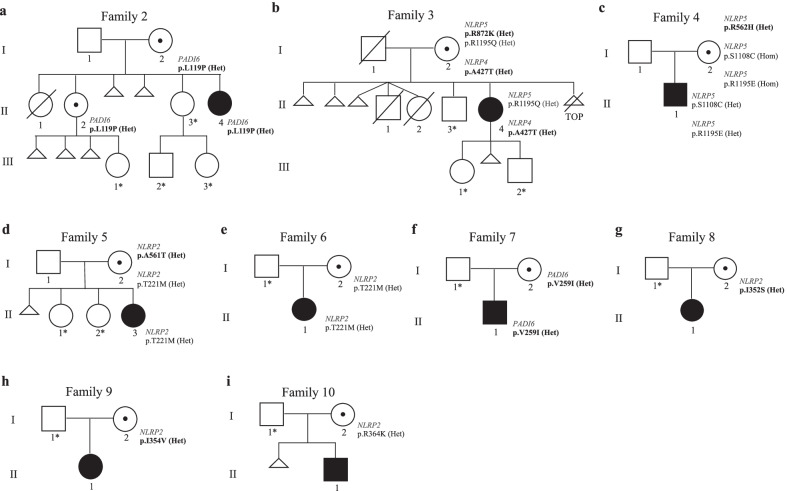
We identified 10 new cases of MLID associated with the clinical features of either BWS or PHP1B, in which segregate 13 maternal putatively damaging missense variants of the SCMC genes. The affected genes also included KHDC3L that has not been associated with MLID to date. Moreover, we highlight the possible relevance of relatively common variants in the aetiology of MLID.
Our data further add to the list of the SCMC components and maternal variants that are involved in MLID, as well as of the associated clinical phenotypes. Also, we propose that in addition to rare variants, common variants may play a role in the aetiology of MLID and imprinting disorders by exerting an additive effect in combination with rarer putatively damaging variants. These findings provide useful information for the molecular diagnosis and recurrence risk evaluation of MLID-associated IDs in genetic counselling.
贝克威思-威德曼综合征(BWS)和假性甲状旁腺功能减退症 1B 型(PHP1B)是由分别位于 11p15.5 和 20q13.32 的印迹基因簇调控失调引起的印迹疾病(ID)。在这两种疾病中,一部分患者受多基因座印迹干扰(MLID)影响。在几个家族中,MLID 与编码皮质下母性复合物(SCMC)蛋白成分的母性效应基因的有害变异有关。然而,这些变体的频率、外显率和复发风险仍未定义。在这项研究中,我们对两个 BWS 患者队列和一个 PHP1B 患者队列进行了 MLID 的筛查,并通过外显子组测序和计算机功能研究对 SCMC 基因中存在的母性变体的阳性病例进行了分析。
我们鉴定了 10 例新的 MLID 病例,这些病例与 BWS 或 PHP1B 的临床特征相关,其中 13 例是 SCMC 基因的母性潜在有害错义变体。受影响的基因还包括 KHDC3L,该基因迄今尚未与 MLID 相关。此外,我们强调了相对常见的变体在 MLID 发病机制中的可能相关性。
我们的数据进一步增加了 SCMC 成分和与 MLID 相关的母性变体的列表,以及相关的临床表型。此外,我们提出,除了罕见的变体外,常见的变体可能通过与更罕见的潜在有害变体相结合,发挥累加效应,在 MLID 和印迹疾病的发病机制中发挥作用。这些发现为遗传咨询中 MLID 相关 ID 的分子诊断和复发风险评估提供了有用的信息。