Vašatko Hana, Gosch Lukas, Jauk Julian, Stavric Milena
Faculty of Architecture, Institute of Architecture and Media, Graz University of Technology, 8010 Graz, Austria.
Biomimetics (Basel). 2022 Apr 21;7(2):51. doi: 10.3390/biomimetics7020051.
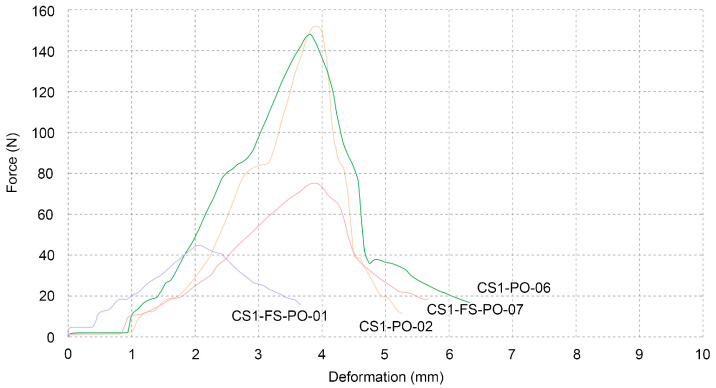
The subject of this research is growing mycelium-based composites and exploring their basic material properties. Since the building industry is responsible for a large amount of annual CO emissions, rethinking building materials is an important task for future practices. Using such composites is a carbon-neutral strategy that offers alternatives to conventional building materials. Yet, in order to become competitive, their basic research is still needed. In order to create mycelium-based composites, it was necessary to establish a sterile work environment and develop shaping procedures for objects on a scale of architectural building elements. The composite material exhibited qualities that make it suitable for compression-only structures, temporary assemblies, and acoustic and thermal insulation. The methodology includes evaluating several substrates, focused on beech sawdust, with two mycelium strains ( and ), density calculations, compression tests, three-point flexural tests and capillary water absorption. The results of this study are presented through graphical and numerical values comparing material and mechanical properties. This study established a database for succeeding investigations and for defining the potentials and limitations of this material. Furthermore, future applications and relevant examinations have been addressed.
本研究的主题是基于菌丝体的复合材料,并探索其基本材料特性。由于建筑业每年产生大量的碳排放,重新思考建筑材料是未来实践的一项重要任务。使用此类复合材料是一种碳中和策略,可为传统建筑材料提供替代方案。然而,为了具有竞争力,仍需要对其进行基础研究。为了制造基于菌丝体的复合材料,有必要建立一个无菌工作环境,并开发适用于建筑构件规模物体的成型程序。该复合材料展现出的特性使其适用于仅承受压力的结构、临时组件以及隔音和隔热。该方法包括评估几种基材,重点是山毛榉锯末,使用两种菌丝体菌株(和),进行密度计算、压缩试验、三点弯曲试验和毛细吸水试验。本研究的结果通过比较材料和力学性能的图形和数值呈现。本研究为后续研究以及确定这种材料的潜力和局限性建立了一个数据库。此外,还探讨了未来的应用和相关研究。