Bonanni Roberto, Cariati Ida, Tarantino Umberto, D'Arcangelo Giovanna, Tancredi Virginia
Department of Clinical Sciences and Translational Medicine, "Tor Vergata" University of Rome, 00133 Rome, Italy.
Department of Orthopaedics and Traumatology, "Policlinico Tor Vergata" Foundation, 00133 Rome, Italy.
J Funct Morphol Kinesiol. 2022 Apr 29;7(2):38. doi: 10.3390/jfmk7020038.
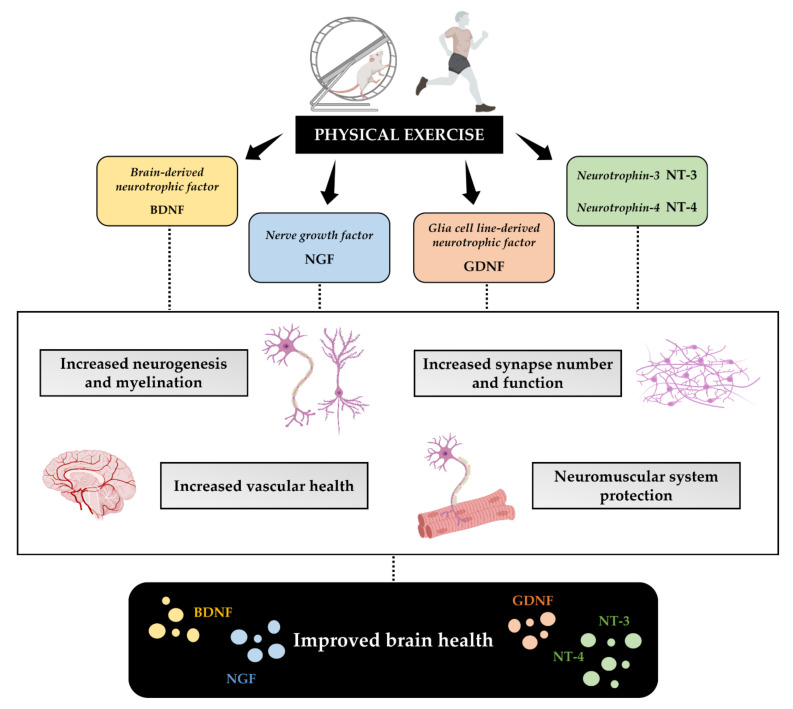
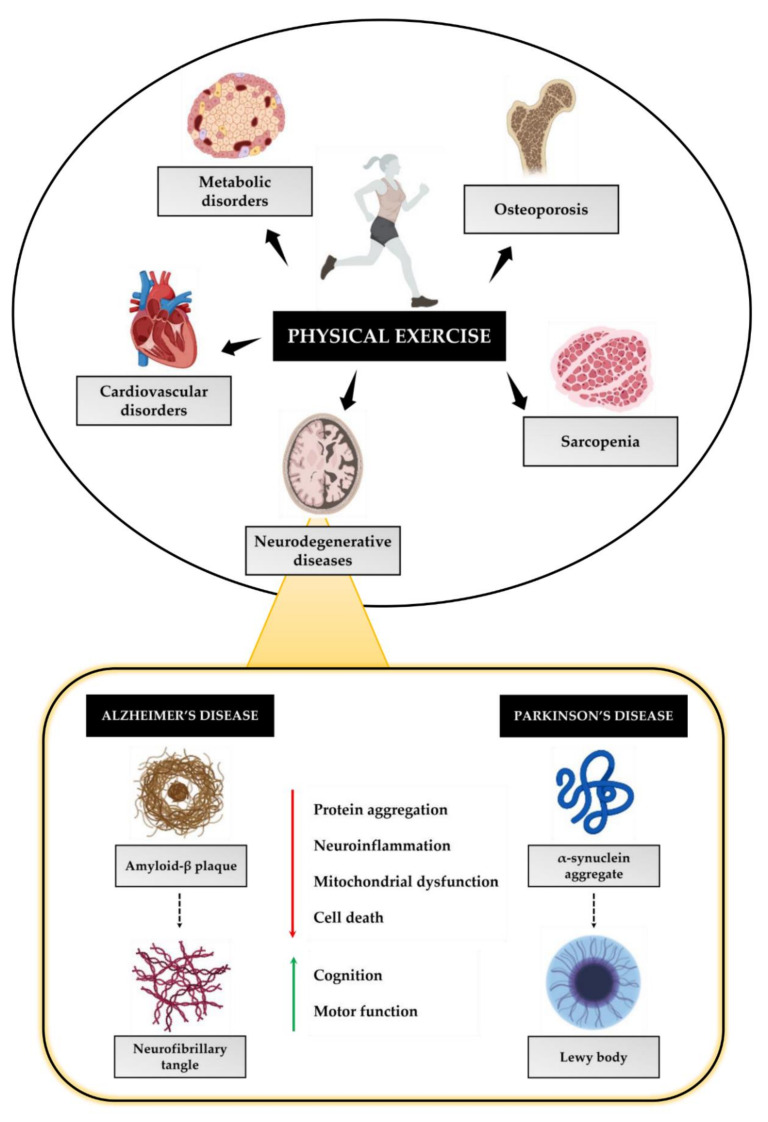
Scientific evidence has demonstrated the power of physical exercise in the prevention and treatment of numerous chronic and/or age-related diseases, such as musculoskeletal, metabolic, and cardiovascular disorders. In addition, regular exercise is known to play a key role in the context of neurodegenerative diseases, as it helps to reduce the risk of their onset and counteracts their progression. However, the underlying molecular mechanisms have not yet been fully elucidated. In this regard, neurotrophins, such as brain-derived neurotrophic factor (BDNF), nerve growth factor (NGF), glia cell line-derived neurotrophic factor (GDNF), neurotrophin-3 (NT-3), and neurotrophin-4 (NT-4), have been suggested as key mediators of brain health benefits, as they are involved in neurogenesis, neuronal survival, and synaptic plasticity. The production of these neurotrophic factors, known to be increased by physical exercise, is downregulated in neurodegenerative disorders, suggesting their fundamental importance in maintaining brain health. However, the mechanism by which physical exercise promotes the production of neurotrophins remains to be understood, posing limits on their use for the development of potential therapeutic strategies for the treatment of neurodegenerative diseases. In this literature review, we analyzed the most recent evidence regarding the relationship between physical exercise, neurotrophins, and brain health, providing an overview of their involvement in the onset and progression of neurodegeneration.
科学证据已证明体育锻炼在预防和治疗多种慢性和/或与年龄相关的疾病方面具有强大作用,如肌肉骨骼疾病、代谢紊乱和心血管疾病。此外,众所周知,经常锻炼在神经退行性疾病中起着关键作用,因为它有助于降低发病风险并对抗疾病进展。然而,其潜在的分子机制尚未完全阐明。在这方面,神经营养因子,如脑源性神经营养因子(BDNF)、神经生长因子(NGF)、胶质细胞系源性神经营养因子(GDNF)、神经营养因子-3(NT-3)和神经营养因子-4(NT-4),已被认为是大脑健康益处的关键介质,因为它们参与神经发生、神经元存活和突触可塑性。这些神经营养因子的产生已知会因体育锻炼而增加,但在神经退行性疾病中会下调表明它们在维持大脑健康方面至关重要。然而,体育锻炼促进神经营养因子产生的机制仍有待了解,这限制了它们在开发神经退行性疾病潜在治疗策略中的应用。在这篇文献综述中,我们分析了关于体育锻炼、神经营养因子和大脑健康之间关系的最新证据,概述了它们在神经退行性变的发生和进展中的作用。