Wang Haixia, Zhang Zeyi, Ma Yu, Jia Yuanmin, Ma Bin, Gu Junlian, Chen Ou, Yue Shouwei
School of Nursing and Rehabilitation, Cheeloo College of Medicine, Shandong University, Jinan, China.
Department of Pediatrics, The Second Hospital of Shandong University, Jinan, China.
Front Pharmacol. 2022 May 11;13:852536. doi: 10.3389/fphar.2022.852536. eCollection 2022.
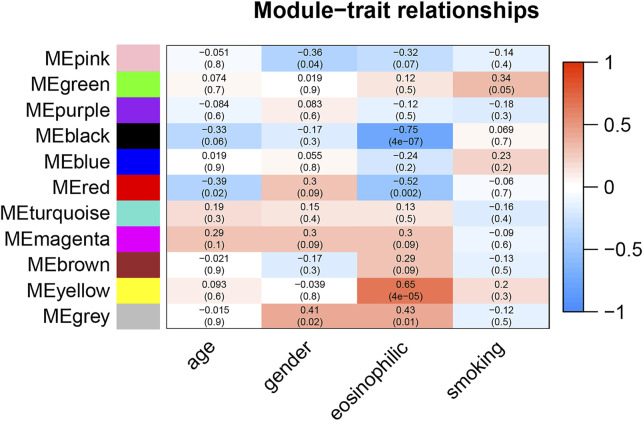
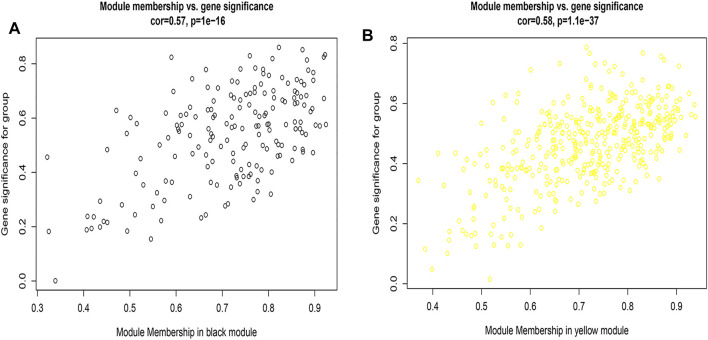
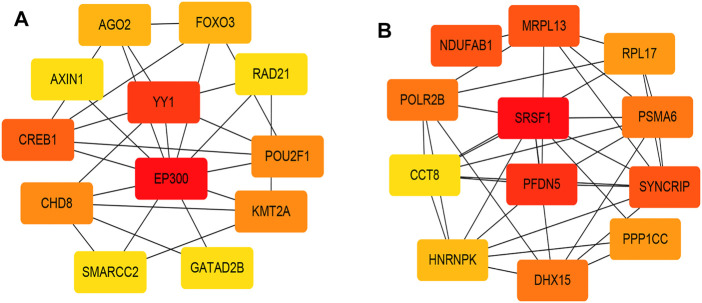
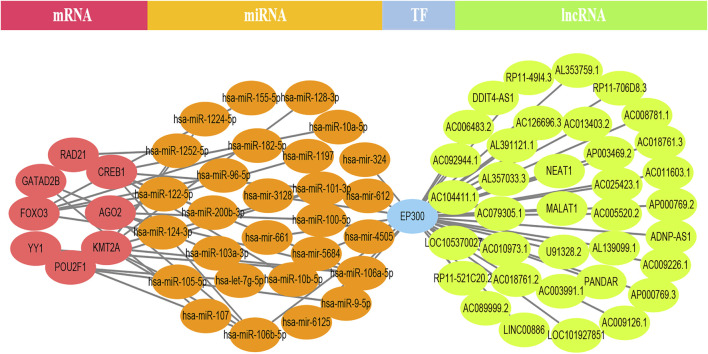
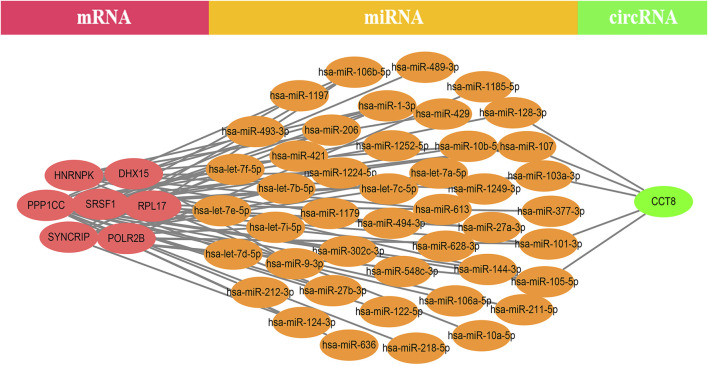
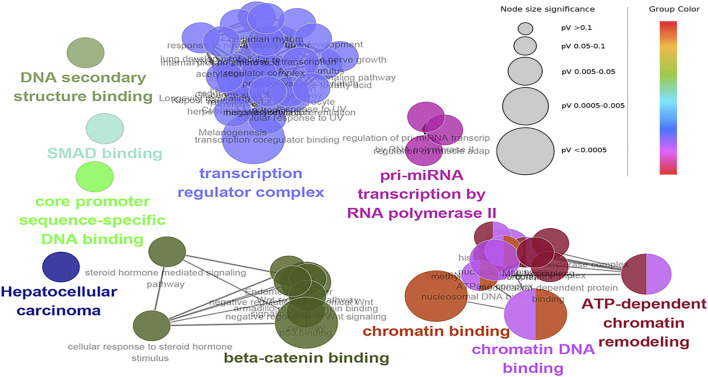
Currently, disease control in patients with severe eosinophilic asthma is not optimistic. Competing endogenous RNA (ceRNA) networks have been found to play a key role in asthma in recent years. However, it is unclear whether ceRNA networks play an important part in severe eosinophilic asthma. Firstly, gene expression profiles related to severe eosinophilic asthma were downloaded from the Gene Expression Omnibus (GEO) database. Secondly, the key modules were identified by the weighted gene co-expression network analysis (WGCNA). Thirdly, genes in modules highly associated with severe eosinophilic asthma were selected for further construction of the ceRNA network. Fourthly, Gene Ontology (GO) and Kyoto Encyclopedia of Genes and Genomes (KEGG) enrichment analyses were performed on hub genes. Finally, the results of this study were validated on the GSE143303, GSE137268, and GSE147878 datasets. 22 severe eosinophilic asthmatics and 13 healthy controls were extracted for WGCNA. We found that the genes in the black module ( = -0.75, < 0.05) and yellow module ( = 0.65, < 0.05) were highly associated with severe eosinophilic asthma. EP300 was discovered to serve the key connecting function in the ceRNA network. Surprisingly, lncRNAs seem to eliminate the role of EP300 in the black module and we discovered that CCT8 and miRNA-mRNA formed a circRNA-miRNA-mRNA network in the yellow module. We found that EP300 and FOXO3 in the black module were regulated by steroid hormones in the enrichment analysis, which were related to the medication used by the patient. Through validation of other datasets, we found that the hub genes in the yellow module were the key genes in the treatment of severe eosinophilic asthma. In particular, RPL17 and HNRNPK might specifically regulate severe eosinophilic asthma. RPL17 and HNRNPK might particularly regulate severe eosinophilic asthma. Our results could be useful to provide potential immunotherapy targets and prognostic markers for severe eosinophilic asthma.
目前,重度嗜酸性粒细胞性哮喘患者的疾病控制情况不容乐观。近年来发现竞争性内源性RNA(ceRNA)网络在哮喘中起关键作用。然而,尚不清楚ceRNA网络在重度嗜酸性粒细胞性哮喘中是否起重要作用。首先,从基因表达综合数据库(GEO)下载与重度嗜酸性粒细胞性哮喘相关的基因表达谱。其次,通过加权基因共表达网络分析(WGCNA)确定关键模块。第三,选择与重度嗜酸性粒细胞性哮喘高度相关模块中的基因进一步构建ceRNA网络。第四,对枢纽基因进行基因本体论(GO)和京都基因与基因组百科全书(KEGG)富集分析。最后,在GSE143303、GSE137268和GSE147878数据集上验证本研究结果。提取22例重度嗜酸性粒细胞性哮喘患者和13名健康对照进行WGCNA。我们发现黑色模块(=-0.75,<0.05)和黄色模块(=0.65,<0.05)中的基因与重度嗜酸性粒细胞性哮喘高度相关。发现EP300在ceRNA网络中起关键连接作用。令人惊讶的是,长链非编码RNA似乎消除了EP300在黑色模块中的作用,并且我们发现在黄色模块中CCT8和miRNA-mRNA形成了一个circRNA-miRNA-mRNA网络。我们发现在富集分析中黑色模块中的EP300和FOXO3受类固醇激素调节,这与患者使用的药物有关。通过对其他数据集的验证,我们发现黄色模块中的枢纽基因是治疗重度嗜酸性粒细胞性哮喘的关键基因。特别是,RPL17和HNRNPK可能特异性调节重度嗜酸性粒细胞性哮喘。RPL17和HNRNPK可能特别调节重度嗜酸性粒细胞性哮喘。我们的结果可能有助于为重度嗜酸性粒细胞性哮喘提供潜在的免疫治疗靶点和预后标志物。