Zhao Haidong, Tang Xiaoqin, Wu Mingli, Li Qi, Yi Xiaohua, Liu Shirong, Jiang Junyi, Wang Shuhui, Sun Xiuzhu
College of Animal Science and Technology, Northwest A&F University, Yangling, China.
College of Grassland Agriculture, Northwest A&F University, Yangling, China.
Front Genet. 2021 Feb 10;12:616388. doi: 10.3389/fgene.2021.616388. eCollection 2021.
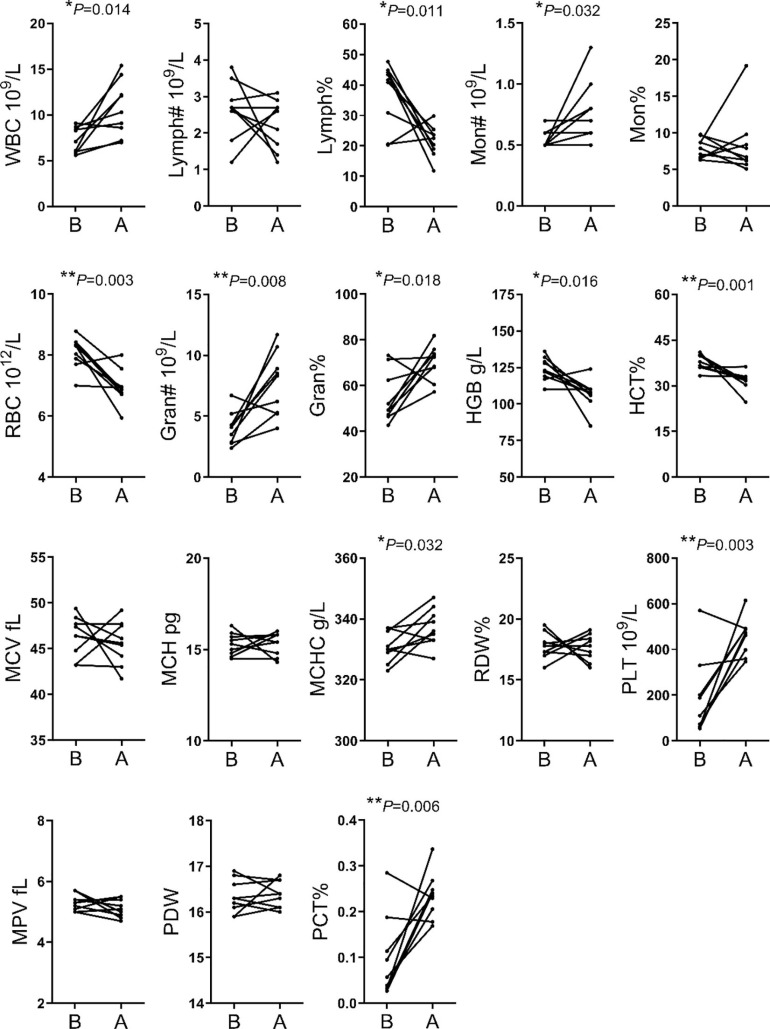
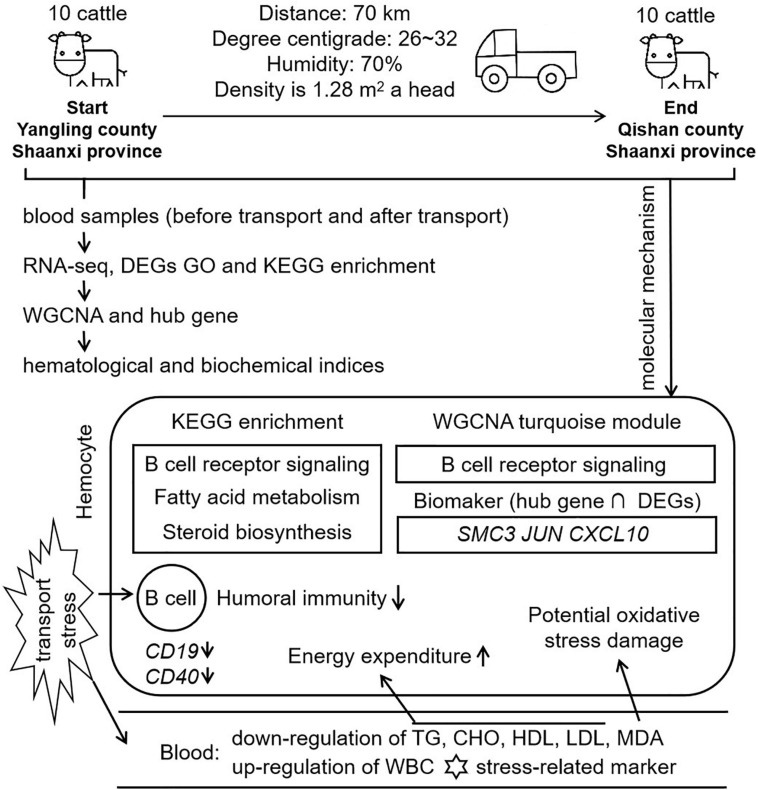
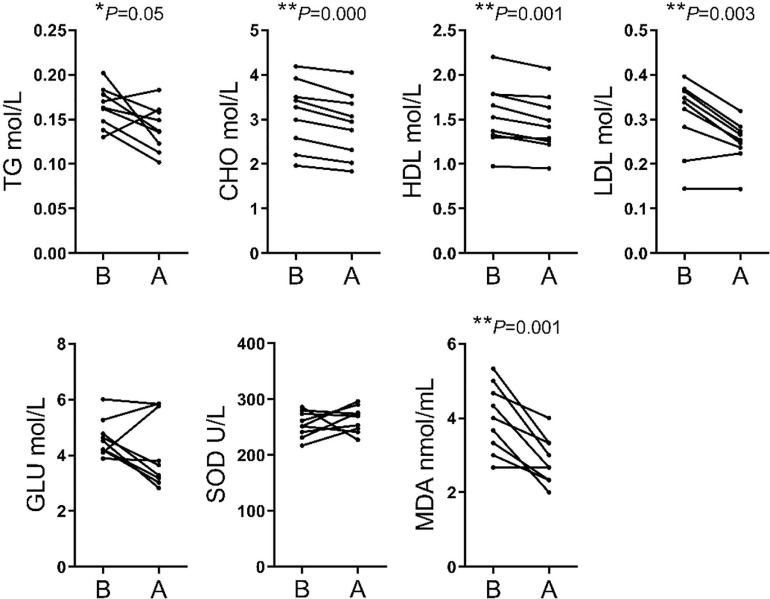
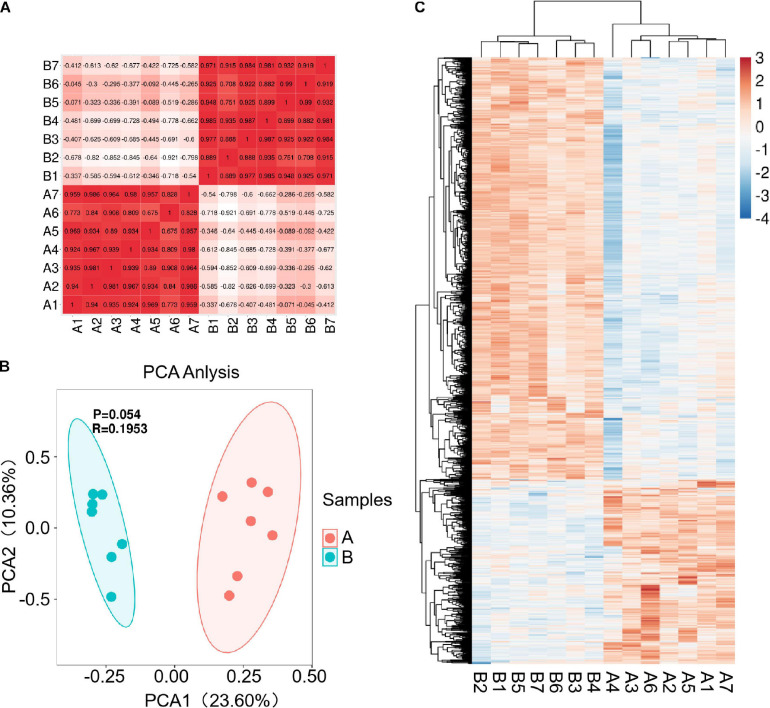
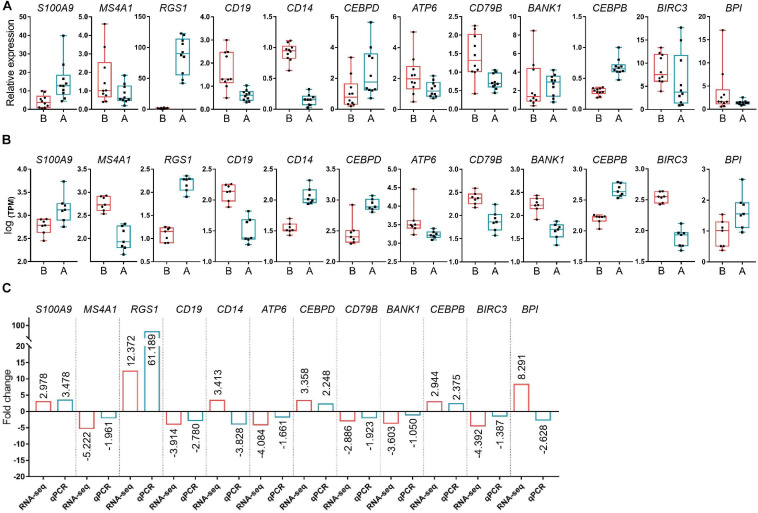
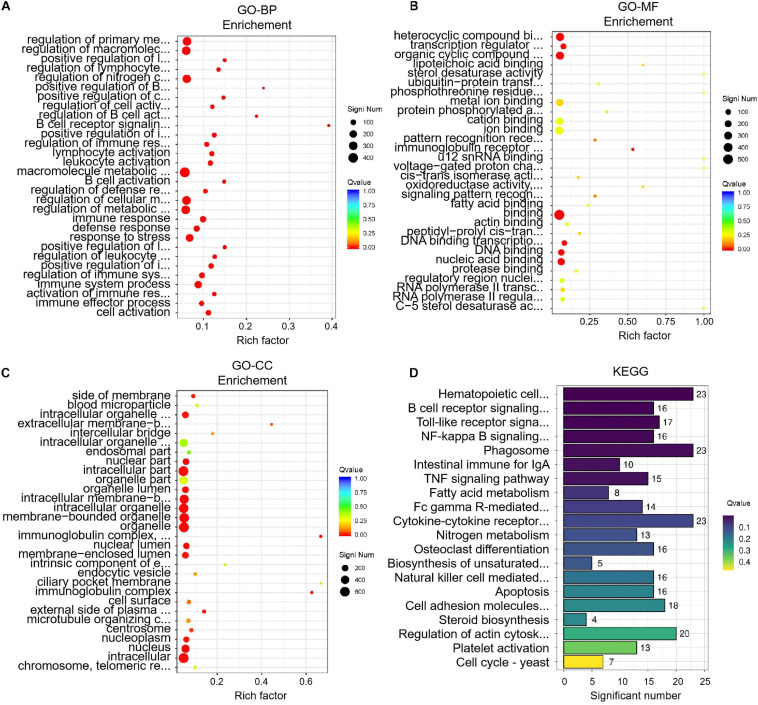
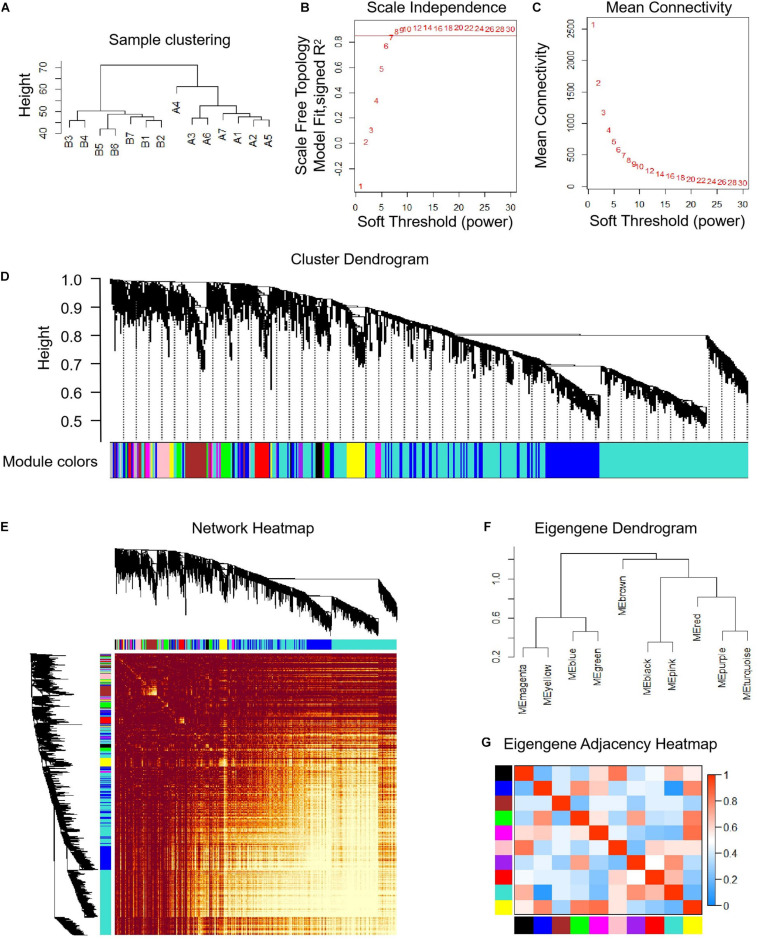
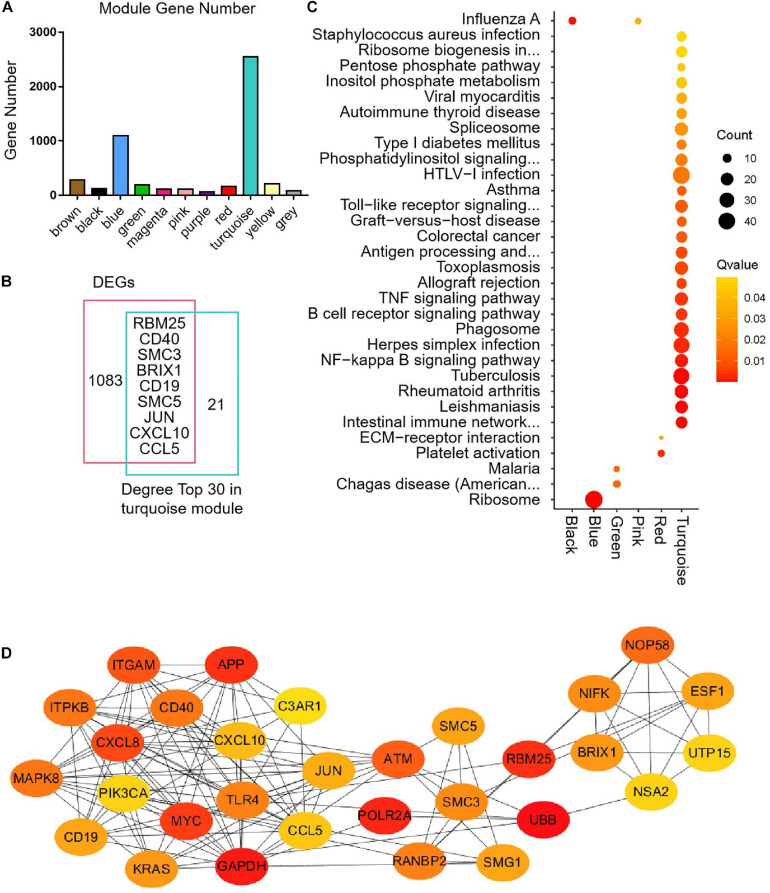
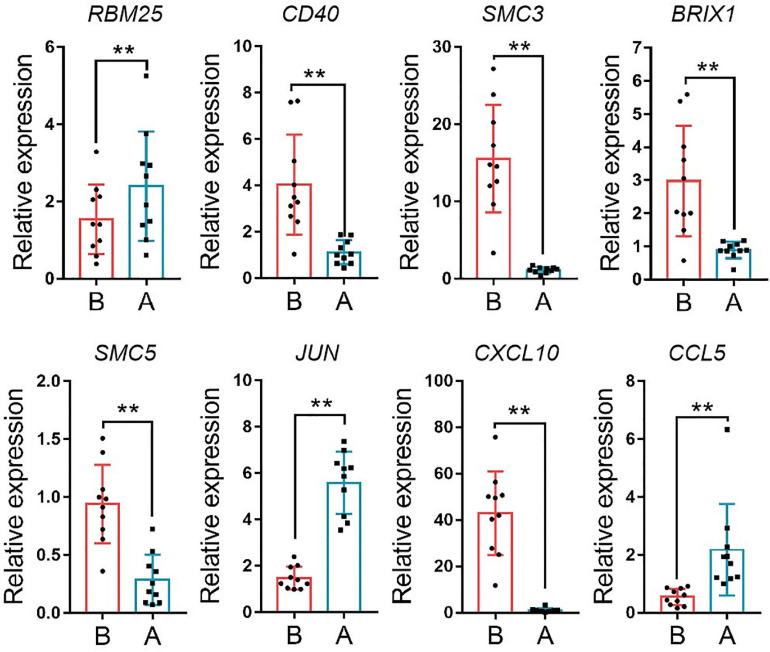
The transportation is a crucial phase in beef cattle industry, and the annual losses caused by beef cattle transport stress are substantial. Several studies have described the effect of long distance transportation stress on animal health, such as disorder in nervous, endocrine, immune, and metabolic system. However, molecular mechanisms underlying short distance transportation stress is still poorly understood. Present study aims to investigate the effect of short distance transportation by measuring the hematological indices and transcriptomic analysis. In this study, a total 10 Qinchuan cattle were used to compare the molecular characteristics of blood before and after transportation. We have found that a stress-related marker "white blood cell count (WBC)" increased significantly after transportation. The decrease in triglyceride (TG), cholestenone (CHO), high-density lipoprotein (HDL), and low-density lipoprotein (LDL) showed that energy expenditure was increased after transportation, but not enough to activate fatty decomposition. Intriguingly, the decrease of malondialdehyde (MDA) showed that cattle were more resilience to oxidative stress. The RNA-seq showed that 1,092 differentially expressed genes (DEGs) were found (329 up-regulated and 763 down-regulated) between group before and group after. The GO and KEGG enrichment showed that the metabolic pathway and B cell function related pathways were enriched. Furthermore, median absolute deviation (MAD) top 5,000 genes were used to construct a co-expression network by weighted correlation network analysis (WGCNA), and 11 independent modules were identified. Combing with protein-protein interaction (PPI) analysis, the verification of quantitative real-time PCR (qPCR) and the correlation of B cell function, (), (), and () were suggested as potential molecular markers in identification of short distance transportation. Collectively, the blood RNA-seq analysis and WGCNA indicated that the disorder of B cell differentiation, proliferation, survival, and apoptosis were the potential molecular mechanism in short distance transportation stress. In conclusion, our results provide the novel insight about potential biomarkers for short distance transportation stress, which may serve as for diagnosing and preventing this condition in beef industry.
运输是肉牛产业中的一个关键阶段,肉牛运输应激每年造成的损失巨大。多项研究描述了长途运输应激对动物健康的影响,如神经、内分泌、免疫和代谢系统紊乱。然而,短距离运输应激的分子机制仍知之甚少。本研究旨在通过测量血液学指标和转录组分析来探究短距离运输的影响。在本研究中,共使用10头秦川牛来比较运输前后血液的分子特征。我们发现,一个与应激相关的指标“白细胞计数(WBC)”在运输后显著增加。甘油三酯(TG)、胆固醇(CHO)、高密度脂蛋白(HDL)和低密度脂蛋白(LDL)的降低表明运输后能量消耗增加,但不足以激活脂肪分解。有趣的是,丙二醛(MDA)的降低表明牛对氧化应激更具抵抗力。RNA测序显示,运输前组和运输后组之间发现了1092个差异表达基因(DEG)(329个上调和763个下调)。基因本体(GO)和京都基因与基因组百科全书(KEGG)富集分析表明,代谢途径和B细胞功能相关途径得到了富集。此外,使用中位数绝对偏差(MAD)排名前5000的基因通过加权相关网络分析(WGCNA)构建共表达网络,并识别出11个独立模块。结合蛋白质-蛋白质相互作用(PPI)分析、定量实时PCR(qPCR)验证和B细胞功能相关性分析,()、()和()被认为是识别短距离运输的潜在分子标记。总体而言,血液RNA测序分析和WGCNA表明,B细胞分化、增殖、存活和凋亡紊乱是短距离运输应激的潜在分子机制。总之,我们的结果为短距离运输应激的潜在生物标志物提供了新的见解,这可能有助于肉牛产业中对这种情况的诊断和预防。