Jin Mengyao, Cao Wei, Chen Bo, Xiong Maoming, Cao Guodong
Department of General Surgery, First Affiliated Hospital of Anhui Medical University, Hefei, China.
Front Cell Dev Biol. 2022 May 13;10:808859. doi: 10.3389/fcell.2022.808859. eCollection 2022.
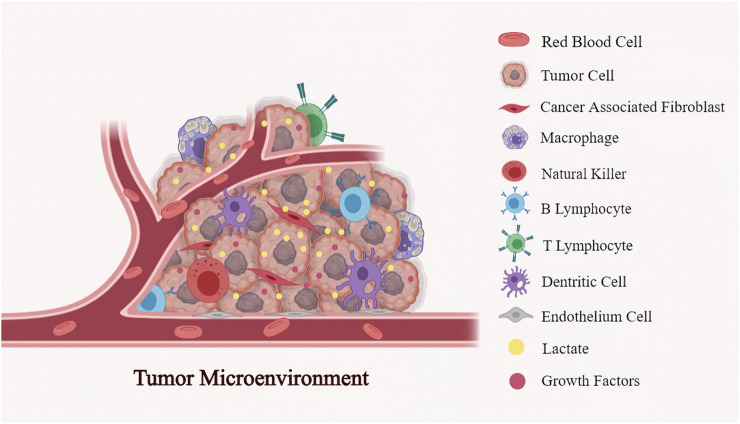
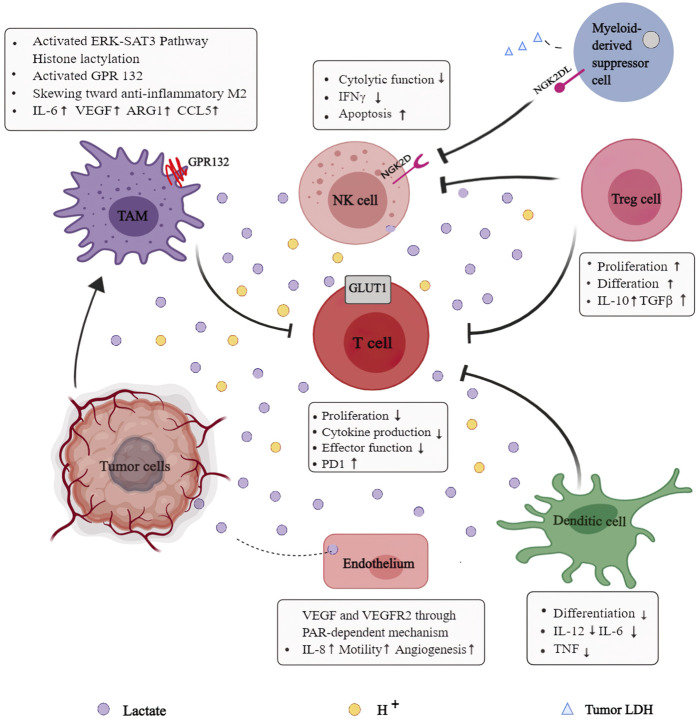
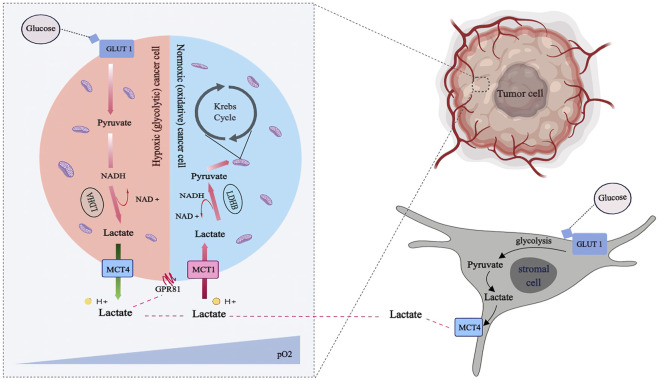
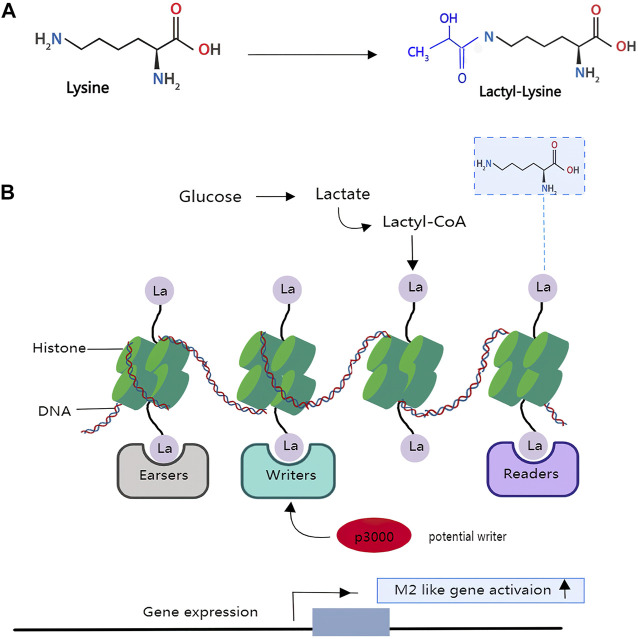
Tumor evolution is influenced by events involving tumor cells and the environment in which they live, known as the tumor microenvironment (TME). TME is a functional and structural niche composed of tumor cells, endothelial cells (ECs), cancer-associated fibroblasts (CAFs), mesenchymal stromal cells (MSCs), and a subset of immune cells (macrophages, dendritic cells, natural killer cells, T cells, B cells). Otto Warburg revealed the Warburg effect in 1923, a characteristic metabolic mechanism of tumor cells that performs high glucose uptake and excessive lactate formation even in abundant oxygen. Tumor tissues excrete a large amount of lactate into the extracellular microenvironment in response to TME's hypoxic or semi-hypoxic state. High lactate concentrations in tumor biopsies have been linked to metastasis and poor clinical outcome. This indicates that the metabolite may play a role in carcinogenesis and lead to immune escape in TME. Lactate is now recognized as an essential carbon source for cellular metabolism and as a signaling molecule in TME, forming an active niche that influences tumor progression. This review summarized the advanced literature demonstrating the functional role of lactate in TME remodeling, elucidating how lactate shapes the behavior and the phenotype of both tumor cells and tumor-associated cells. We also concluded the intriguing interactions of multiple immune cells in TME. Additionally, we demonstrated how lactate functioned as a novel function factor by being used in a new histone modification, histone lysine lactylation, and to regulate gene expression in TME. Ultimately, because lactate created a favorable niche for tumor progression, we summarized potential anti-tumor strategies targeting lactate metabolism and signaling to investigate better cancer treatment.
肿瘤进化受到涉及肿瘤细胞及其生存环境(即肿瘤微环境,TME)的事件的影响。TME是一个功能和结构小生境,由肿瘤细胞、内皮细胞(ECs)、癌症相关成纤维细胞(CAFs)、间充质基质细胞(MSCs)以及一部分免疫细胞(巨噬细胞、树突状细胞、自然杀伤细胞、T细胞、B细胞)组成。奥托·瓦尔堡在1923年发现了瓦尔堡效应,这是肿瘤细胞的一种特征性代谢机制,即使在氧气充足的情况下也会进行高糖摄取和过量乳酸生成。肿瘤组织会响应TME的缺氧或半缺氧状态,将大量乳酸分泌到细胞外微环境中。肿瘤活检中高乳酸浓度与转移和不良临床结局有关。这表明这种代谢物可能在致癌过程中发挥作用,并导致TME中的免疫逃逸。乳酸现在被认为是细胞代谢的重要碳源以及TME中的信号分子,形成了一个影响肿瘤进展的活跃小生境。这篇综述总结了先进文献,展示了乳酸在TME重塑中的功能作用,阐明了乳酸如何塑造肿瘤细胞和肿瘤相关细胞的行为及表型。我们还总结了TME中多种免疫细胞的有趣相互作用。此外,我们展示了乳酸如何通过一种新的组蛋白修饰——组蛋白赖氨酸乳酰化发挥新型功能因子的作用,并调节TME中的基因表达。最终,由于乳酸为肿瘤进展创造了有利的小生境,我们总结了针对乳酸代谢和信号传导的潜在抗肿瘤策略,以研究更好的癌症治疗方法。