
在硫酸盐还原菌环境中,有机酸代谢产物在地质能源管道腐蚀中的作用。
The role of organic acid metabolites in geo-energy pipeline corrosion in a sulfate reducing bacteria environment.
作者信息
Madirisha Makungu, Hack Robert, van der Meer Freek
机构信息
Department of Applied Earth Sciences, Faculty of Geo-Information Science and Earth Observation (ITC), University of Twente, P.O. Box 217, 7500 AE, Enschede, the Netherlands.
Chemistry Department, College of Natural and Applied Sciences (CoNAS), University of Dar es Salaam, P. O. Box 35061, Dar es Salaam, Tanzania.
出版信息
Heliyon. 2022 May 20;8(5):e09420. doi: 10.1016/j.heliyon.2022.e09420. eCollection 2022 May.
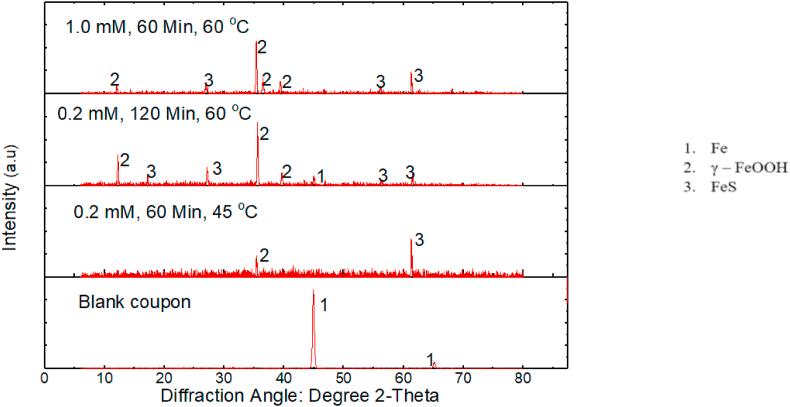
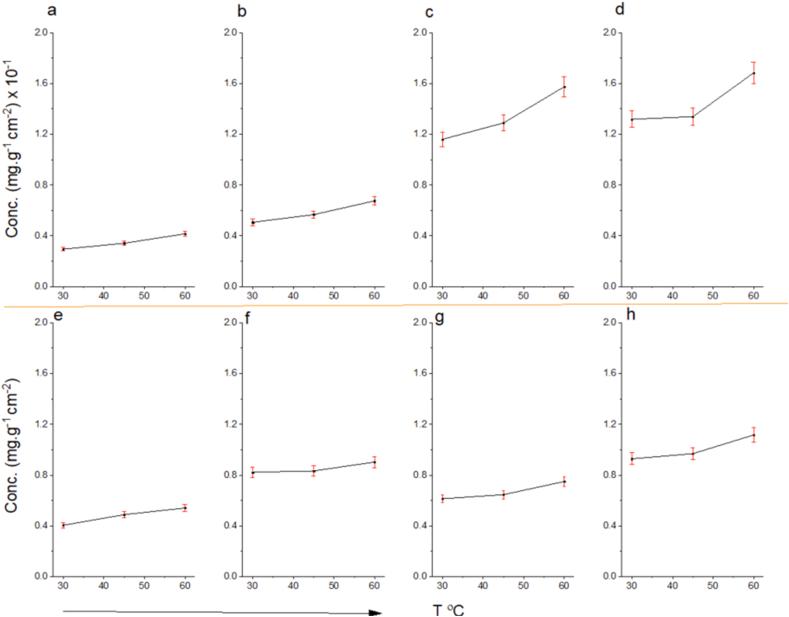
The dominant factors in Microbial Influenced Corrosion (MIC) are hard to determine because normally several individual species and their metabolites are involved, and, moreover, different metabolites may cause opposing effects. To address this problem, the effects of individual metabolites from different species should be elucidated when at the same time other metabolites are held constant. In this study, the role is investigated of simulated organic acid metabolites, namely, acetic and L-ascorbic acids, on corrosion of geo-energy pipelines (carbon steel) in a simulated Sulfate Reducing Bacteria (SRB) environment. The SRB environment is simulated using a calcium alginate biofilm, abiotic sulfide, CO, and NaCl brine. The electrochemical results show that both simulated organic acid metabolites accelerate corrosion in a simulated SRB environment. The results are further supported by electrochemical weight losses, kinetic corrosion activation parameters, multiple linear regression, ICP-OES, pH, and XRD. However, a comparison of electrochemical results with those published in the literature for a simulated SRB environment without acetic or L-ascorbic acid under similar experimental conditions shows that the presence of acetic in this study results in lower corrosion current densities while in presence of L-ascorbic acid results into higher corrosion current densities. This implies that acetic and L-ascorbic acids inhibit and accelerate corrosion, respectively. In addition, the results highlight that HS is a key role of corrosion in the presence of organic acid. The results of this study are important new and novel information on the role of acetic and L-ascorbic acids in corrosion of geo-energy pipelines in the SRB environment.
微生物影响下的腐蚀(MIC)中的主导因素很难确定,因为通常涉及几种不同的物种及其代谢产物,而且,不同的代谢产物可能会产生相反的影响。为了解决这个问题,在其他代谢产物保持不变的同时,应阐明不同物种中单个代谢产物的影响。在本研究中,研究了模拟有机酸代谢产物,即乙酸和L-抗坏血酸,在模拟硫酸盐还原菌(SRB)环境中对地质能源管道(碳钢)腐蚀的作用。使用海藻酸钙生物膜、非生物硫化物、一氧化碳和氯化钠盐水模拟SRB环境。电化学结果表明,两种模拟有机酸代谢产物在模拟SRB环境中均会加速腐蚀。电化学失重、动力学腐蚀活化参数、多元线性回归、电感耦合等离子体发射光谱法(ICP-OES)、pH值和X射线衍射(XRD)结果进一步支持了上述结果。然而,将本研究的电化学结果与在类似实验条件下模拟不含乙酸或L-抗坏血酸的SRB环境的文献中公布的结果进行比较表明,本研究中乙酸的存在导致较低的腐蚀电流密度,而L-抗坏血酸的存在导致较高的腐蚀电流密度。这意味着乙酸和L-抗坏血酸分别抑制和加速腐蚀。此外,结果突出表明,在存在有机酸的情况下,HS是腐蚀的关键因素。本研究结果为乙酸和L-抗坏血酸在SRB环境中对地质能源管道腐蚀的作用提供了重要的新信息。



 Zotero 插件