Memorial Sloan Kettering Cancer Center, New York, New York, USA.
Weill Cornell Medical College, New York, New York, USA.
Cancer. 2022 Aug 1;128(15):2958-2966. doi: 10.1002/cncr.34269. Epub 2022 Jun 1.
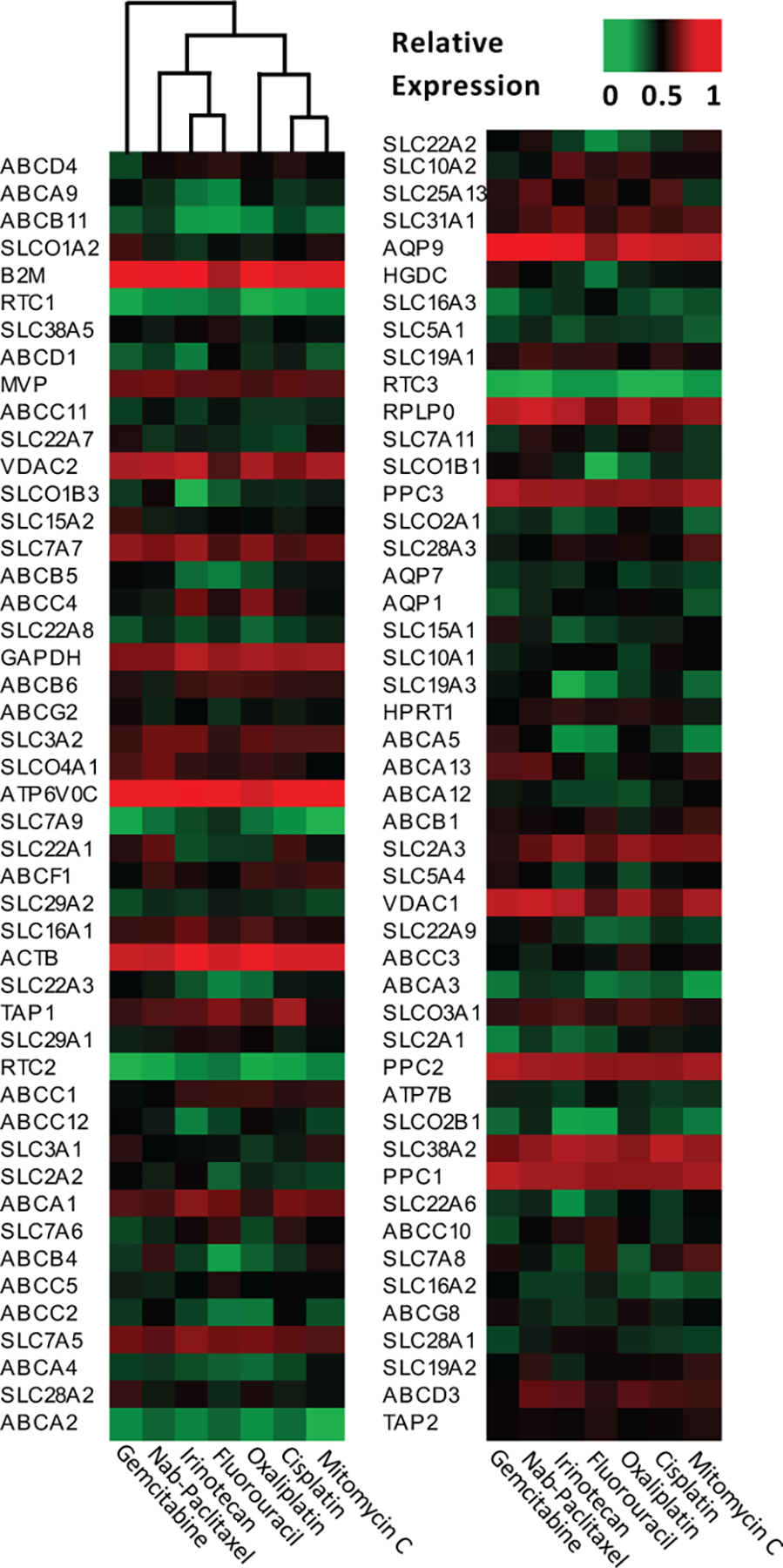
Pancreatic adenocarcinoma (PDAC) remains a refractory disease; however, modern cytotoxic chemotherapeutics can induce tumor regression and extend life. A blood-based, pharmacogenomic, chemosensitivity assay using gene expression profiling of circulating tumor and invasive cells (CTICs) to predict treatment response was previously developed. The combination regimen of 5-fluorouracil, leucovorin, irinotecan, and oxaliplatin (FOLFIRINOX) and gemcitabine/nab-paclitaxel (G/nab-P) are established frontline approaches for treating advanced PDAC; however, there are no validated biomarkers for treatment selection. A similar unmet need exists for choosing second-line therapy.
The chemosensitivity assay was evaluated in metastatic PDAC patients presenting for frontline treatment. A prospective study enrolled patients (n = 70) before receiving either FOLFIRINOX or G/nab-P at a 1:1 ratio. Six milliliters of peripheral blood was collected at baseline and at time of disease progression. CTICs were isolated, gene-expression profiling was performed, and the assay was used to predict effective and ineffective chemotherapeutic agents. Treating physicians were blinded to the assay prediction results.
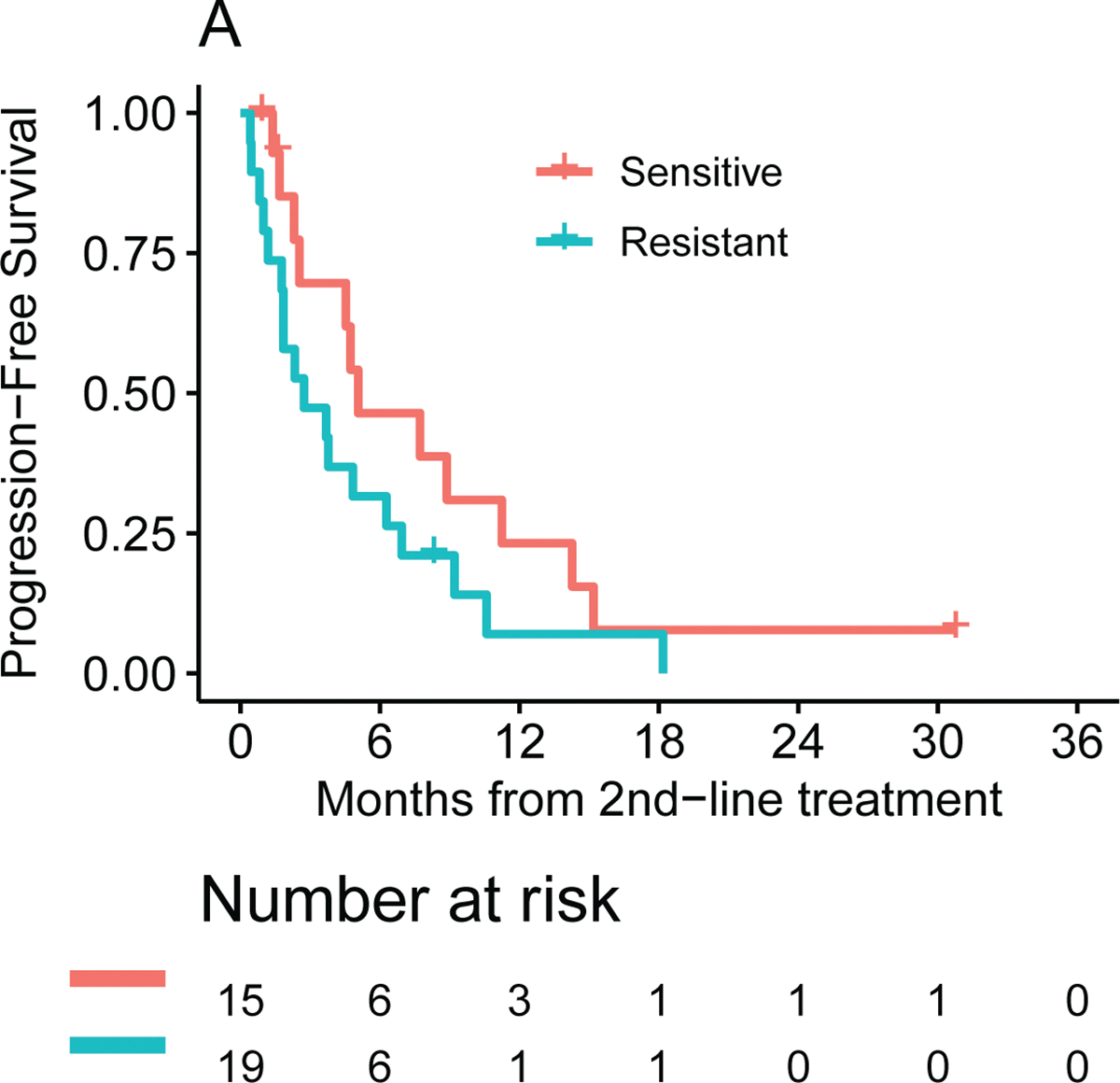
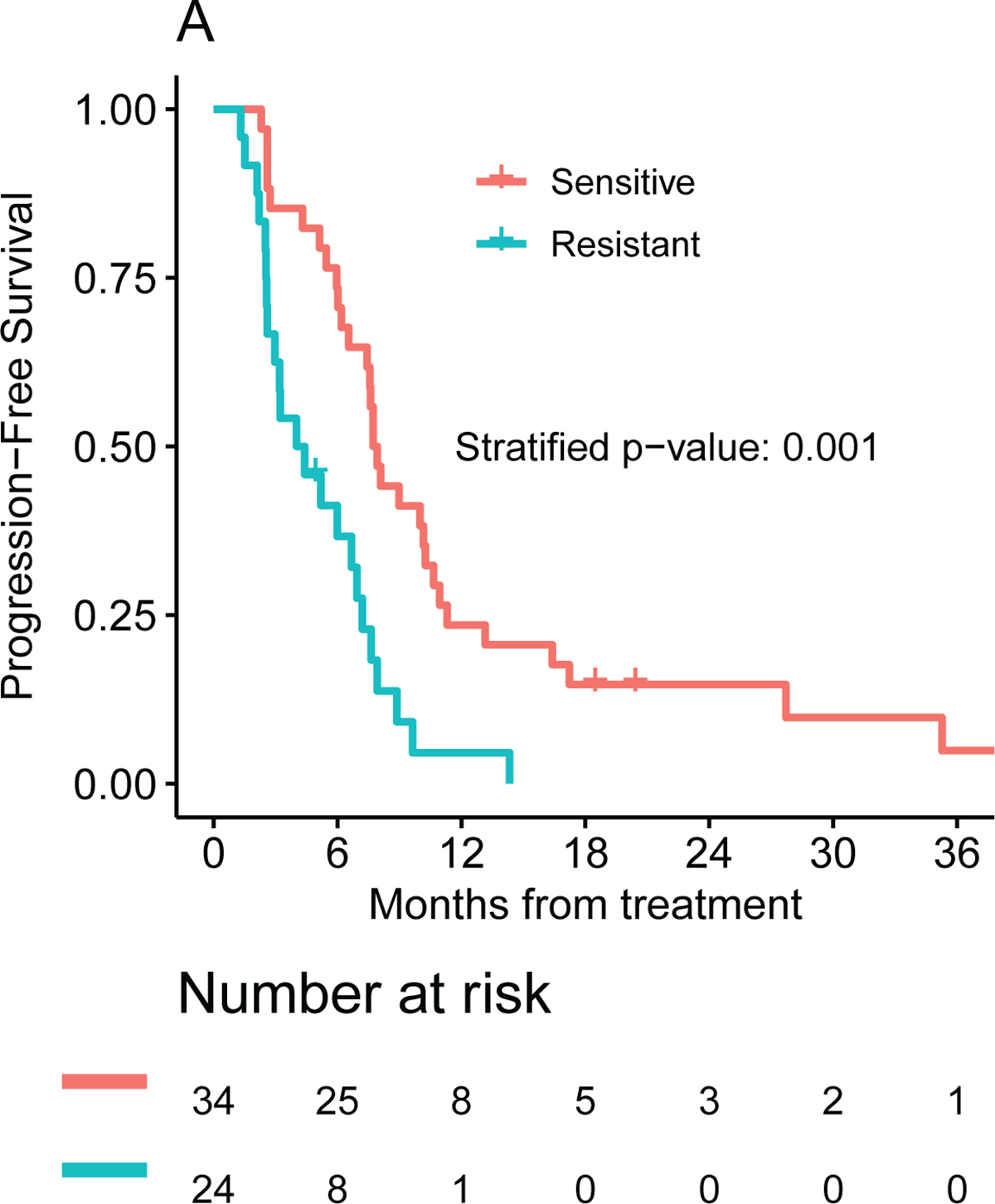
Patients receiving an effective regimen as predicted by the chemosensitivity assay experienced significantly longer median progression-free survival (mPFS; 7.8 months vs. 4.2 months; hazard ratio [HR], 0.35; p = .0002) and median overall survival (mOS; 21.0 months vs. 9.7 months; HR, 0.40; p = .005), compared with an ineffective regimen. Assay prediction for effective second-line therapy was explored. The entire study cohort experienced favorable outcomes compared with historical controls, 7.1-month mPFS and 12.3-month mOS.
Chemosensitivity assay profiling is a promising tool for guiding therapy in advanced PDAC. Further prospective validation is under way (clinicaltrials.gov NCT03033927).
胰腺癌(PDAC)仍然是一种难治性疾病;然而,现代细胞毒性化疗药物可以诱导肿瘤消退并延长生命。先前已经开发了一种基于血液的、药物基因组学的、使用循环肿瘤和侵袭细胞(CTICs)的基因表达谱进行化学敏感性测定的方法,以预测治疗反应。氟尿嘧啶、亚叶酸、伊立替康和奥沙利铂(FOLFIRINOX)和吉西他滨/纳布紫杉醇(G/nab-P)联合方案是治疗晚期 PDAC 的既定一线治疗方法;然而,目前还没有有效的生物标志物来选择治疗方法。二线治疗的选择也存在类似的未满足的需求。
该化学敏感性测定法在接受一线治疗的转移性 PDAC 患者中进行了评估。前瞻性研究按 1:1 的比例招募了接受 FOLFIRINOX 或 G/nab-P 治疗的患者(n=70)。在基线和疾病进展时采集 6 毫升外周血。分离 CTICs,进行基因表达谱分析,并使用该测定法预测有效的和无效的化疗药物。治疗医生对测定结果的预测结果不知情。
根据化学敏感性测定法预测接受有效治疗方案的患者的中位无进展生存期(mPFS;7.8 个月 vs. 4.2 个月;风险比[HR],0.35;p=0.0002)和中位总生存期(mOS;21.0 个月 vs. 9.7 个月;HR,0.40;p=0.005)明显更长,与无效治疗方案相比。探索了该测定法预测有效二线治疗的作用。整个研究队列的结果均优于历史对照,mPFS 为 7.1 个月,mOS 为 12.3 个月。
化学敏感性测定分析是指导晚期 PDAC 治疗的一种很有前途的工具。正在进行进一步的前瞻性验证(clinicaltrials.gov NCT03033927)。