Laboratory of Immunoregulation, Sidra Medicine, PO BOX 26999, Doha, Qatar.
Microbiome and Host-Microbes Interactions Laboratory, Sidra Medicine, Doha, Qatar.
Clin Rev Allergy Immunol. 2023 Aug;65(1):43-71. doi: 10.1007/s12016-022-08939-9. Epub 2022 Jun 1.
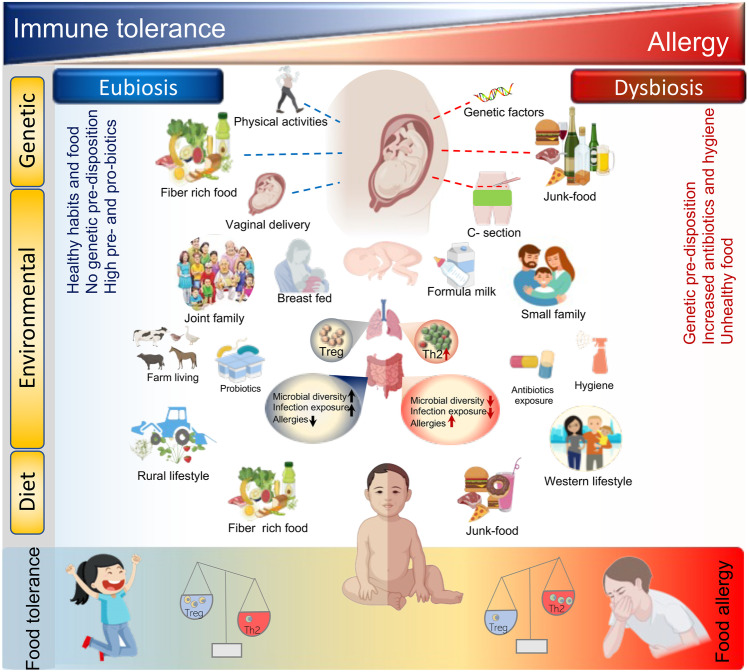
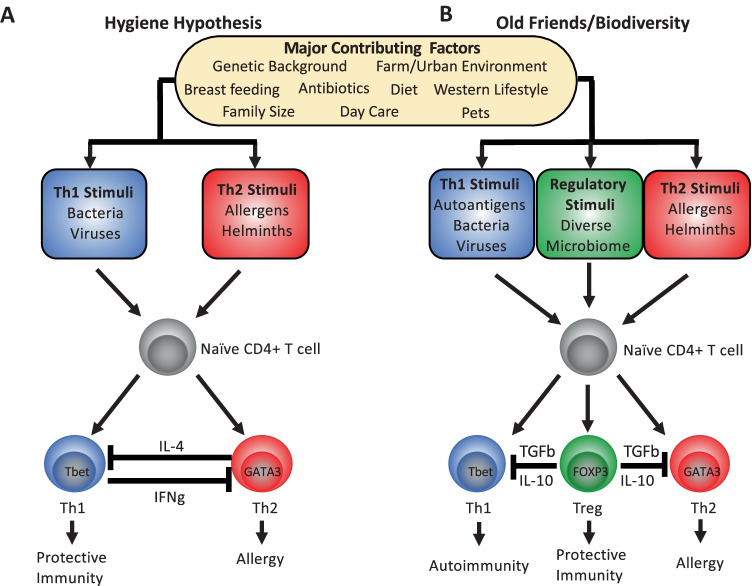
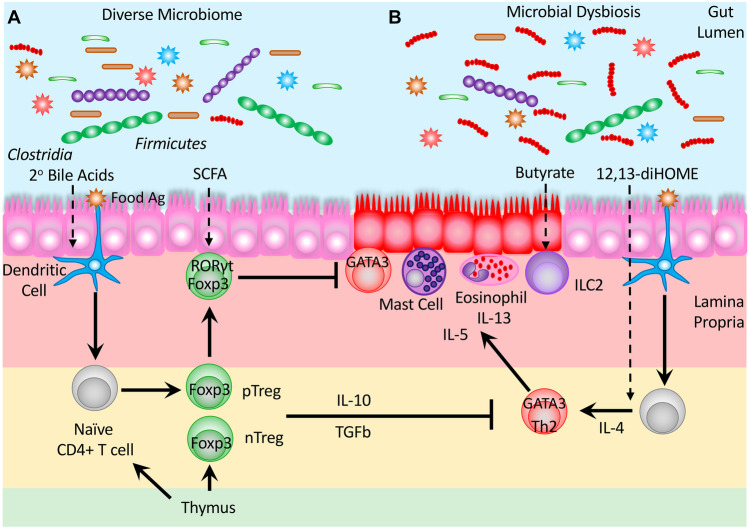
The hygiene hypothesis has been popularized as an explanation for the rapid increase in allergic disease observed over the past 50 years. Subsequent epidemiological studies have described the protective effects that in utero and early life exposures to an environment high in microbial diversity have in conferring protective benefits against the development of allergic diseases. The rapid advancement in next generation sequencing technology has allowed for analysis of the diverse nature of microbial communities present in the barrier organs and a determination of their role in the induction of allergic disease. Here, we discuss the recent literature describing how colonization of barrier organs during early life by the microbiota influences the development of the adaptive immune system. In parallel, mechanistic studies have delivered insight into the pathogenesis of disease, by demonstrating the comparative effects of protective T regulatory (Treg) cells, with inflammatory T helper 2 (Th2) cells in the development of immune tolerance or induction of an allergic response. More recently, a significant advancement in our understanding into how interactions between the adaptive immune system and microbially derived factors play a central role in the development of allergic disease has emerged. Providing a deeper understanding of the symbiotic relationship between our microbiome and immune system, which explains key observations made by the hygiene hypothesis. By studying how perturbations that drive dysbiosis of the microbiome can cause allergic disease, we stand to benefit by delineating the protective versus pathogenic aspects of human interactions with our microbial companions, allowing us to better harness the use of microbial agents in the design of novel prophylactic and therapeutic strategies.
卫生假说已被广泛认为是解释过去 50 年来过敏疾病迅速增加的原因。随后的流行病学研究描述了在子宫内和生命早期接触微生物多样性高的环境对预防过敏疾病发展的保护作用。下一代测序技术的快速发展使得能够分析屏障器官中存在的微生物群落的多样性,并确定它们在诱导过敏疾病中的作用。在这里,我们讨论了最近的文献,描述了生命早期屏障器官中微生物定植如何影响适应性免疫系统的发育。与此同时,机制研究通过展示保护性 T 调节(Treg)细胞与炎症性 T 辅助 2(Th2)细胞在免疫耐受或诱导过敏反应中的比较效果,深入了解了疾病的发病机制。最近,我们对适应性免疫系统与微生物衍生因子之间的相互作用在过敏疾病发展中的核心作用的理解取得了重大进展。这提供了对我们的微生物组和免疫系统之间共生关系的更深入理解,解释了卫生假说的关键观察结果。通过研究驱动微生物组失调的干扰如何导致过敏疾病,我们可以通过描述人类与微生物伴侣相互作用的保护和致病方面来受益,从而使我们能够更好地利用微生物制剂来设计新的预防和治疗策略。